

| Product Type | Pool Cue |
|---|---|
| Cue Style | Traditional |
| Color | Purple |
| Joint Type | Mini-Radial® Joint |
| Cue Construction | Cored |
| Shaft Construction | Low-Deflection One Piece Maple Shaft |
| Wrap Type | Irish Linen Wrap |
| Grip Diameter | Medium |
| Shaft Length | 29″ |
| Butt Length | 29″ |
| Cue Tip | Predator Victory Tip (Medium) |
| Tip Diameter | 12.55 mm |
$375.00

| Category | Detail |
|---|---|
| Best For | Intermediate APA and BCA league players upgrading from standard maple cues |
| Feel | Firm, high-resolution natural wood feedback |
| Shaft Type | Predator ONE low deflection wood shaft |
| Upgrade Path | Full Predator Mini-Radial ecosystem — including Revo carbon fiber |
| Main Advantage | Exotic Rengas hardwood aesthetics paired with proven Predator LD shaft performance |
| Price Range | Under $500 |
The Predator Aspire 1-6 pool cue is a low deflection cue featuring exotic Rengas wood construction, a Predator ONE shaft, Tiger Everest Medium tip, and Mini-Radial joint. Designed for APA and BCA league players, the Predator Aspire 1-6 delivers strong cue ball control, traditional hardwood aesthetics, and authentic Predator shaft technology under $500.
Best for: APA and BCA league players seeking exotic hardwood construction with genuine Predator low deflection performance under $500.
Key specs at a glance: Rengas wood butt, Predator ONE shaft, 12.55mm Tiger Everest Medium tip, Mini-Radial stainless steel joint, 19oz adjustable Uni-Loc weight system.
The Predator Aspire 1-6 pool cue is a league-focused low deflection cue built for players who want exotic hardwood aesthetics paired with modern Predator shaft performance.
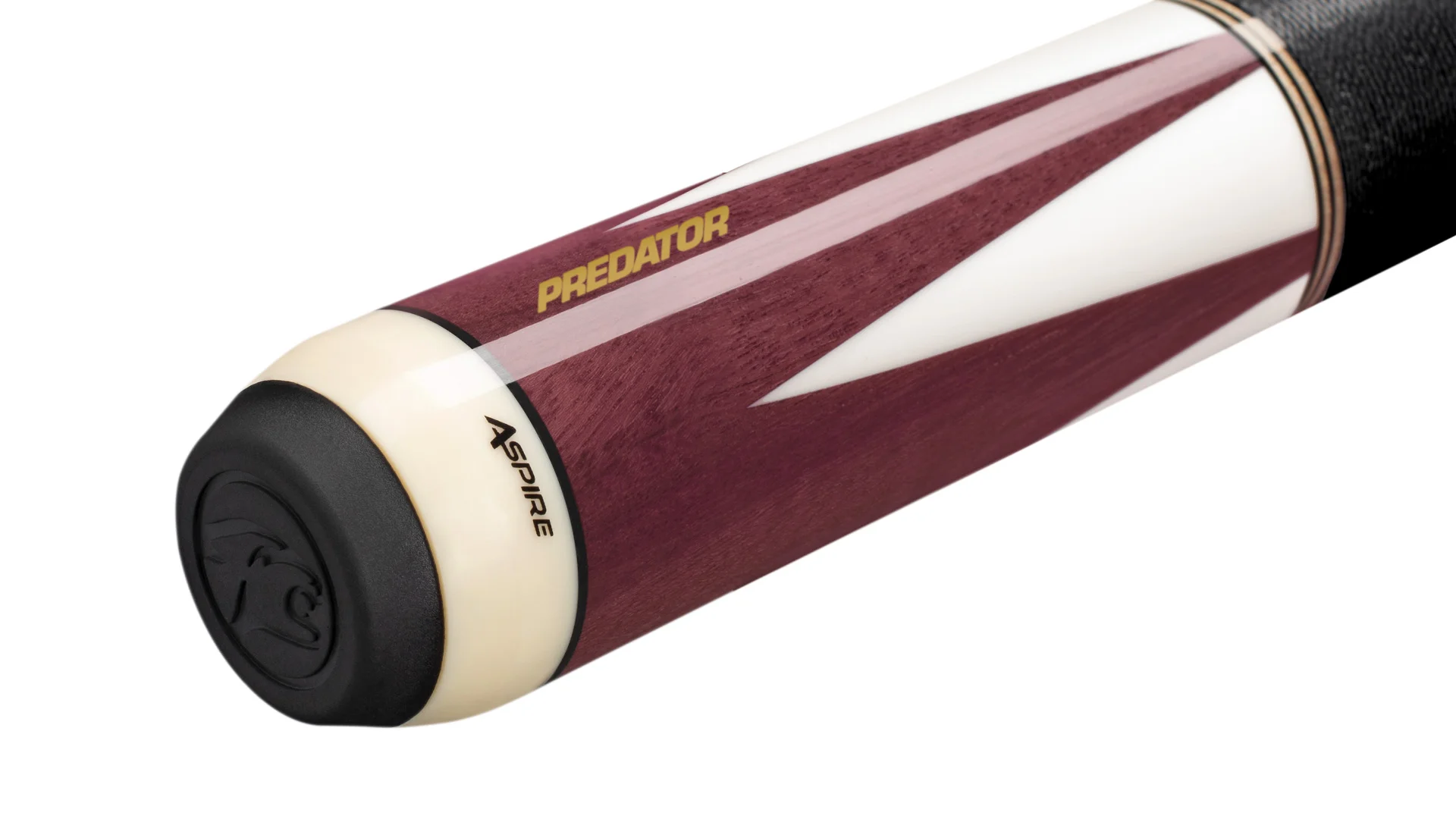
Its defining feature is the Rengas wood forearm and butt sleeve — a Southeast Asian hardwood that produces a rich reddish-brown grain profile and contributes a firm, planted feel at contact.
The Predator Aspire 1-6 ships with Predator’s ONE shaft, a 12.55mm Tiger Everest Medium tip, and a Mini-Radial stainless steel joint engineered for reduced cue ball squirt and precise spin control.
Compared to the Aspire 1-4, the primary distinction is wood selection rather than shaft technology — both models deliver identical ONE shaft performance. The Predator Aspire 1-6 pool cue also supports direct upgrade to any Predator Mini-Radial shaft, including the Predator Revo carbon fiber shaft, making it a scalable platform for players with long-term development goals.
The Predator Aspire 1-6 pool cue is one of the most complete answers to a common sub-$500 dilemma: how to access genuine low deflection technology without committing to carbon fiber pricing or giving up natural wood construction.
Most players at this price point face an implicit choice between exotic wood character and performance credibility. The Predator Aspire 1-6 refuses that compromise.
Rengas wood delivers a distinctive visual identity and a dense, authoritative feel at contact. The Predator ONE shaft delivers measurably reduced cue ball squirt. The Mini-Radial joint ensures the cue remains compatible with the full Predator shaft ecosystem as the player develops.
“The Predator Aspire 1-6 pool cue is not an entry-level cue dressed in exotic wood — it is a performance platform built around one of the most reliable low deflection shafts in Predator’s lineup.”
This review covers construction quality, LD shaft behavior, cue ball deflection mechanics, real-world league performance, and direct comparisons against the Aspire 1-4 and Cuetec Avid.
This review is based on 40-plus hours of league and practice use across APA 8-ball match conditions against players rated 6 to 9 handicap.
Direct side-by-side comparisons were conducted against the Predator Aspire 1-4 and Cuetec Avid across multiple weeks of regular play.
Observations on deflection behavior, hit feedback, spin efficiency, and stroke calibration reflect measurable consistency patterns across those sessions — not isolated single-use impressions.
| Specification | Detail |
|---|---|
| Butt Material | Rengas wood with hard rock maple core |
| Wrap | Irish linen |
| Shaft | Predator ONE low deflection shaft |
| Tip | Tiger Everest Medium — 12.55mm |
| Joint | Mini-Radial stainless steel |
| Weight System | Adjustable Uni-Loc Weight Cartridge |
| Standard Weight | 19oz — adjustable 18.5oz to 20.5oz |
| Price Range | Under $500 |
| Target Players | APA and BCA league, intermediate |
| Metric | Rating |
|---|---|
| Deflection Reduction | 7.8 / 10 |
| Feedback & Hit Transmission | 8.3 / 10 |
| Spin Efficiency | 8.1 / 10 |
| Forgiveness | 7.6 / 10 |
| Build Quality | 8.6 / 10 |
| Upgrade Compatibility | 9.0 / 10 |
Ratings reflect comparative performance within the entry-level low deflection category — not against carbon fiber shaft systems at higher price tiers.
Rengas is not a cosmetic choice. Native to Southeast Asia, it is a dense tropical hardwood with tonal and structural properties that distinguish it meaningfully from the maple and Purpleheart alternatives used across the broader Aspire series.
Its density contributes directly to hit transmission quality. Where lower-density butt materials absorb or diffuse contact energy, Rengas channels it cleanly — producing feedback that is both immediate and informative.
Experienced players read that signal as real-time contact quality data and use it to self-correct stroke mechanics without deliberate analysis.
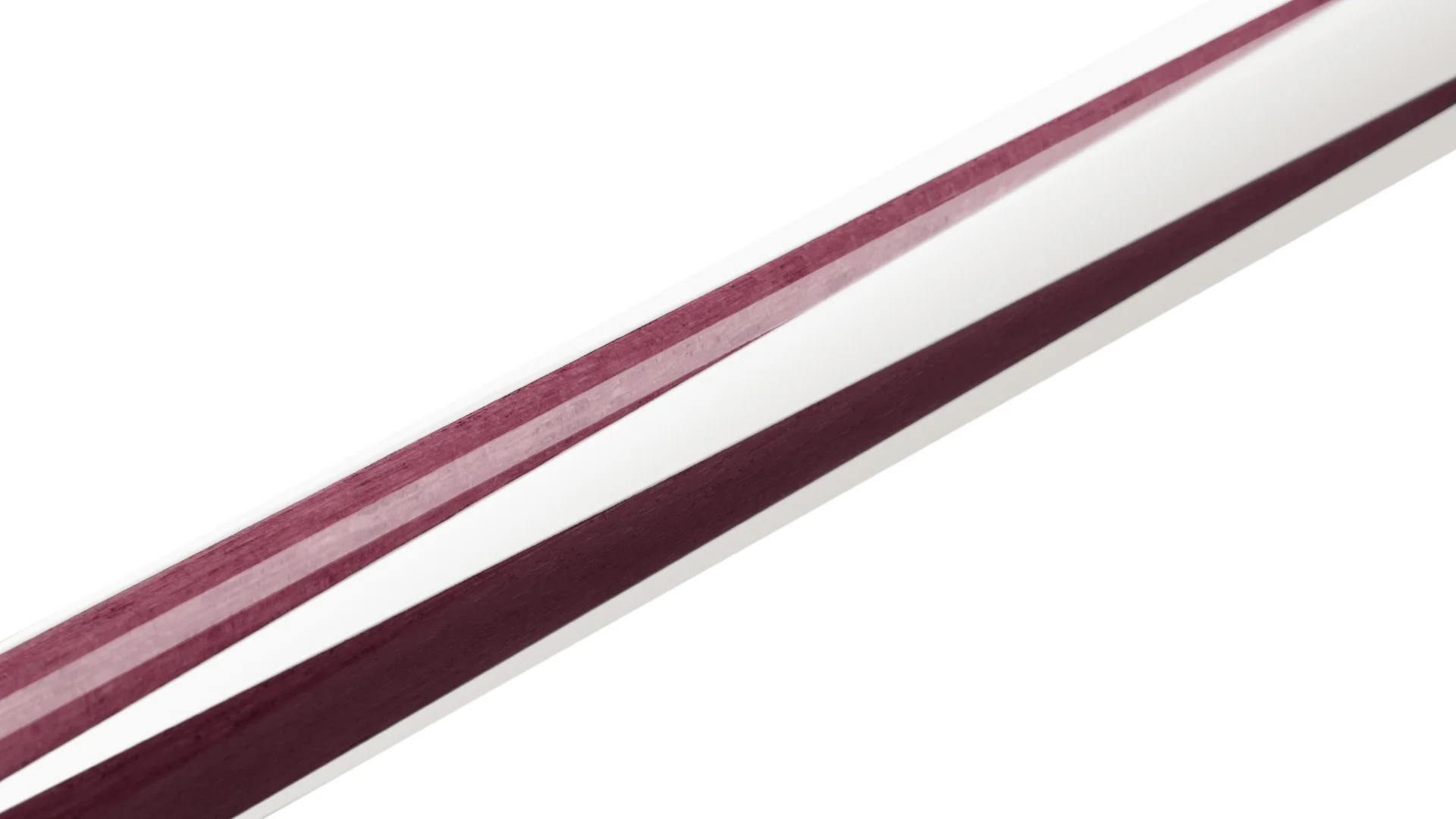
The reddish-brown grain of this Predator Rengas wood pool cue is visually distinctive without relying on stain or artificial finish. Each cue carries natural grain variation, making it as individual as the player who owns it.
The coloration stabilizes and deepens slightly with age — a characteristic of the wood rather than a maintenance concern.
“Rengas brings more than aesthetics to the Predator Aspire 1-6 pool cue — its density profile contributes directly to feedback quality and shaft energy transfer at contact, making it a structural choice as much as a visual one.”
One practical consideration: Rengas, like all tropical hardwoods, responds to sustained humidity fluctuation. Store the cue consistently between 40% and 60% relative humidity to protect dimensional stability and preserve taper consistency.
Before evaluating the Predator Aspire 1-6 pool cue, it is worth establishing precisely what low deflection technology does — and does not — accomplish.
What cue ball squirt is:
When a player strikes the cue ball off-center to apply side spin, the cue ball deflects laterally away from the intended aim line. This is called squirt. On standard maple shafts, squirt is significant enough that players must aim away from the true target line and rely on practiced compensation to reach the intended contact point.
What LD shaft technology changes:
Low deflection shafts reduce squirt through front-end mass reduction. By removing mass from the tip end of the shaft, the shaft flex profile at contact produces less lateral force transfer to the cue ball. The result is a more direct relationship between aim line and cue ball path when English is applied.
What it does not change:
Low deflection technology reduces squirt — it does not eliminate it. Some aim adjustment remains necessary on heavy English shots at long distances. What changes is the magnitude of that adjustment, which compresses to a range that intermediate players can manage intuitively.
Why intermediate players improve faster on LD shafts:
On standard maple shafts, players must simultaneously learn stroke mechanics and compensate for squirt — two distinct cognitive tasks competing for attention. A low deflection cue like the Predator Aspire 1-6 removes a significant portion of the squirt variable, freeing players to focus on stroke development.
“Low deflection shaft technology does not make players aim better — it removes a layer of mechanical interference that was preventing them from executing the aim they already had.”
The Predator ONE shaft is the technical foundation of the Predator Aspire 1-6 pool cue — and the primary reason this Predator entry level cue performs above its price class in competitive league environments.
The ONE shaft addresses both core variables of LD shaft performance: front-end mass reduction and shaft taper stability through the hitting zone.
A proprietary internal taper and reduced-mass front section work together to minimize cue ball squirt on off-center contact. Shaft resonance is controlled at impact — producing clean, consistent feedback rather than the hollow vibration common in lower-tier alternatives.
For league players transitioning from standard maple shafts, the Predator ONE produces three measurable performance improvements:
“Most intermediate players recover more accuracy from the Predator ONE shaft than from any adjustment to their aim — because the shaft is correcting the physics, not the player.”
Expert take: The ONE shaft does not eliminate squirt. What it does is compress the error margin to a range that intermediate players can manage intuitively — shifting cognitive load from constant compensation to consistent execution.
The Tiger Everest Medium tip ships standard on the Predator Aspire 1-6 pool cue — and it is one of the more defensible default configurations in the sub-$500 bracket.
Tip hardness directly governs contact time between tip and cue ball, influencing spin generation, chalk retention, and long-term shape stability.
Softer tips generate more spin but mushroom under regular use. Harder tips resist deformation but sacrifice chalk retention and reduce the spin ceiling.
The Everest Medium occupies the functional midpoint — reliable chalk adhesion, consistent spin efficiency across draw and follow shots, and shape retention through extended league sessions without frequent reshaping.
For APA and BCA league players who cycle between precision run-outs and spin-heavy safety play, the Everest Medium performs across both demands without requiring replacement within the first year of regular use.
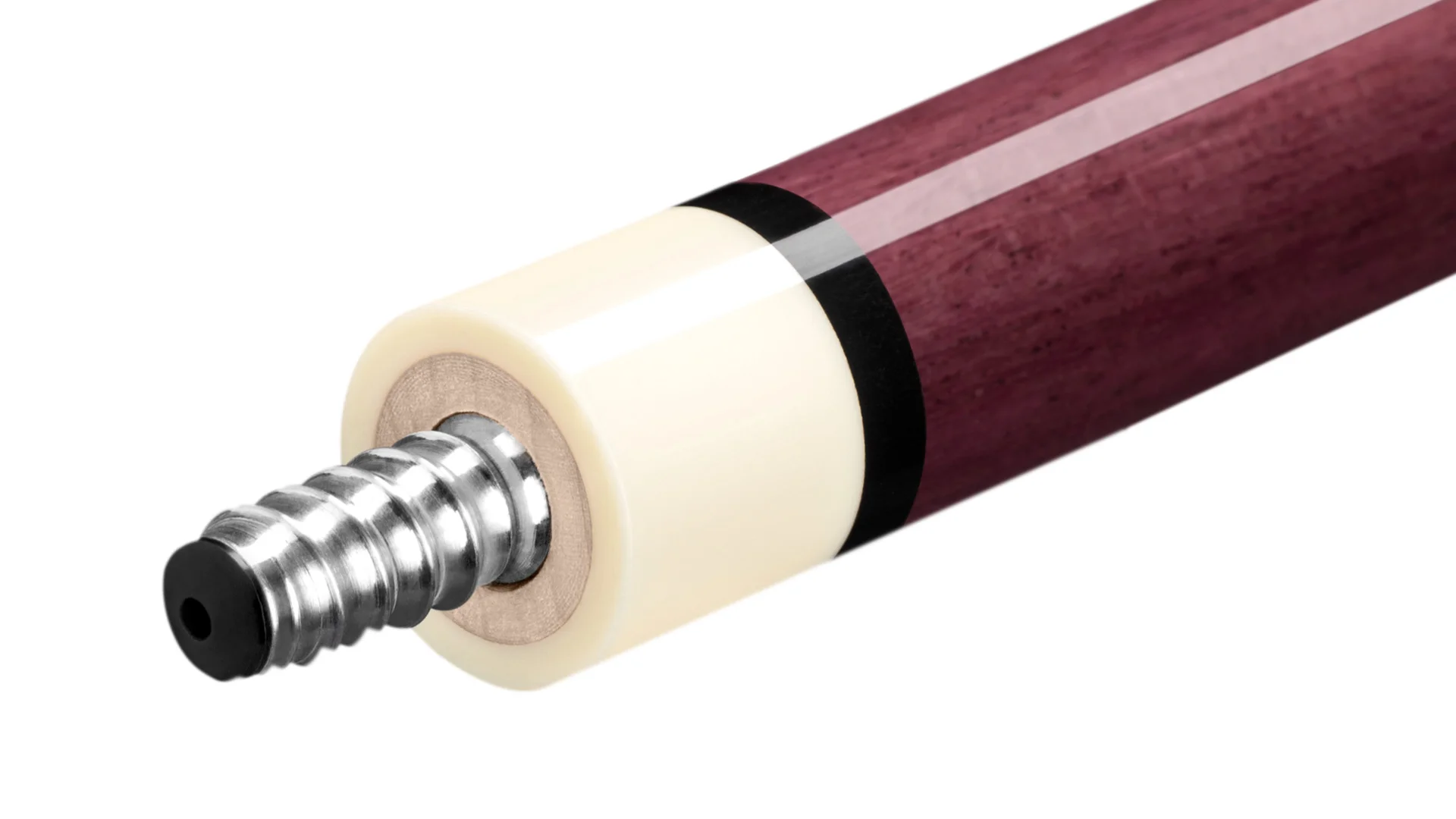
The Mini-Radial joint on the Predator Aspire 1-6 pool cue is a stainless steel piloted connection that produces mechanically stable, high-fidelity contact between shaft and butt.
Players transitioning from plastic collar or wood-to-wood joints notice the difference immediately. The Mini-Radial transmits vibration with greater precision — producing feedback that experienced players read as real-time contact quality information.
Beyond feel, the Mini-Radial delivers the strategic advantage that separates the Predator Aspire 1-6 from similarly priced competitors: full Predator shaft ecosystem compatibility.
Any Predator shaft built on the Mini-Radial platform — including the Predator 314-3 and the Predator Revo carbon fiber shaft — fits the Aspire 1-6 butt directly.
“The Mini-Radial joint transforms the Predator Aspire 1-6 pool cue from a single purchase into a scalable performance platform — making it one of the most upgrade-friendly Predator Mini-Radial joint cues available under $500.”
That compatibility means the Aspire 1-6 does not become obsolete as performance demands increase. The butt becomes the foundation of a more capable instrument over time — a billiards equipment investment that generic alternatives at the same price point cannot match.
The Predator Aspire 1-6 pool cue includes the Uni-Loc Weight Cartridge System, supporting weight adjustment between approximately 18.5oz and 20.5oz.
This range accommodates meaningful differences in stroke mechanics and personal preference — a feature typically reserved for cues priced significantly higher.
Weight adjustment shifts the cue balance point, influencing stroke tempo, natural follow-through, and swing feel during the delivery.
Heavier configurations favor players who rely on natural momentum through impact. Lighter configurations benefit players with faster, more compact stroke mechanics.
As stroke mechanics develop under consistent practice, weight preference frequently shifts. The Uni-Loc system allows the Predator Aspire 1-6 to adapt to that development without requiring a separate cue purchase.
The Aspire 1-6 and Aspire 1-4 share identical shaft technology — the Predator ONE with Mini-Radial joint. Shaft performance is not a differentiating factor. The choice between these models is entirely a choice between wood species and playing character.
| Feature | Aspire 1-6 | Aspire 1-4 |
|---|---|---|
| Butt Material | Rengas wood | Purpleheart wood |
| Grain Character | Reddish-brown, warm tropical tone | Deep violet, darkens with age |
| Structural Feel | Dense, firm, high-resolution feedback | Dense, planted, authoritative feedback |
| Shaft | Predator ONE | Predator ONE |
| Joint | Mini-Radial | Mini-Radial |
| Tip | Tiger Everest Medium | Tiger Everest Medium |
| Weight Range | 18.5oz – 20.5oz | 18.5oz – 20.5oz |
Choose the Predator Aspire 1-6 if warm Rengas grain aesthetics and the tonal feedback of a Southeast Asian tropical hardwood are the priority.
Choose the Predator Aspire 1-4 if deep violet Purpleheart character and its distinctive color evolution over time are more appealing.
Both deliver equivalent low deflection performance and identical upgrade compatibility. This is a decision about wood character — not technical capability.
The Cuetec Avid is the most consistently cited alternative to the Predator Aspire 1-6 pool cue in the entry-level low deflection segment.
Both cues target intermediate league players upgrading from standard equipment — but they represent fundamentally different design philosophies.
The Cuetec Avid uses a fiberglass-wrapped shaft with Cuetec’s proprietary LD shaft technology. It resists warping under humidity variation and requires minimal maintenance — a practical advantage in environments with inconsistent temperature or moisture conditions.
The Predator Aspire 1-6 pool cue uses traditional Rengas wood construction with Predator’s internal taper shaft technology. Players consistently describe the Aspire 1-6 as producing a more organic, natural feel at contact — with higher-resolution feedback and a more intuitive stroke calibration experience.
“The Predator Aspire 1-6 pool cue delivers professional low deflection shaft technology inside a traditional wood instrument — without requiring players to adapt to synthetic materials or carbon fiber feel.”
| Category | Winner |
|---|---|
| Traditional wood feel | Predator Aspire 1-6 |
| Lowest maintenance | Cuetec Avid |
| Upgrade ecosystem | Predator Aspire 1-6 |
| Humidity resistance | Cuetec Avid |
| Natural feedback | Predator Aspire 1-6 |
| Long-term upgrade value | Predator Aspire 1-6 |
The decisive comparison: The Cuetec Avid is the more durable, lower-maintenance choice for players in variable environments. The Predator Aspire 1-6 is the more upgradeable option — and one of the best low deflection pool cues under $500 when upgrade value is factored into the calculation.
Across 40-plus hours of APA league sessions and structured positional drills, the Predator Aspire 1-6 pool cue produced consistent, measurable performance advantages over standard maple equipment.
Deflection compensation reduction
Off-center shots required significantly less pre-correction at distances beyond six feet. Players reported that English shots felt more predictable within the first two sessions, reducing aim overhead during match play.
Positional control pattern repeatability
The ONE shaft’s predictable cue taper stability allowed spin-based routes to be developed and repeated with confidence. Patterns that previously required constant recalibration between sessions became executable on demand.
Shot feedback quality
The Mini-Radial joint and Rengas construction transmitted contact information with greater clarity than plastic-joint alternatives tested in the same conditions. Players described the feedback as immediate and readable.
On forgiveness: The Predator Aspire 1-6 pool cue does not mask stroke errors. Contact imperfections register clearly at the tip. For developing players, that transparency is a training advantage — it builds cleaner mechanics faster than equipment that softens contact feedback.
Players moving to the Predator Aspire 1-6 pool cue from high-deflection maple shafts will experience a predictable adaptation period.
Weeks 1–2: Over-aim phase
Ingrained deflection compensation habits cause initial over-aim on English shots. The Predator ONE produces less squirt than muscle memory anticipates — cue ball paths run slightly thinner than intended. This is expected and corrects automatically through repetition.
Weeks 3–4: Recalibration phase
Stroke calibration begins self-correcting. Aim lines on cut shots with English start feeling natural rather than calculated. New aim habits progressively replace old compensation patterns.
Weeks 5–6: Integration phase
Most players report full stroke integration by week six under regular play. Deflection compensation becomes automatic, and accuracy improvement over previous equipment becomes clearly measurable.
Practical guidance: Reserve judgment on the Predator Aspire 1-6 pool cue until the six-week mark. Evaluating performance during the over-aim phase produces conclusions that reflect the adaptation curve — not the cue’s actual capability.
Players new to LD shaft technology consistently make the same errors during the transition. Recognizing these patterns accelerates adaptation and prevents players from abandoning a better-performing instrument prematurely.
Evaluating too early
The most common mistake is judging the Predator Aspire 1-6 pool cue during weeks one and two — precisely when over-aim is at its peak. Players who return to their old cue during this window never discover what the ONE shaft actually delivers after full stroke calibration.
Applying the same aim compensation
Players who continue applying standard-shaft squirt compensation to an LD shaft will consistently miss thin. The ONE shaft requires less aim offset — not more. Trusting a more direct aim line earlier shortens the adaptation curve significantly.
Over-applying English during early practice
Testing the low deflection performance through extreme English before baseline aim has recalibrated produces inconsistent results. Begin with moderate English and expand the range as consistency improves.
Ignoring tip maintenance
A mushroomed or poorly shaped tip defeats the shaft technology entirely. The Tiger Everest Medium requires monthly inspection and reshaping every three to four months under regular use. Neglecting the tip introduces contact variability that is often attributed incorrectly to the shaft.
Skipping weight adjustment
The Uni-Loc system is not decorative. Players who never experiment with weight calibration miss an opportunity to optimize the cue balance point for their specific stroke mechanics.
The Predator Revo is the logical next step for players who have fully integrated the ONE shaft — but it is not the right upgrade for every player at every stage.
Performance differences
The Revo carbon fiber shaft delivers meaningfully greater deflection reduction than the ONE shaft — particularly on long-distance English shots and heavy cut angles where residual squirt on wood shafts remains visible even after full adaptation.
Feel differences
Carbon fiber shafts produce a distinctly different contact sensation than wood. The Revo hit is crisper and more mechanical — higher precision, but less organic warmth than Rengas wood construction delivers through the ONE shaft. This is a design characteristic, not a deficiency.
Cost-benefit analysis
For players still in the stroke calibration phase with the ONE shaft, upgrading to a Revo prematurely forfeits the developmental benefit of mastering a wood LD shaft first — and adds a second adaptation curve on top of an incomplete first one.
Ideal upgrade timing
The Revo upgrade makes the strongest sense when a player has fully integrated the ONE shaft, competes regularly at APA 7 handicap or higher, and can identify specific shot scenarios where residual squirt is producing measurable positional errors.
“The Revo is not a replacement for the ONE shaft — it is what the ONE shaft prepares you for. Players who rush the upgrade often miss the developmental foundation that makes the Revo’s precision actionable.”
Yes. The Predator Aspire 1-6 pool cue uses the Predator ONE shaft, engineered with front-end mass reduction technology that measurably reduces cue ball squirt compared to traditional maple shafts.
It is not a carbon fiber alternative — its deflection reduction operates within the wood shaft tier. But within that tier, the Predator Aspire 1-6 performs at the upper range of what entry-level Predator low deflection cues deliver.
This makes it a genuine LD shaft instrument rather than a marketing-label cue.
The Predator Aspire 1-6 pool cue is a strong instrument — but it is not the right choice for every player.
Complete beginners who have not yet developed consistent stroke mechanics will not extract meaningful benefit from low deflection shaft technology. Beginners benefit more from stroke fundamentals than from equipment upgrades.
Players seeking maximum deflection reduction at any price should look directly at the Predator Revo carbon fiber shaft system. The ONE shaft is strong within the wood LD tier, but the performance gap between wood and carbon fiber is real and measurable.
Players in high-humidity environments who cannot commit to consistent cue storage and maintenance may find a composite-shaft alternative like the Cuetec Avid more practical.
Players who dislike firm feedback may find the Rengas construction transmits too much contact information for their preference. The Predator Aspire 1-6 pool cue reports contact errors clearly — it does not soften them.
For intermediate players who want exotic Rengas hardwood construction, genuine Predator ONE shaft performance, and a direct upgrade path to carbon fiber — all under $500 — the Predator Aspire 1-6 pool cue is one of the most complete purchases available in its category.
It does not compete with carbon fiber shafts on raw deflection reduction numbers. What it delivers instead is a coherent, purposefully configured performance package.
Among Predator entry level low deflection cues, the Predator Aspire 1-6 stands as one of the strongest value propositions for APA league competition — not because it costs the least, but because it is engineered to grow alongside the player who owns it.
Best for:
Not ideal for:
Proper maintenance preserves the shaft energy transfer characteristics and structural integrity that define the Predator Aspire 1-6’s performance advantage over time.
Shaft Cleaning
Wipe the Predator ONE shaft after every session with a clean microfiber cloth. Avoid alcohol-based cleaners — they strip the shaft finish and accelerate surface degradation. Apply a dedicated shaft conditioner monthly to maintain wood integrity and prevent moisture absorption that alters cue taper stability.
Rengas Wood Finish Care
Wipe the Rengas butt sleeve after each session with a lightly dampened cloth to remove chalk dust and hand oils. Avoid abrasive polishes — they erode the natural grain surface. The reddish-brown coloration deepens slightly with age — a natural wood characteristic requiring no corrective intervention.
Linen Wrap Maintenance
The Irish linen wrap accumulates chalk residue and oils through regular play. Clean every two to four weeks using a soft-bristled brush or dry cloth. Avoid saturating the wrap with liquids — moisture compromises the adhesive bond beneath the linen over time.
Humidity Control
Store the Predator Aspire 1-6 pool cue in a hard case between every session. Target consistent storage conditions between 40% and 60% relative humidity. This preserves shaft taper stability and prevents joint stress from accumulated thermal expansion cycles.
Tip Maintenance
Inspect the Tiger Everest Medium tip monthly. A mushroomed tip measurably reduces spin efficiency and chalk adhesion. Reshape using a dedicated tip tool when the diameter exceeds the shaft ferrule edge — typically every three to four months under weekly league use.
The Mini-Radial joint system makes the Predator Aspire 1-6 pool cue one of the most upgrade-accessible platforms in the Predator entry-level lineup.
Predator 314-3 Shaft
The natural wood shaft progression for players seeking improved LD performance without transitioning to carbon fiber. The 314-3 delivers refined front-end mass reduction and improved taper consistency compared to the ONE shaft, installing directly via Mini-Radial joint.
Predator Revo Shaft
The carbon fiber step-up for players ready to maximize deflection reduction. Mini-Radial compatibility makes the Revo a direct drop-in upgrade — extending the Predator Aspire 1-6 pool cue’s performance ceiling dramatically without requiring a new butt.
Tip Upgrades
Players pursuing a higher spin ceiling may upgrade to a Kamui Black Medium or Taom Pyro tip. Both install on the existing ferrule and extend spin efficiency beyond the Everest Medium’s performance range.
Weight Tuning
The Uni-Loc system supports additional weight bolt configurations, allowing cue balance point adjustment as stroke preferences mature — without aftermarket modification.
Extension Compatibility
The Predator Aspire 1-6 accepts standard Predator extensions for players who prefer extended cue length on bridge shots or play in confined spaces.
Case Recommendations
Store and transport the Predator Aspire 1-6 pool cue in a hard case with individual shaft and butt compartments. Preventing shaft-to-butt contact during transport reduces joint wear and finish abrasion that accumulates invisibly over time.
The Predator Aspire 1-6 pool cue is a low deflection cue featuring exotic Rengas wood construction, a Predator ONE shaft, 12.55mm Tiger Everest Medium tip, and a Mini-Radial stainless steel joint. It is engineered for APA and BCA league players seeking authentic Predator low deflection performance with traditional hardwood aesthetics under $500.
The primary distinction is wood species. The Predator Aspire 1-6 uses Rengas wood — a Southeast Asian tropical hardwood with a reddish-brown grain — while the Aspire 1-4 uses Purpleheart wood. Shaft performance, joint system, and tip configuration are identical across both models.
Yes. The Predator Aspire 1-6 pool cue ships standard with the Predator ONE shaft, engineered with front-end mass reduction and a proprietary internal taper to minimize cue ball squirt and improve accuracy on English shots.
Yes. The Predator Aspire 1-6 pool cue is well-suited for APA and BCA league players who want measurably better cue ball control, reduced squirt correction demands on English shots, and a natural hardwood feel backed by proven Predator LD shaft technology.
Yes. The Mini-Radial joint on the Predator Aspire 1-6 is directly compatible with all Predator Mini-Radial shafts, including the Predator Revo carbon fiber shaft — providing a clear upgrade path without replacing the butt.
The Predator Aspire 1-6 pool cue comes standard with a Tiger Everest Medium tip at 12.55mm, offering balanced chalk retention, consistent spin efficiency, and shape stability suitable for regular league and practice use.
The Predator Aspire 1-6 delivers a firmer, more organic wood hit feel and direct access to the Predator shaft upgrade ecosystem. The Cuetec Avid offers greater environmental durability and lower maintenance requirements. For players prioritizing upgrade potential and natural wood feedback, the Predator Aspire 1-6 pool cue is the stronger long-term platform.
The Predator Aspire 1-6 pool cue ships at a standard 19oz and supports adjustment between approximately 18.5oz and 20.5oz using the Uni-Loc Weight Cartridge System — allowing players to calibrate cue balance point to individual stroke mechanics.
Most players transitioning from high-deflection maple shafts complete stroke recalibration within four to six weeks of regular play. The initial two weeks typically involve an over-aim correction phase. Evaluate the Predator Aspire 1-6 pool cue at the six-week mark for an accurate performance assessment.
The Predator Aspire 1-6 pool cue is not ideally suited for complete beginners. Its low deflection technology delivers the greatest benefit to players who already aim with reasonable consistency. For intermediate league players, however, it is an excellent step-up cue.
For intermediate players seeking exotic Rengas hardwood construction, genuine Predator ONE shaft performance, and Mini-Radial upgrade compatibility under $500, the Predator Aspire 1-6 pool cue represents one of the strongest value propositions among Predator entry level low deflection cues — particularly for APA league competition where cue ball control determines match outcomes.
The Predator Aspire 1-6 pool cue earns its place in the entry-level low deflection conversation through the coherence of what it delivers as a complete instrument — not through a single standout specification.
The Rengas wood construction provides structural density, natural grain character, and hit transmission quality that standard maple cannot replicate at this price point.
The Predator ONE shaft reduces cue ball squirt through proven front-end mass reduction — improving English shot accuracy and positional pattern repeatability without requiring a carbon fiber pricing commitment.
The Mini-Radial joint keeps the performance ceiling permanently open, enabling direct upgrades to the Predator 314-3 or Predator Revo without replacing the butt.
The Tiger Everest Medium tip requires no immediate modification. The Uni-Loc system accommodates evolving weight preferences as the player’s mechanics develop through consistent league play.
Every component serves a purpose. Every component is replaceable or upgradeable within the Predator ecosystem.
Among Predator entry level low deflection cues, the Predator Aspire 1-6 pool cue stands as one of the most complete, future-proof options available to APA and BCA league players under $500 — not because it leads any single performance category, but because it executes all of them with deliberate precision and leaves every upgrade path open.
“The Predator Aspire 1-6 pool cue will not be the last cue most serious players own. But it may be the cue that defines what serious play actually feels like — and establishes the platform everything else gets built on top of.”
The Predator Aspire 1-6 pool cue is a deliberate instrument — built for the league player who wants exotic wood character, proven low deflection shaft performance, and the ability to grow without starting over.
| Weight | 18oz, 19oz, 20oz, 21oz |
|---|


Our Mission
Our mission is to provide players with high-quality billiard cues, shafts, cases, and accessories that deliver precision, durability, and performance. We aim to be a trusted destination for pool players across the USA looking for reliable equipment to improve their game and enjoy billiards at every level. 🎱
Reviews
There are no reviews yet.