
$507.00

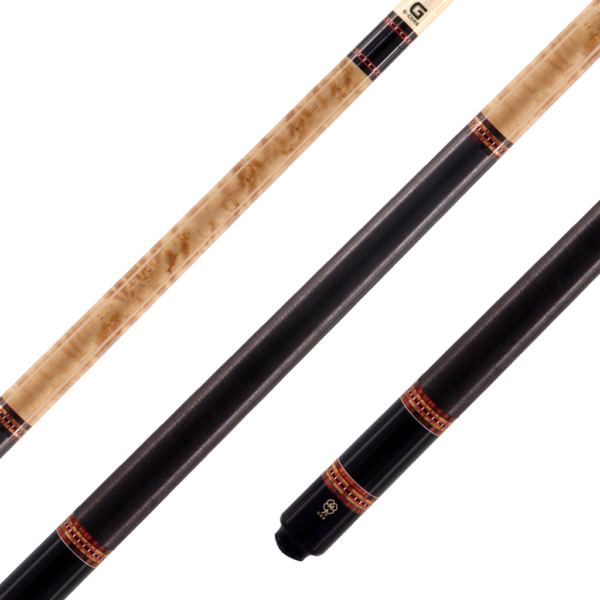
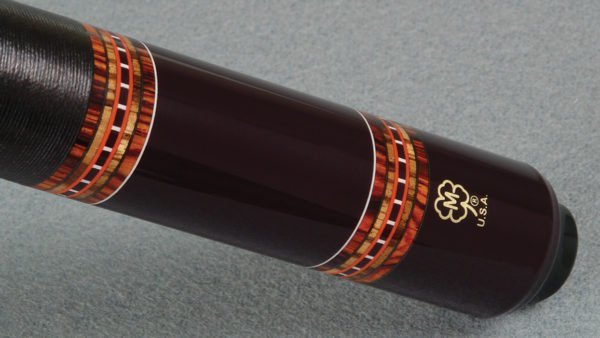
The McDermott G225 Pool Cue occupies a precise and underserved position in the performance cue market: it delivers verified low-deflection technology, American craftsmanship, and a transferable lifetime warranty at a price point under $400. For intermediate and league players navigating the gap between entry-level sticks and professional-tier equipment, the G225 represents one of the most technically justified purchases available.
This review examines the McDermott G225 specifications, G-Core shaft performance, Everlock weight system, joint construction, and long-term value against comparable USA-made pool cues. Every claim is grounded in documented product specifications and observable performance characteristics.
Quick Answer: Is the McDermott G225 Pool Cue Worth It?
The McDermott G225 Pool Cue is one of the best USA-made low-deflection pool cues under $400 for intermediate players. Its G-Core shaft reduces cue ball deflection while preserving traditional maple feel, and its lifetime warranty against warpage provides uncommon long-term ownership protection unavailable from most competitors at this price.
Before evaluating performance, establishing a precise technical baseline matters. The McDermott G225 specifications are as follows:
These specifications position the G225 as a structurally serious instrument, not a cosmetically dressed beginner cue with inflated pricing.
| Pros | Cons |
|---|---|
| G-Core low-deflection shaft included at base price | No wrap option for players preferring grip texture |
| Lifetime warranty covers warpage | Full carbon fiber deflection reduction requires Defy upgrade |
| Everlock system allows 18oz–21oz adjustment | Wrapless handle requires clean, dry hands |
| 3/8″-10 joint supports future shaft upgrades | Navigator tip may need replacement for advanced spin players |
| USA-made construction with strong resale value | Not optimized for break-shot power applications |
The G-Core shaft is the defining performance component of the McDermott G225 and the primary reason intermediate players should evaluate this cue seriously.
The G-Core shaft uses a carbon fiber stabilizer embedded within the first seven inches of the shaft—the segment most responsible for cue ball deflection, also called squirt, during off-center contact. By reinforcing this zone with carbon fiber rather than relying solely on wood grain consistency, McDermott achieves two simultaneous outcomes: reduced front-end mass and improved radial symmetry. Both factors directly lower deflection on spin shots requiring english.
Key insight: The G-Core shaft is not a full carbon fiber shaft. It retains an exterior maple construction, which preserves the tactile feedback, shaft resonance, and sound profile that experienced players associate with wood-to-wood play. Players moving from traditional maple shafts will find the G-Core transition significantly easier than adapting to a full composite shaft such as the McDermott Defy or Predator Revo, both of which require recalibrating english compensation habits built over years of play.
| Characteristic | Standard Maple Shaft | G-Core Shaft |
|---|---|---|
| Deflection on spin shots | Higher squirt | Meaningfully reduced squirt |
| Radial consistency | Variable by grain | Stabilized by carbon fiber insert |
| Front-end mass | Standard | Reduced |
| Sound and feel profile | Traditional wood | Wood-dominant with composite stability |
| Shaft resonance | Full wood vibration | Partially dampened, cleaner feedback |
| Adaptation curve | Baseline | Minimal for maple players |
For intermediate players struggling with cue ball position on cut shots, the G-Core shaft addresses the mechanical root of that problem—excess front-end mass producing squirt—rather than masking it with tip selection alone.
“The G225 succeeds because it lowers deflection without forcing traditional players into the rigid acoustic profile of full carbon fiber shafts. Players gain meaningful squirt reduction while retaining the shaft resonance and feel that wood-to-wood construction produces.”
The G-Core shaft reduces deflection significantly compared to standard maple but does not match the near-zero squirt performance of full carbon fiber options like the McDermott Defy or Cuetec Cynergy. For APA and BCA league players whose game is built on maple shaft feel, this is a feature, not a limitation. For advanced players requiring maximum english compensation reduction, a carbon fiber shaft upgrade is the correct path—and the G225 butt supports that transition directly.
Understanding why the G-Core shaft improves cue ball control requires a working understanding of deflection physics.
When a cue strikes the cue ball off-center to apply english or side spin, the cue ball does not travel in the aimed direction. It deflects—or squirts—away from the spin side before curving back. This squirt is caused primarily by the front-end mass of the shaft tip section at impact.
The secondary deflection effect, called swerve, occurs as the ball curves back toward the aimed line due to the applied spin. Both squirt and swerve must be internalized or mechanically minimized for consistent english play.
The G-Core’s carbon fiber stabilizer reduces the effective front-end mass of the shaft in the first seven inches. Less mass at impact means the cue ball deflects less from the aimed line during english shots. This allows players to apply side spin with less compensatory aim adjustment, improving cue ball control and positional accuracy—particularly on cut shots in 9-ball and 8-ball where cue ball position is the difference between winning and losing a rack.
Practical result: During inside english cut shots, the G-Core shaft produces a more predictable cue ball path than standard maple, reducing the mental overhead required to execute precise positional play.
The McDermott G225 uses a 3/8″-10 wood-to-wood joint, a construction choice with measurable consequences for how the cue plays.
Unlike stainless steel or phenolic joints, a wood-to-wood joint allows the shaft and butt to vibrate as a unified, organic system on contact. The result is a fuller, warmer hit that transfers energy more naturally through the cue’s balance point. League players and bar table competitors—particularly those competing in APA 8-ball or BCA 9-ball formats—frequently prefer this feel because it provides cleaner tactile feedback on thin cuts and positional shots where touch sensitivity determines cue ball precision.
Practical implication: The 3/8″-10 joint specification also means the G225 butt is compatible with any 3/8″-10 threaded aftermarket shaft, including the McDermott Defy carbon fiber shaft, the Cuetec Cynergy, and other performance upgrades. Players who want to advance to full carbon fiber later can do so without replacing the entire cue, making the G225 a platform investment rather than a terminal purchase.
The Everlock weight system is one of the G225’s most practical features and one that is frequently undervalued in buyer evaluations.
Pool cue weight preference is not static. Players adjusting to new tables, transitioning between bar box and nine-foot formats, or managing physical changes over time will benefit from a cue that adapts rather than requires replacement. The Everlock system allows weight adjustment across an approximate range of 18oz to 21oz by adding or removing weighted bolts from the butt cavity.
Why this matters for intermediate players specifically: Intermediate players are still refining their stroke mechanics and cue balance point preferences. A cue that can be calibrated to match evolving weight preferences supports skill development without forcing additional equipment purchases. After extended sessions on different table speeds, many players discover their optimal weight differs from their starting assumption. The Everlock system accommodates that discovery without cost.
The McDermott G225 features a wrapless maple handle, a design choice that carries distinct playability and maintenance implications.
A wrapless handle eliminates the moisture absorption and texture degradation associated with Irish linen or leather wraps. For players with dry hands or those who prefer a smooth, low-resistance grip, the wrapless surface provides consistent tactile feedback and a more direct connection to the cue’s balance point across extended sessions. The maple finish also requires significantly less maintenance than wrapped alternatives and does not develop the hardened, slick surface that worn linen produces after months of competitive use.
Trade-off to acknowledge: Players who rely on wrap texture for grip security during a loose or high-pressure stroke may initially find the wrapless surface less forgiving. This is a documented preference variable, not a product defect. The G225’s wrapless design optimizes for long-term precision and consistency over compensatory grip assistance. Players with persistent grip concerns may find a rosin bag or grip enhancer sufficient to bridge the difference.
The 13mm Navigator Black Medium tip ships as standard on the McDermott G225 and represents a competent, professional-grade choice for intermediate play.
The Navigator Black Medium formulation retains chalk consistently without mushrooming quickly—a common failure mode in softer tips that degrades stroke consistency over time. The medium density profile balances the firm tips favored for power and stun shots with the softer tips preferred for maximum english and draw shot spin transfer. For a player developing their full game across 8-ball, 9-ball, and straight pool, this is a technically sound default selection.
Upgrade path: Players prioritizing maximum spin application—particularly on long draw shots or tight rail shots requiring heavy side spin—may find a soft Navigator or a layered leather tip such as a Kamui Black Medium more aligned with their style. The 13mm diameter is compatible with a wide range of aftermarket layered leather tip options and requires only basic tip tool replacement.
The McDermott lifetime warranty is one of the most cited value arguments for the G225, and for good reason—but precision about its scope is essential.
McDermott’s lifetime warranty covers manufacturing defects and warpage when the cue is purchased through an authorized dealer. This is a genuinely rare coverage commitment in the pool cue industry. Most competitors at this price point offer one-to-three-year limited warranties that exclude warpage explicitly—the single most common form of structural cue failure in climates with significant humidity variation.
What the warranty does not cover: Physical damage from misuse, improper storage, unauthorized modifications, or purchases made through unauthorized secondary market sellers. Buyers should verify authorized dealer status before purchase to preserve warranty eligibility.
“The warpage coverage is the warranty’s most meaningful distinction. A warped cue is unplayable and typically unrepairable. McDermott’s commitment to replace warped cues through authorized channels removes the single largest long-term ownership risk from the purchase equation.”
The G225’s 3/8″-10 joint system makes it one of the most upgrade-friendly cues in its price category.
| Shaft | Manufacturer | Joint Compatibility | Deflection Reduction |
|---|---|---|---|
| McDermott Defy | McDermott | 3/8″-10 ✅ | Maximum |
| Cuetec Cynergy | Cuetec | 3/8″-10 ✅ | Maximum |
| Predator Revo | Predator | Requires adapter | Maximum |
The 3/8″-10 thread standard is one of the most widely supported joint specifications in the aftermarket shaft market. Unlike proprietary joint systems used by some competitors, the G225’s joint allows players to install performance shafts from multiple manufacturers without purchasing a new butt. This converts the G225 from a single-shaft cue into a long-term platform capable of supporting a player’s game from intermediate level through advanced competition.
Cost-benefit upgrade path: The G225 butt retails under $400 with the G-Core shaft included. Adding a McDermott Defy carbon fiber shaft as a second shaft option costs approximately $200–$300 more, producing a two-shaft system competitive with cues retailing at $600–$700 as single units. For APA and BCA league players who want both wood feel for practice and maximum low-deflection performance for tournament play, this dual-shaft configuration offers substantial value.
Understanding the McDermott G225 review requires evaluating it against its closest competitors in the best pool cues under $400 category.
The Viking A226 is a legitimate competitor with similar pricing and USA craftsmanship. Viking’s joint system uses a different pin standard, which limits aftermarket shaft compatibility compared to the G225’s widely supported 3/8″-10 specification. The G225’s G-Core shaft provides a more technically defined low-deflection solution than Viking’s standard maple shafts at comparable price points, and McDermott’s lifetime warpage coverage exceeds Viking’s standard warranty scope.
The Lucasi Custom LZC12 competes on visual design and includes a Uni-Loc quick-release joint, which enables faster shaft swapping than threaded systems—an advantage for players who rotate shafts frequently during a session. However, the McDermott G225’s Everlock weight system, G-Core low-deflection technology, and lifetime warpage coverage provide structural and performance advantages that outlast cosmetic differentiation over a cue’s lifespan.
| Feature | McDermott G225 | Viking A226 | Lucasi LZC12 |
|---|---|---|---|
| Low-deflection shaft included | ✅ G-Core | ❌ Standard maple | ⚠️ Varies by model |
| Adjustable weight system | ✅ Everlock | ❌ | ❌ |
| Lifetime warpage warranty | ✅ | ⚠️ Limited | ⚠️ Limited |
| 3/8″-10 upgrade compatibility | ✅ | ❌ Different standard | ❌ Uni-Loc proprietary |
| USA-made construction | ✅ | ✅ | ⚠️ Partial |
Summary position: Among USA-made pool cues under $400, the G225 is distinguished by the simultaneous combination of G-Core low-deflection technology, adjustable weight, 3/8″-10 upgrade compatibility, and lifetime warpage coverage. No single direct competitor matches all four criteria at this price.
Technical specifications produce predictable outcomes only when examined against real playing conditions. Here is how the G225 performs across common APA and BCA league scenarios.
On long draw shots: The G-Core shaft’s reduced front-end mass improves draw shot cue ball path predictability. During long draw attempts across a nine-foot table, the reduced squirt means the cue ball tracks closer to the intended line without requiring exaggerated follow-through compensation.
On inside english cut shots: In 9-ball position play where inside english is applied to control the cue ball angle after contact, the G-Core shaft reduces the squirt that causes positional errors on tight cuts. The difference is most apparent on cut angles between 30 and 45 degrees where english compensation on standard maple shafts requires noticeable aim adjustment.
On rail shots requiring side spin: The medium Navigator tip’s chalk retention supports consistent contact on spin-heavy rail shots without the miscue risk that softer tips introduce after light chalk application.
On stun shots and stop shots: The wood-to-wood joint’s natural feedback makes stun shot execution more tactilely readable than phenolic joint cues, allowing players to calibrate stroke speed more precisely for position on straight-in shots.
During extended league sessions: The wrapless maple handle maintains consistent grip feel across a full match without the moisture-related texture changes that affect linen-wrapped cues after an hour of competitive play.
The McDermott G225 Pool Cue is a technically coherent, professionally warranted instrument that solves real problems for intermediate and league players. Its G-Core shaft delivers measurable low-deflection performance—reducing cue ball squirt without abandoning the shaft resonance and wood feel that defines traditional pool play. Its 3/8″-10 joint, Everlock weight system, and lifetime warpage coverage collectively reduce total ownership risk and long-term cost in ways that competitors at this price point do not match.
What Makes the McDermott G225 Different From Other Pool Cues Under $400?
The McDermott G225 differs from most pool cues under $400 because it combines traditional maple construction with a stabilized low-deflection G-Core shaft, a 3/8″-10 upgrade-friendly joint system, adjustable Everlock weighting, and a lifetime warranty that includes warpage coverage. Most competitors offer only two or three of those features simultaneously.
Definitive take: At under $400, the McDermott G225 is among the strongest value propositions in USA-made pool cues precisely because its performance advantages are structural, not cosmetic. Players who invest in this cue are investing in a platform—one that supports shaft upgrades, weight customization, and long-term competitive use without the compromises that define cheaper alternatives.
For intermediate players ready to eliminate deflection as a limiting variable in their game, the McDermott G225 Pool Cue is the correct and well-justified starting point.
Yes. The McDermott G225 includes the G-Core low-deflection shaft, which uses an internal carbon fiber stabilizer in the first seven inches of the shaft to reduce cue ball squirt during english shots. It delivers meaningful deflection reduction while preserving a wood exterior feel, making it more accessible than full carbon fiber alternatives for players transitioning from standard maple.
The cue ships standard with a 13mm Navigator Black Medium tip, designed for consistent chalk retention, reliable cue ball grip across spin shots, and durability without premature mushrooming. Players prioritizing maximum english may eventually upgrade to a layered leather tip such as a Kamui Black Medium.
Yes. McDermott provides a lifetime warranty covering manufacturing defects and warpage when purchased through an authorized dealer. The warpage coverage is the warranty’s most significant distinction—most competitors at this price point exclude warpage from coverage entirely.
Yes. The Everlock weight system allows adjustment across an approximate range of 18oz to 21oz by adding or removing weighted bolts from the butt cavity. This allows players to calibrate cue balance point and swing weight as their stroke mechanics develop without purchasing additional equipment.
The McDermott G225 uses a 3/8″-10 wood-to-wood joint, producing a traditional organic hit feel and broad compatibility with aftermarket shafts including the McDermott Defy and Cuetec Cynergy carbon fiber shafts.
Yes. The G225 is specifically suited for intermediate and APA or BCA league players who have developed consistent stroke mechanics and want reduced cue ball squirt on english shots without abandoning the tactile feedback of traditional maple shaft construction.
Yes. Any 3/8″-10 compatible carbon fiber shaft—including the McDermott Defy and Cuetec Cynergy—threads directly onto the G225 butt. This makes the G225 a viable long-term platform for players planning future shaft upgrades toward maximum low-deflection performance.
The G-Core shaft contains a carbon fiber stabilizer that improves radial consistency, reduces front-end mass, and lowers cue ball squirt on off-center contact compared to a standard maple shaft. It retains a wood exterior, preserving the shaft resonance and feel that traditional players prefer while delivering measurable deflection reduction.
| Weight | 18oz, 19oz, 20oz, 21oz |
|---|


Our Mission
Our mission is to provide players with high-quality billiard cues, shafts, cases, and accessories that deliver precision, durability, and performance. We aim to be a trusted destination for pool players across the USA looking for reliable equipment to improve their game and enjoy billiards at every level. 🎱
Reviews
There are no reviews yet.