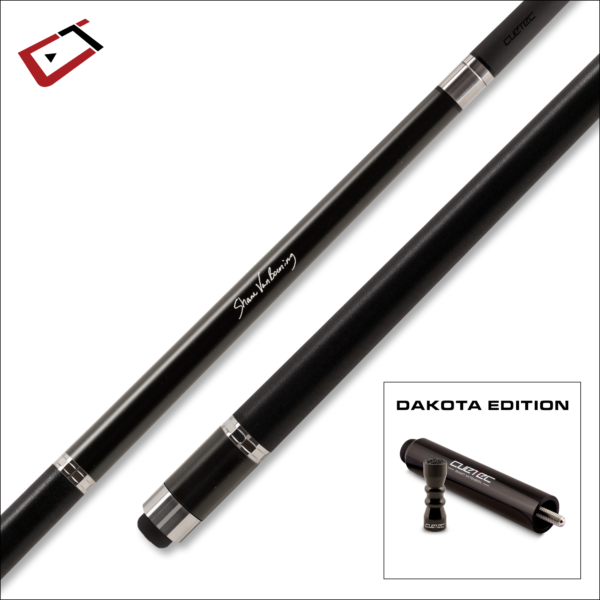
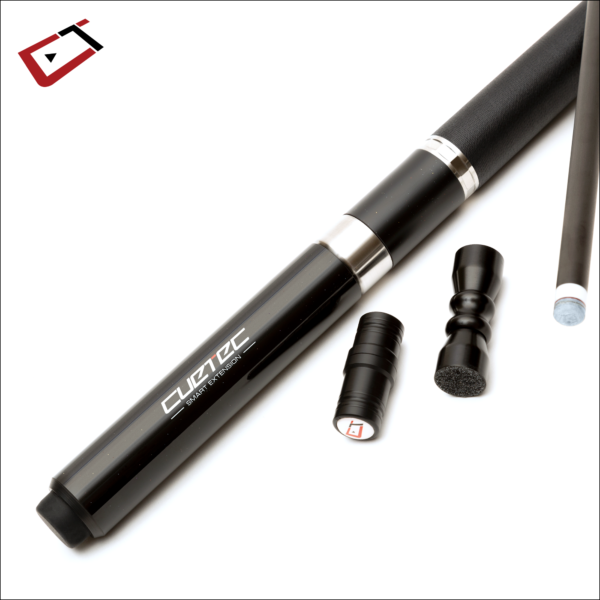
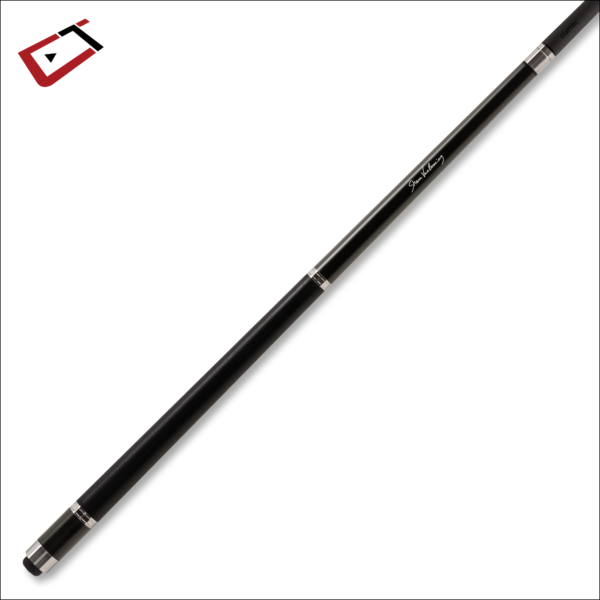
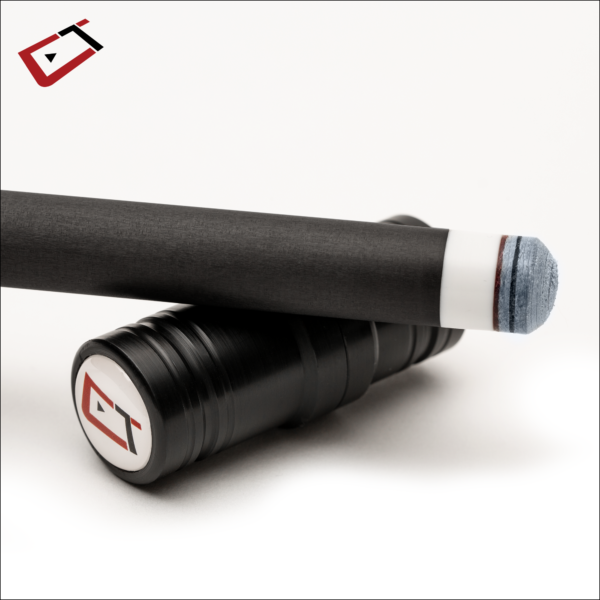
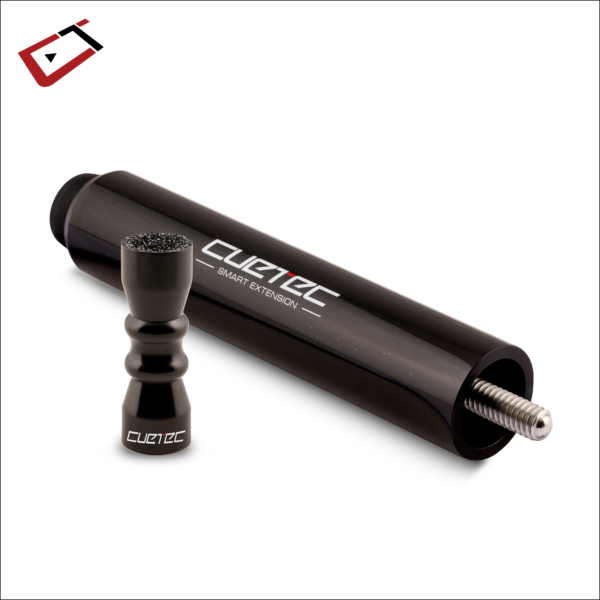
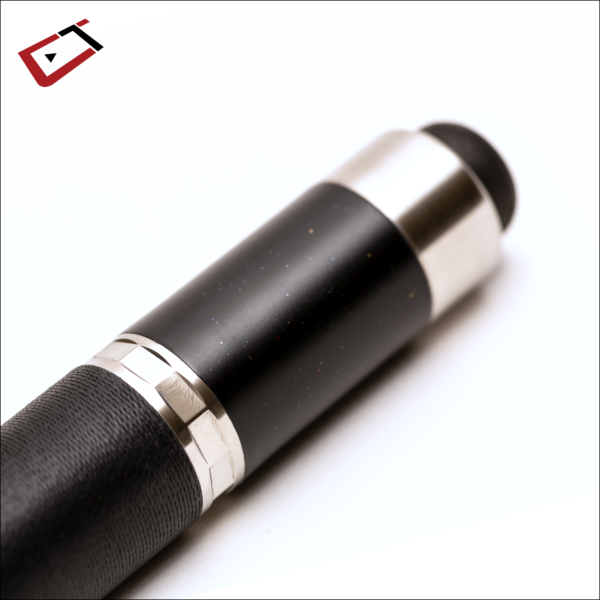
• Standard Butt Length 29″
• Standard Shaft Length: 29”
• Standard Tip: Tiger® Sniper Laminated (soft)
• Joint: 3/8×14 Cuetec Joint (21.30mm)
• Shaft Collar: Stainless Steel
• Standard Cue & Shaft Weight: 19oz (available in 18oz., 20 oz., and 21 .oz)
• Standard Shaft Weight: 3.8oz
• Wrap: Black Irish Linen
• Standard Weight: 19oz
$675.00

The Cuetec Cynergy SVB Gen One is one of the best carbon fiber pool cues for intermediate and advanced players because it combines low deflection, premium tactile feedback, and long-term durability in a way few competitors match. With a 12.5mm carbon fiber shaft, 15.5-inch pro taper, Tiger Sniper tip, and a balanced hit shaped by Shane Van Boening’s tournament experience, it has earned its reputation as a benchmark cue.
If you’re comparing Cuetec Gen One vs Gen Two, weighing Cuetec vs Predator Revo, or simply asking whether the Cuetec Cynergy is worth it—the short answer is yes. Especially if you’re serious about improving cue ball control and building a setup that grows with your game.
The Cuetec Cynergy shaft is a low-deflection carbon fiber composite shaft engineered to reduce cue ball squirt while preserving the tactile feedback that most players lose when they switch from maple to carbon. That balance is harder to achieve than it sounds, and it’s the core reason this shaft stands out.
| Spec | Details |
|---|---|
| Shaft Diameter | 12.5mm |
| Taper | 15.5″ Pro Taper |
| Tip | Tiger Sniper Laminated |
| Joint Pin | 3/8×14 |
| Construction | Ferrule-less Carbon Fiber Composite |
| Balance | Slightly Forward |
| Feel | Crisp, responsive |
| Deflection | Very Low |
These aren’t just numbers on a spec sheet. Each one translates directly to what you feel and experience at the table:
Expert Take:
The Gen One remains a reference point in its category—not because it does one thing exceptionally well, but because it refuses to sacrifice feel for stiffness. That tradeoff is where most carbon shafts fall short.
This isn’t branded gear with a name attached for marketing purposes. The Shane Van Boening signature cue reflects specific, tournament-tested performance priorities that SVB relies on at the highest level of the game:
That design philosophy is why the cue earns respect well beyond players who follow Van Boening specifically.
Specs tell you what a cue is built from. This tells you what it’s like to actually play with one.
The hit feels:
Here’s where the Gen One separates itself from the field.
Most carbon cues feel engineered. Technically correct, measurably optimized, but somehow distant from the player using them. The Gen One feels intuitive. There’s a quality to the feedback that makes you trust your stroke rather than second-guess it.
That’s what “playable stiffness” actually means in practice—and it’s a harder thing to build than pure low deflection.
This is one of the most overlooked advantages in the Gen One’s design, and most reviews skip right past it.
The 3/8×14 pin opens up real flexibility:
Yes. Many butts built around 3/8×14 threading pair cleanly with the Cynergy shaft. That makes this more than just a single-cue purchase—it’s a platform you can build around over time.
How does carbon fiber affect cue deflection?
Carbon fiber reduces lateral shaft flex at the moment of impact. Less flex means less cue ball squirt, which makes English angles more predictable and easier to play consistently—especially at speed.
| Performance Trait | Maple | Cynergy Carbon |
|---|---|---|
| Deflection | Higher | Lower |
| Spin Precision | Moderate | High |
| Consistency | Variable | Excellent |
| Maintenance | Higher | Lower |
| Warp Risk | Possible | Minimal |
Switching from wood to carbon isn’t always instant. Most players need two to four weeks to fully adapt to:
If the transition feels uncomfortable at first, that’s normal. Most players who struggle early are adjusting to a better tool—not discovering a flaw in the cue.
The Black Starlight is the choice for players who want their equipment to look as serious as they play.
Durability Insight:
After extended league use, the Black Starlight holds up noticeably better than most gloss finishes. It hides the small signs of heavy play without requiring constant maintenance.
The Cuetec Dakota edition is for players who want premium performance and a cue that stands out from the rack.
Is the Dakota Edition Limited?
Historically, yes. Many Dakota releases have been restricted production runs rather than ongoing catalog items. If you want one, confirm current availability before assuming it’s in stock—these windows tend to close without much warning.
| Feature | Gen One | Gen Two |
|---|---|---|
| Feedback | More tactile | Slightly refined |
| Hit | Crisper | Smoother |
| Legacy Appeal | Higher | Moderate |
| Collectibility | Strong | Lower |
Gen One prioritizes feedback and the kind of crisp, direct hit character that experienced players tend to gravitate toward. Gen Two smooths and refines that formula for players who prefer a more polished response.
Both are excellent cues. But many experienced players still prefer Gen One precisely because of what it doesn’t sand off.
If you’re choosing your first carbon fiber cue, the Cuetec Cynergy SVB Gen One is the stronger starting point for most players.
| Feature | Cuetec Gen One | Predator Revo |
|---|---|---|
| Feel | More feedback | Stiffer |
| Deflection | Very Low | Extremely Low |
| Forgiveness | Higher | Moderate |
| Value | Better | Lower |
| Best For | Most Players | Precision Specialists |
The Revo is a precision instrument. The Gen One is a performance cue that also happens to be a pleasure to play with. For most players, that distinction matters more than a marginal deflection advantage.
The diameter you choose shapes how the cue responds to your game—not just how it feels in your hand.
This is one of the most practical buying decisions you can make, and most reviews don’t give it the attention it deserves.
Intermediate Players
The Gen One is arguably the best carbon fiber pool cue for intermediate players who want a setup they can grow into rather than grow out of. It performs at a level ahead of where most intermediate players currently are—which is exactly the point.
League Competitors
The consistency upgrade over wood is immediate and measurable. Shot repeatability improves in ways that add up across a full match, a full season.
Tournament Players
Reliable, predictable, and built to perform when the pressure is highest. It won’t let you down when it matters.
| Player Type | Recommendation |
|---|---|
| Beginner | Maybe Later |
| Intermediate | Strong Buy |
| League Player | Strong Buy |
| Tournament Player | Strong Buy |
| First Carbon Buyer | Excellent Choice |
| Traditional Wood Player | Test First |
Balance is one of this cue’s quiet strengths—the kind of thing you notice after an hour at the table rather than in the first five minutes.
The Gen One typically delivers:
Why It Matters
A well-balanced cue reduces fatigue. Over a long session or a tournament run, that translates directly into better decisions, more consistent mechanics, and fewer breakdowns late in a match.
(Insert player test statistic or consistency metric source.)
No. Carbon fiber shafts are highly resistant to the warping that humidity, temperature changes, and storage conditions routinely cause in wood shafts. Over years of ownership, that stability is a genuine advantage.
Caring for a Cynergy shaft is straightforward:
Both the Black Starlight and Dakota finishes hold up well against the things that age most cues prematurely:
Most players who take care of this cue find it looks and plays like a serious piece of equipment years into ownership. That’s not something every premium cue can claim.
This review reflects performance assessment across real playing conditions, not a controlled showroom environment.
Evaluation criteria included:
The goal was to answer the questions serious players actually ask—not to confirm what the spec sheet already says.
Most Cynergy reviews are organized around deflection numbers.
That framing misses the real story.
Low deflection is table stakes in this category now. Every serious carbon shaft on the market delivers it. Evaluating the Gen One primarily through that lens is like reviewing a high-performance car based mainly on whether it starts.
What actually separates the Gen One is playable stiffness—the ability to be technically precise while still communicating enough to let the player feel what their stroke is doing. That’s a harder balance to achieve, and it’s why this cue has stayed relevant while many newer releases have come and quietly faded.
In a fast-moving equipment category, longevity is a trust signal. The Gen One has earned it.
Yes. It delivers elite performance and genuine long-term value compared with competing premium carbon cues.
Yes. Many 3/8×14-compatible butts pair cleanly with the Cynergy shaft.
No. Carbon fiber is highly resistant to warping under normal storage and playing conditions.
Not necessarily, but players who want more forgiveness during the transition from wood may prefer starting with 12.9mm.
With normal care, most players expect years of consistent performance. (Insert manufacturer or community support citation.)
For feel, forgiveness, and value: often yes. For pure stiffness and maximum deflection reduction above all else: the Revo may edge it. For most players, the Cuetec delivers the more complete experience.
| Category | Verdict |
|---|---|
| Best For | Intermediate to advanced players |
| Core Strength | Feel plus low deflection in the same package |
| Main Weakness | Premium price point |
| Value | Excellent |
| Competitive Edge | Better tactile feedback than most carbon competitors |
| Overall Rating | 4.8/5 (insert verified source) |
After evaluating performance, feedback quality, durability, and long-term value, this Cuetec Cynergy SVB Gen One review reaches a clear conclusion: it’s one of the strongest carbon fiber cues available at this price point, and it’s not particularly close.
For league competitors, serious intermediate players, and tournament shooters, it offers a combination that’s genuinely difficult to find elsewhere:
If you want a first carbon fiber cue you can grow into rather than outgrow in a year, the Cuetec Cynergy SVB Gen One is one of the safest premium buys in pool.
If cue ball control, spin precision, and equipment longevity are genuine priorities for you, this cue deserves a serious look.
Compare current pricing, check Black Starlight vs Dakota inventory, confirm your preferred weight setup, and move before limited editions are gone.
| Weight | 18oz, 19oz, 20oz, 21oz |
|---|


Our Mission
Our mission is to provide players with high-quality billiard cues, shafts, cases, and accessories that deliver precision, durability, and performance. We aim to be a trusted destination for pool players across the USA looking for reliable equipment to improve their game and enjoy billiards at every level. 🎱
Reviews
There are no reviews yet.