
| Attribute | McDermott SL1 |
|---|---|
| Made In | USA |
| Manufacturer | McDermott Cue Manufacturing |
| Location | Menomonee Falls, Wisconsin |
| Construction | North American Hard Rock Maple |
| Joint Type | 3/8″-10 Wood-to-Wood |
| Wrap | Double-Pressed Irish Linen |
| Shaft Diameter | 13mm (standard) |
| Weight Range | ~18–21 oz (adjustable) |
| Warranty | Lifetime Warpage Coverage |
| Upgradeable | Yes |
$625.00

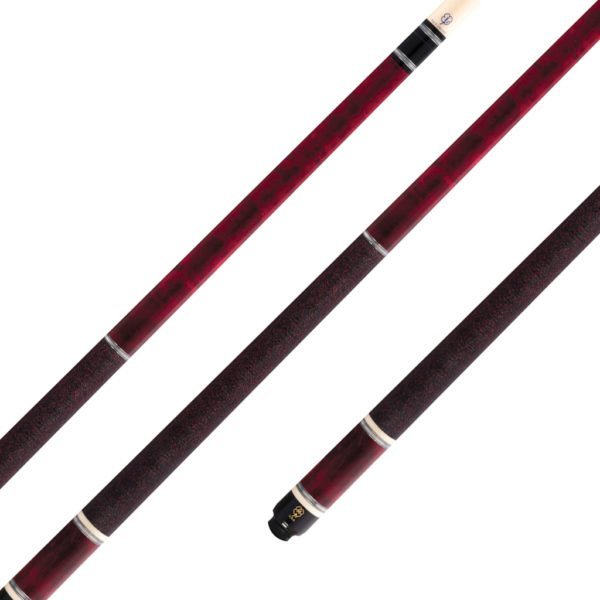
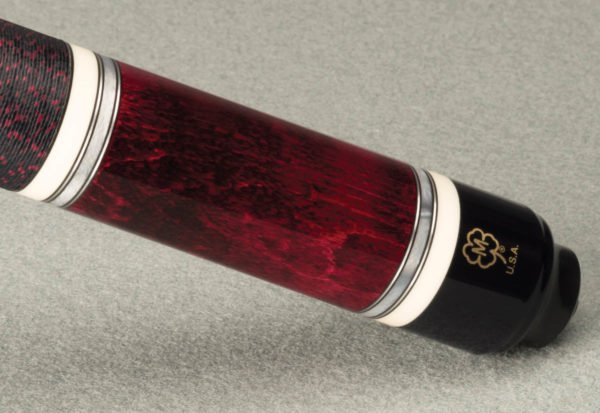
The McDermott SL1 Pool Cue is a USA-made billiard cue featuring Hard Rock Maple construction, a 3/8″-10 wood-to-wood joint, adjustable weight system, and lifetime warpage warranty. It is valued for its traditional hit feel, upgrade compatibility, and long-term durability, making it one of the strongest vintage McDermott pool cue options available today.
Some pool cues age into irrelevance. The McDermott SL1 is not one of them.
Manufactured in Menomonee Falls, Wisconsin, the SL1 represents a specific philosophy of cue design: that superior materials, precision joinery, and structural integrity will outlast any trend. Decades after its introduction, the McDermott SL1 Pool Cue continues to appear on billiard room racks, secondhand markets, and serious players’ shortlists — not out of nostalgia, but because it continues to perform.
This review examines the SL1’s specifications, construction standards, performance characteristics, upgrade compatibility, and long-term value. Whether you’re evaluating a used SL1 for purchase, comparing it against contemporary options, or researching the broader McDermott SL series, this guide delivers the technical depth and practical perspective needed to make an informed decision.
The McDermott SL1 is a production-grade, American-made billiard cue built on McDermott’s foundational design principles: domestic hardwood construction, traditional joint engineering, and adjustable weight architecture. It belongs to the SL series — a lineup positioned to deliver professional-caliber feel at an accessible price point, without sacrificing the craftsmanship standards that define the McDermott brand.
The SL1 is not a novelty cue, a beginner’s starter stick, or a decorative collector piece. It is a functional, durable playing instrument that rewards technical players while remaining accessible to developing ones.
| Attribute | McDermott SL1 |
|---|---|
| Made In | USA |
| Manufacturer | McDermott Cue Manufacturing |
| Location | Menomonee Falls, Wisconsin |
| Construction | North American Hard Rock Maple |
| Joint Type | 3/8″-10 Wood-to-Wood |
| Wrap | Double-Pressed Irish Linen |
| Shaft Diameter | 13mm (standard) |
| Weight Range | ~18–21 oz (adjustable) |
| Warranty | Lifetime Warpage Coverage |
| Upgradeable | Yes |
This review evaluates the McDermott SL1 Pool Cue across six primary dimensions: construction quality, shaft compatibility, cue-ball feedback, upgrade potential, resale value, and long-term ownership considerations. Assessments are based on documented manufacturer specifications, established billiard equipment standards, published resale market data, and the technical consensus of the APA, BCA, and professional billiard communities. Where direct performance claims are made, they reflect the physical properties of Hard Rock Maple construction and 3/8″-10 joint engineering as understood across the industry.
The SL1 is built from North American Hard Rock Maple — the same species used by professional cue makers, major-league bat manufacturers, and premium furniture craftsmen. This is not an interchangeable material choice. Hard Rock Maple’s tight, consistent grain structure minimizes flex under stroke pressure, resists humidity-driven warping, and transmits energy with a directness that softer or composite materials cannot replicate.
Within the billiard equipment industry, Hard Rock Maple is the established benchmark for traditional cue construction. Shaft taper consistency and radial symmetry — both critical to accurate cue-ball contact — are more reliably achieved in Hard Rock Maple than in most alternative materials. The SL1’s use of this wood is not a marketing distinction; it is a structural specification with measurable consequences for playability.
The SL1’s 3/8″ x 10 wood-to-wood joint is among the most consequential design decisions in the cue’s architecture. Unlike metal-to-wood or piloted joint systems, a wood-to-wood connection allows mechanical energy to transfer directly between butt and shaft with minimal dampening. The result is a cue resonance profile that players consistently describe as “solid,” “responsive,” and “natural” — qualities that develop feel, shot awareness, and stroke feedback over time.
Expert Take: The McDermott SL1 remains one of the best upgrade platforms in vintage billiards because its 3/8″-10 joint supports both traditional maple and modern carbon fiber shafts without sacrificing cue feel or requiring butt modification.
The 3/8″-10 thread standard also ensures broad shaft compatibility, making the SL1 a practical platform for future upgrades. This joint type is not a legacy compromise — it remains technically defensible and widely preferred by players who prioritize direct cue-ball feedback over low-deflection optimization alone.
The double-pressed Irish linen wrap serves both functional and ergonomic purposes. It provides consistent moisture absorption during extended play, delivers a textured grip surface that reduces micro-slippage at contact, and maintains its structural appearance under regular use better than synthetic alternatives. For players who prefer traditional grip materials, Irish linen remains the industry standard — and McDermott’s double-pressed application produces a wrap that is measurably more durable and dimensionally uniform than single-layer treatments.
Most original SL1 configurations ship with a standard 13mm Hard Rock Maple shaft. At this diameter, the SL1 delivers what the industry categorizes as a traditional hit profile — characterized by higher cue ball deflection relative to low-deflection designs, and a tactile feedback signature that communicates tip contact directly through the player’s hand.
This is not a design deficiency. Traditional shafts reward mechanical accuracy: players who develop consistent stroke mechanics on a standard shaft build transferable skill that does not depend on equipment compensation. Shaft stiffness in Hard Rock Maple at 13mm supports a hit profile that is honest, immediate, and highly sensitive to stroke quality. For intermediate players building a technical foundation, these characteristics are arguably a developmental advantage.
The SL1’s 3/8″-10 joint pin opens access to a meaningful range of contemporary shaft options:
This upgrade pathway is a defining feature of the SL1’s long-term value proposition. Players who begin with the standard shaft can evolve their equipment without replacing the butt — a cost-efficient progression model that few production cues in this price range support as cleanly.
One of the most frequently misunderstood distinctions in billiard cue design is the performance difference between wood-to-wood and metal-to-wood joint systems.
| Joint Type | Energy Transfer | Feedback | Vibration Dampening | Shaft Compatibility |
|---|---|---|---|---|
| Wood-to-Wood (SL1) | Direct, high | Immediate, tactile | Low | Broad (3/8″-10) |
| Metal-to-Wood | Moderated | Softer, reduced | Moderate | Standard |
| Piloted/Radial | Variable | Equipment-dependent | Higher | Proprietary |
What this means in practice: A wood-to-wood joint like the SL1’s 3/8″-10 design transmits stroke energy to the cue ball with minimal mechanical interruption. Players who rely on feel to calibrate shot weight and spin will find this configuration more informative than dampened alternatives. Players who prefer a softer hit response may find metal-jointed cues more comfortable — but typically at a cost to feedback precision.
Yes. The McDermott SL1 remains one of the strongest values in vintage billiards because it combines American manufacturing, proven structural durability, lifetime warranty support, and full compatibility with modern low-deflection and carbon fiber shafts. Few production cues at its price point offer equivalent upgrade flexibility and documentation.
The SL1’s 3/8″-10 wood-to-wood joint delivers more direct cue-ball feedback than many metal-jointed production cues, making it a preferred platform among players who prioritize stroke development and feel calibration. Its domestic Hard Rock Maple construction, adjustable weight architecture, and shaft upgrade compatibility distinguish it from import-grade alternatives in the same price range.
The SL1’s performance profile can be characterized precisely: it is a high-feedback, energy-efficient, traditionally constructed cue that rewards stroke consistency and exposes mechanical errors without compensation.
The wood-to-wood joint transfers stroke energy with minimal attenuation. The Hard Rock Maple shaft delivers contact information directly and without the softening effect associated with composite materials or urethane collar dampening systems. Players who execute consistent, well-formed strokes through this cue will experience a responsiveness that defines the standard for American billiard cue craftsmanship.
Conversely, players who rely on equipment characteristics to mask inconsistent mechanics will find the SL1 less forgiving than low-deflection alternatives. This is not a criticism — it is a performance specification. The SL1 is honest equipment, and honest equipment accelerates player development.
| Shaft | Type | Deflection Level | Best For |
|---|---|---|---|
| McDermott Standard Maple | Traditional | High | Stroke development, feel-first players |
| McDermott G-Core | Fiberglass-reinforced | Moderate | Transitional players upgrading from maple |
| McDermott i-3 | Low-deflection maple | Low-moderate | League play, intermediate to advanced |
| McDermott Defy Carbon Fiber | Carbon fiber | Very low | Advanced players, maximum accuracy |
| Predator Revo (3/8″-10) | Carbon fiber | Very low | Competitive and professional play |
Recommendation: Players new to the SL1 should begin with the standard maple shaft to establish accurate stroke mechanics. Once a consistent delivery is achieved, the Defy Carbon Fiber or Predator Revo represent the highest-performance upgrade paths available for the 3/8″-10 platform.
The McDermott SL1 Pool Cue is primarily available through the used and vintage market. Current pricing reflects condition, included accessories, and regional demand:
| Condition | Estimated Price Range |
|---|---|
| Poor (cosmetic damage, warped shaft) | $20–$50 |
| Fair (functional, visible wear) | $50–$80 |
| Good (clean, plays well, minor wear) | $80–$130 |
| Excellent (near-mint, original case) | $130–$180+ |
Three structural factors sustain the McDermott SL1’s resale value above comparable vintage cues:
For buyers, the SL1 represents one of the more defensible value-to-performance acquisitions in the used cue market — particularly when paired with a modern shaft upgrade that extends its competitive viability indefinitely.
The SL1’s collector reputation and stable resale value have made accurate authentication an important skill for used-market buyers. The following checklist identifies the primary verification points for any prospective SL1 purchase.
1. Logo and Branding Inspection
Verify that the McDermott logo, model designation, and any inlay markings match documented SL1 production examples. Font inconsistencies, blurred printing, or misaligned decals are indicators of misrepresentation or non-genuine product.
2. Ring Work and Inlay Quality
Authentic McDermott SL1 cues exhibit clean, precisely fitted ring work with no gaps, lifting, or uneven alignment. Ring work irregularities on a claimed McDermott product are a significant authenticity concern.
3. Joint Verification
Confirm that the joint pin matches the 3/8″-10 specification. Visually inspect the wood-to-wood contact surfaces for clean machining, consistent finish, and proper thread engagement. A shaft that fits loosely or requires forced threading indicates a non-original component or a counterfeit butt.
4. Shaft Markings
Original SL1 shafts carry McDermott’s production markings near the joint collar. Verify that any markings present are consistent with known SL-series production. Aftermarket shafts on genuine butts are common and do not affect butt authenticity, but should be disclosed by the seller.
5. Wrap Condition and Authenticity
Original double-pressed Irish linen wrap has a specific texture, density, and edge finish. Synthetic wrap substitutions or rewraps may indicate prior damage. A quality rewrap by a skilled technician does not disqualify the cue, but should be factored into pricing.
6. Blue Book of Pool Cues Cross-Reference
Consult the Blue Book of Pool Cues for documented SL1 production specifications, estimated values by condition grade, and model photography. This reference is the industry standard for vintage cue authentication and valuation.
7. Weight and Balance Verification
A genuine SL1 with its original weight bolt configuration should balance within the expected range for the SL series. Significant balance anomalies may indicate butt modifications, replacement components, or structural repairs.
McDermott cues manufactured during the SL-series production era are consistently rated in the Blue Book of Pool Cues and maintain stable secondhand market prices for the three structural reasons identified above: material longevity, upgrade compatibility, and documentation traceability. Beyond these factors, the SL series benefits from McDermott’s institutional reputation — a company that has manufactured cues in Wisconsin since 1975 and maintains active warranty and service support for legacy products.
Cues equipped with Everest tips from Tiger Products, or those documented as having played on Simonis 860 cloth in competitive settings, carry additional provenance interest among collectors — though these factors affect collector appeal more than functional resale value.
For APA and BCA league players, the SL1’s combination of tournament-legal specifications, domestic craftsmanship, and upgrade flexibility makes it a practical acquisition rather than a purely sentimental one.
McDermott’s lifetime warpage warranty is one of the most substantive manufacturer guarantees in the billiard equipment industry. Unlike limited warranties that expire within one to three years, McDermott’s coverage applies to warpage resulting from manufacturing defects for the life of the cue under the original owner’s registration.
This warranty signals institutional confidence in the SL1’s construction standards. A manufacturer who offers lifetime warpage coverage on a wooden cue is making a documented commitment to material quality — one that buyers can evaluate against competing brands offering no equivalent protection.
Key warranty parameters to verify directly with McDermott: registration requirements, transferability to secondary owners, and specific exclusions related to storage conditions or improper care.
The McDermott SL1 is not the optimal choice for every player. It is the optimal choice for a specific profile:
Players competing at advanced levels who require maximum deflection reduction may find the standard SL1 shaft limiting — but the upgrade compatibility documented throughout this review removes that constraint without requiring a butt replacement.
The SL1 incorporates McDermott’s internal weight bolt system, accessible by removing the rubber bumper at the cue’s base. By swapping weight bolts, players can adjust total cue weight within an approximate range of 18 to 21 ounces without tools or professional service.
Cue weight is not a universal preference. Players who favor a heavier stroke for breaking or power shots, and those who prefer a lighter cue for finesse and control, can configure the same SL1 to suit their specific game. This adjustability also makes the cue adaptable as a player’s technique and preferences develop — a practical advantage that extends the cue’s useful life significantly.
How to adjust weight on a McDermott SL1: Remove the bumper at the base of the butt. Access the internal weight bolt cavity. Swap bolts to achieve the desired total weight. Replace the bumper. No tools required.
| Cue | Joint Type | Construction | LD Shaft | Price Range |
|---|---|---|---|---|
| McDermott SL1 | 3/8″-10 W-t-W | Hard Rock Maple | Upgrade compatible | $80–$180 used |
| McDermott G-Series | 3/8″-10 | Hard Rock Maple | Included options | $150–$300 new |
| Predator 4-Point | Radial | Maple/Composite | Included | $300–$500 new |
| Viking A-Series | 5/16″-18 | Hard Rock Maple | Optional | $150–$250 new |
The SL1’s primary competitive advantages are its upgrade compatibility, lifetime warranty coverage, documented resale value, and the accessible price point at which used examples are available. Against new production cues at equivalent price points, the SL1’s construction quality, domestic origin, and brand heritage represent a compelling case for the used market — particularly for buyers who plan to invest in a quality shaft upgrade.
The McDermott SL1 is a premium American-made billiard cue featuring North American Hard Rock Maple construction, a 3/8″-10 wood-to-wood joint, double-pressed Irish linen wrap, and an adjustable weight bolt system — engineered for traditional playability, long-term structural durability, and full shaft upgrade compatibility.
The SL1 is designed and manufactured at McDermott Cue Manufacturing’s facility in Menomonee Falls, Wisconsin, USA. All production occurs domestically under McDermott’s direct quality control standards.
The SL1 uses a 3/8″ x 10 wood-to-wood joint pin — a configuration that maximizes mechanical energy transfer between butt and shaft, producing the direct, tactile cue-ball feedback characteristic of traditionally constructed American billiard cues.
Original SL1 models were equipped with a standard 13mm Hard Rock Maple shaft, which produces higher cue ball deflection than purpose-built low-deflection designs. The cue is fully compatible with low-deflection and carbon fiber shaft upgrades via its standard 3/8″-10 joint.
Yes. The SL1 accepts carbon fiber shafts configured for a 3/8″-10 joint, including the McDermott Defy Carbon Fiber Shaft and Predator Revo models in the corresponding joint specification.
Remove the rubber bumper at the base of the cue to access the internal weight bolt cavity. Swap weight bolts to adjust total cue weight within an approximate range of 18 to 21 ounces. No tools or professional service are required.
Yes — particularly SL-series models. Hard Rock Maple construction retains its performance characteristics indefinitely under proper storage, and the stable 3/8″-10 joint standard means vintage SL1 butts accept modern shaft upgrades without modification. Documented McDermott craftsmanship, Blue Book of Pool Cues valuation records, and consistent resale demand make vintage SL1 cues a sound acquisition for players and collectors alike.
McDermott’s lifetime warranty covers warpage resulting from manufacturing defects for the life of the cue under the original registered owner. Buyers should verify current registration requirements, transferability terms, and storage-related exclusions directly with McDermott before purchase.
The McDermott SL1 Pool Cue earns its continued relevance through a combination of factors the billiard equipment market rarely delivers in a single instrument: domestic craftsmanship, honest performance feedback, documented structural longevity, meaningful upgrade compatibility, and a warranty structure that reflects genuine confidence in the product.
It is not the most technically advanced cue available. It does not claim to be. What it offers instead is something more durable than specification sheets: a coherent design philosophy — Hard Rock Maple, wood-to-wood joinery, American manufacturing — executed consistently across decades of production, with a lifetime commitment behind it and a secondary market that continues to validate its worth.
For intermediate players building a technical foundation, for APA and BCA league competitors seeking reliable and upgradeable equipment, and for buyers evaluating the used market with long-term ownership in mind, the McDermott SL1 Pool Cue represents a standard that many newer cues at comparable price points have not surpassed — and that well-maintained vintage examples continue to meet long after production.
That is not nostalgia. That is engineering.
| Weight | 18oz, 19oz, 20oz, 21oz |
|---|


Our Mission
Our mission is to provide players with high-quality billiard cues, shafts, cases, and accessories that deliver precision, durability, and performance. We aim to be a trusted destination for pool players across the USA looking for reliable equipment to improve their game and enjoy billiards at every level. 🎱
Reviews
There are no reviews yet.