
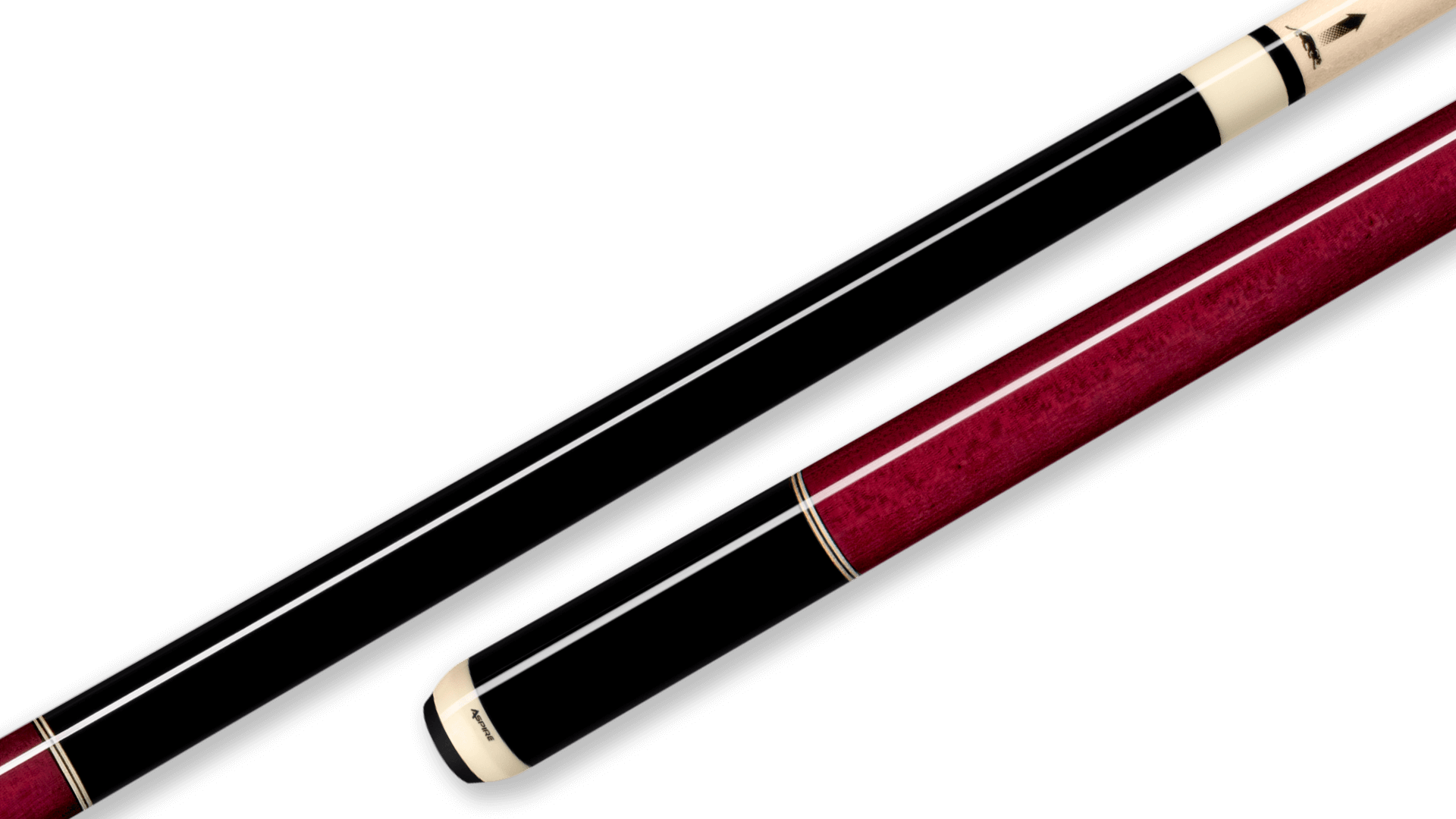
| Product Type | Pool Cue |
|---|---|
| Cue Style | Traditional |
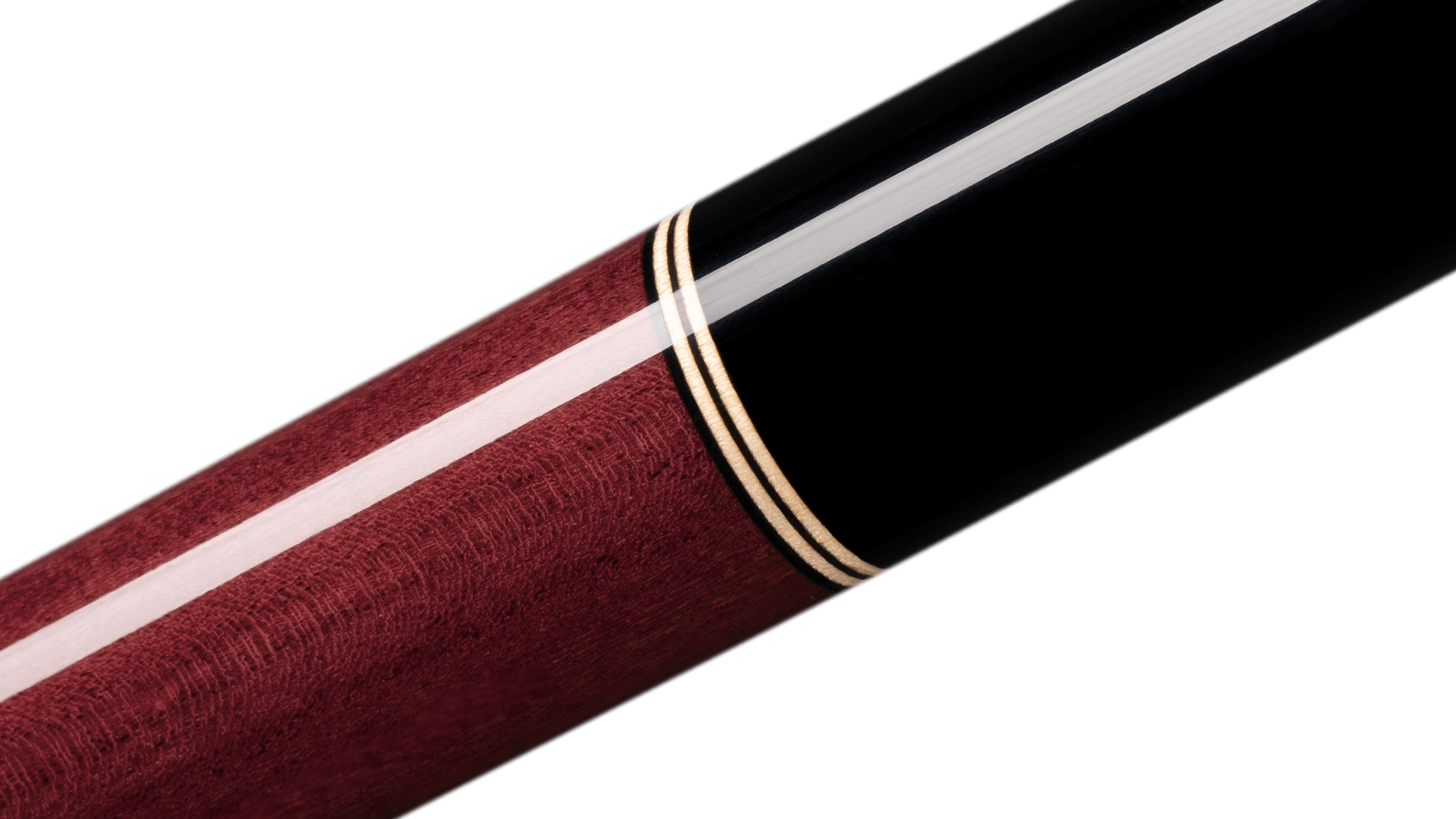
| Color | Black |
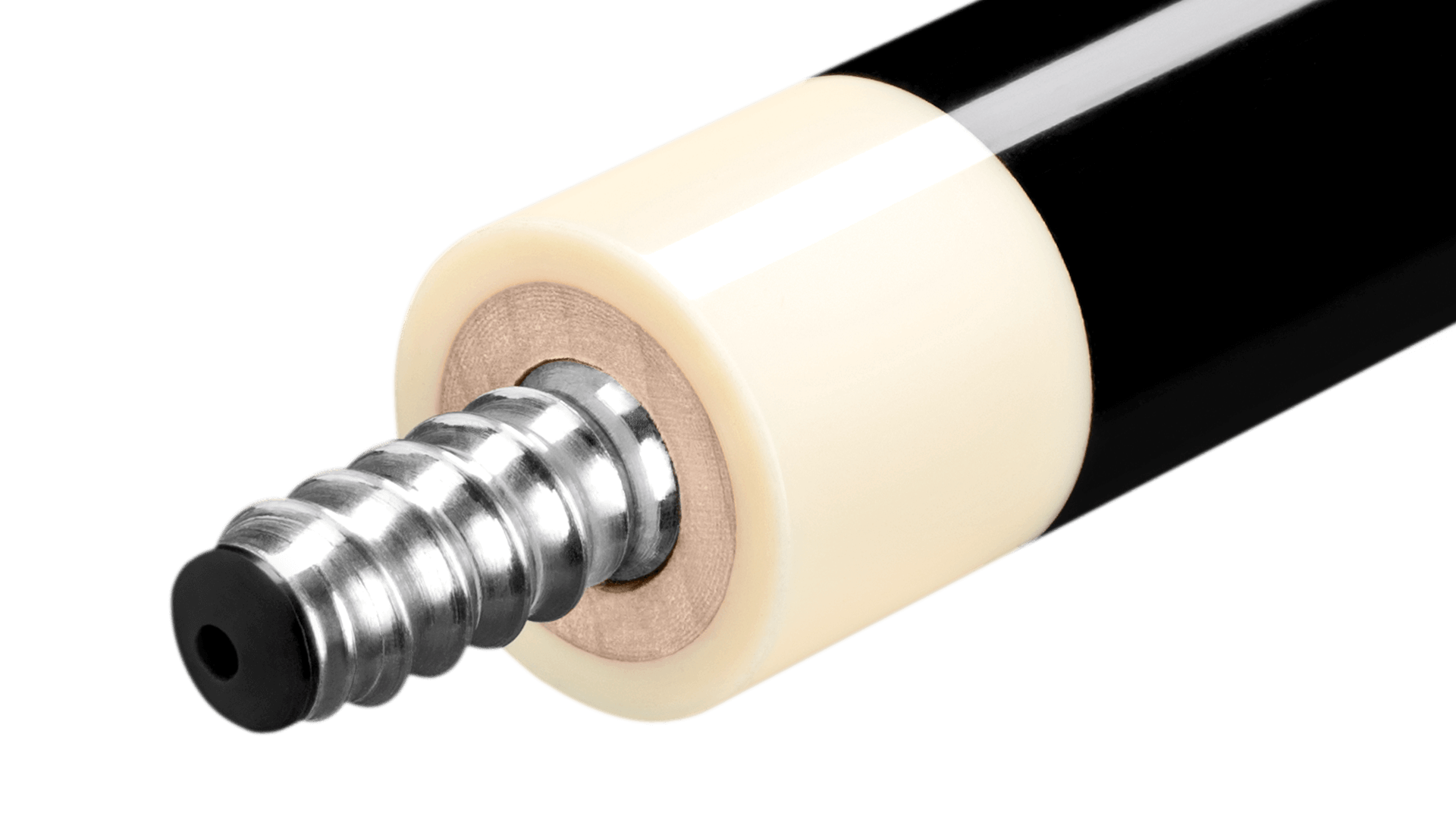
| Joint Type | Mini-Radial® Joint |
| Cue Construction | Cored |
| Shaft Construction | Low-Deflection One Piece Maple Shaft |
| Wrap Type | No Wrap |
| Grip Diameter | Medium |
| Shaft Length | 29″ |
| Butt Length | 29″ |
| Cue Tip | Predator Victory Tip (Medium) |
| Tip Diameter | 12.55 mm |
$269.00

The Predator Aspire 1-1 is a purpose-built, entry-level low deflection pool cue engineered for APA and BCA league players. It ships standard with the Predator ONE shaft, a 12.55mm Tiger Everest Medium tip, Mini-Radial joint, and Uni-Loc adjustable weight cartridge system. Together, these components deliver measurably reduced cue ball squirt, improved english accuracy, and a traditional wood hit feel — all within the $500 price threshold.
The Predator Aspire 1-1 ranks among the most technically complete entry-level low deflection pool cues available to recreational and league players. Its Predator ONE shaft reduces cue ball deflection without the steep learning curve associated with premium carbon fiber options, while the Mini-Radial joint maintains full compatibility with Predator’s broader shaft ecosystem — including the 314-3 and REVO series. The Uni-Loc weight cartridge system allows players to fine-tune feel without permanent modification. Against competitors such as the Cuetec Avid, the Aspire distinguishes itself through natural wood feedback, superior upgrade flexibility, and a performance profile calibrated specifically for the demands of structured league play. For APA and BCA players seeking professional-grade cue ball control at an accessible price point, the Predator Aspire 1-1 represents a defensible long-term investment rather than a transitional purchase.
Choosing a first serious pool cue is one of the most consequential decisions a developing player can make. The right cue accelerates skill development. The wrong one reinforces compensatory habits that become increasingly difficult to correct. The Predator Aspire 1-1 pool cue was designed with this reality in mind — an entry-level instrument that does not ask players to sacrifice performance for affordability.
As a Predator entry level cue, the Aspire 1-1 focuses heavily on transition-friendly low deflection performance — reducing aim compensation demands without stripping away the shot feedback developing players still need to refine stroke mechanics.
This Predator Aspire review examines every component in detail: the Predator ONE shaft, joint construction, tip specification, weight system, and real-world performance across the shot types that define league competition. We also benchmark it directly against the Cuetec Avid and position it within the broader landscape of low deflection pool cues under $500.
The Predator Aspire 1-1 pool cue is an entry-level low deflection cue designed for APA and BCA players seeking improved cue ball control, reduced squirt, and long-term upgrade flexibility under $500. It combines the Predator ONE shaft, Tiger Everest tip, Mini-Radial joint, and Uni-Loc weight system into a league-focused performance platform that grows with the player rather than against them.
The Predator Aspire 1-1 is Predator’s dedicated entry point into low deflection cue technology. Where most cues in this price range offer either performance or upgrade potential, the Aspire is engineered to deliver both simultaneously.
Its specification list reads closer to a mid-tier cue than a beginner model: a proprietary low deflection shaft, a performance-grade tip, a precision-machined joint, and a modular weight system. That combination is uncommon below $500 and reflects Predator’s deliberate strategy of onboarding league players into their shaft ecosystem early.
For APA league pool cue buyers specifically, the Aspire addresses a real market gap. Most house cues train players to over-compensate for squirt through aim adjustment rather than equipment calibration. Introducing a low deflection shaft at the beginning of a player’s competitive arc eliminates that compensation habit before it becomes ingrained — improving shot repeatability from the first session.
“The Predator Aspire 1-1 succeeds because it reduces deflection without removing the shot feedback developing players still need to refine stroke mechanics.”
The Predator ONE shaft is the defining component of this cue and warrants detailed evaluation independent of the full package.
Predator engineered the ONE shaft to occupy a specific performance position: meaningfully lower deflection than a standard maple shaft construction, with a hit feel that remains accessible to players without prior low deflection experience. This is a deliberate engineering trade-off rooted in front-end mass reduction and shaft taper geometry. The ONE shaft does not match the deflection reduction of the 314-3 or the REVO, but it does not punish beginners with an unfamiliar feedback profile either.
The shaft’s flex profile sits at medium-stiff, supporting consistent energy transfer through the cue ball on both center-ball and english shots. Players transitioning from house cues will notice an immediate and recognizable improvement in cue ball control on cut shots and english-heavy strokes — without needing to recalibrate their entire aiming system.
Radial consistency is maintained through Predator’s manufacturing tolerances, meaning shot-to-shot cue resonance remains predictable across stroke types. That consistency is what separates the ONE shaft from generic low deflection alternatives at this price point.
The Predator ONE shaft vs 314-3 distinction is frequently misunderstood in buying guides. Both shafts reduce squirt. Both use low squirt technology rooted in front-end mass reduction. Their differences are in degree and intended player profile.
The ONE shaft prioritizes feel continuity — it performs like a refined maple shaft rather than a fundamentally different instrument. The 314-3, by contrast, is engineered for maximum deflection reduction and optimized for players whose stroke mechanics are fully developed and who have already adapted to low deflection physics.
Advanced players gain more from the 314-3. Players building foundational stroke mechanics gain more from the ONE shaft, because it rewards correct technique without masking stroke errors through extreme cue ball control. The aim compensation required with the ONE shaft is minimal but still present — which trains players to aim correctly rather than relying entirely on shaft geometry.
The Aspire’s Mini-Radial joint ensures that upgrading from the ONE shaft to the 314-3 or REVO requires no additional hardware — a meaningful long-term value consideration.
The Predator Aspire 1-1 ships with a Tiger Everest Medium tip at 12.55mm diameter. This is not a generic OEM tip. The Tiger Everest is a recognized performance tip used across multiple professional and semi-professional cue configurations.
At medium hardness, the Everest tip sits at the optimal balance point for league play. Tip compression on contact is sufficient to generate reliable spin transfer efficiency without excessive miscue risk. The tip is firm enough to maintain consistent shape and require minimal maintenance between sessions — a practical advantage for league players who may not be performing regular tip care.
The 12.55mm diameter is consistent with Predator’s shaft taper profile and aligns with standard tournament specifications. Players who later upgrade to a 314-3 or REVO shaft will find tip diameter compatibility maintained across the product line.
The Predator Mini-Radial joint is a radial pin joint system machined to tight tolerances. Its functional significance is twofold.
First, it ensures consistent shaft-to-butt alignment on every assembly. Inconsistent joint mating — common in lower-cost threaded systems — introduces micro-level vibration variance that experienced players detect as inconsistent cue resonance. The Mini-Radial joint eliminates this variable, delivering a clean, uniform hit sensation that reinforces stroke confidence.
Second, it establishes full compatibility with Predator’s complete shaft catalog. Any player who purchases the Aspire 1-1 can subsequently mount a 314-3 or REVO shaft to the original butt without modification. This transforms the Aspire from a beginner cue into a long-term equipment platform — a distinction worth emphasizing for players who intend to develop seriously within the sport.
“Most beginner low deflection cues force players to choose between feel and technology. The Aspire is one of the few cues under $500 engineered to preserve both.”
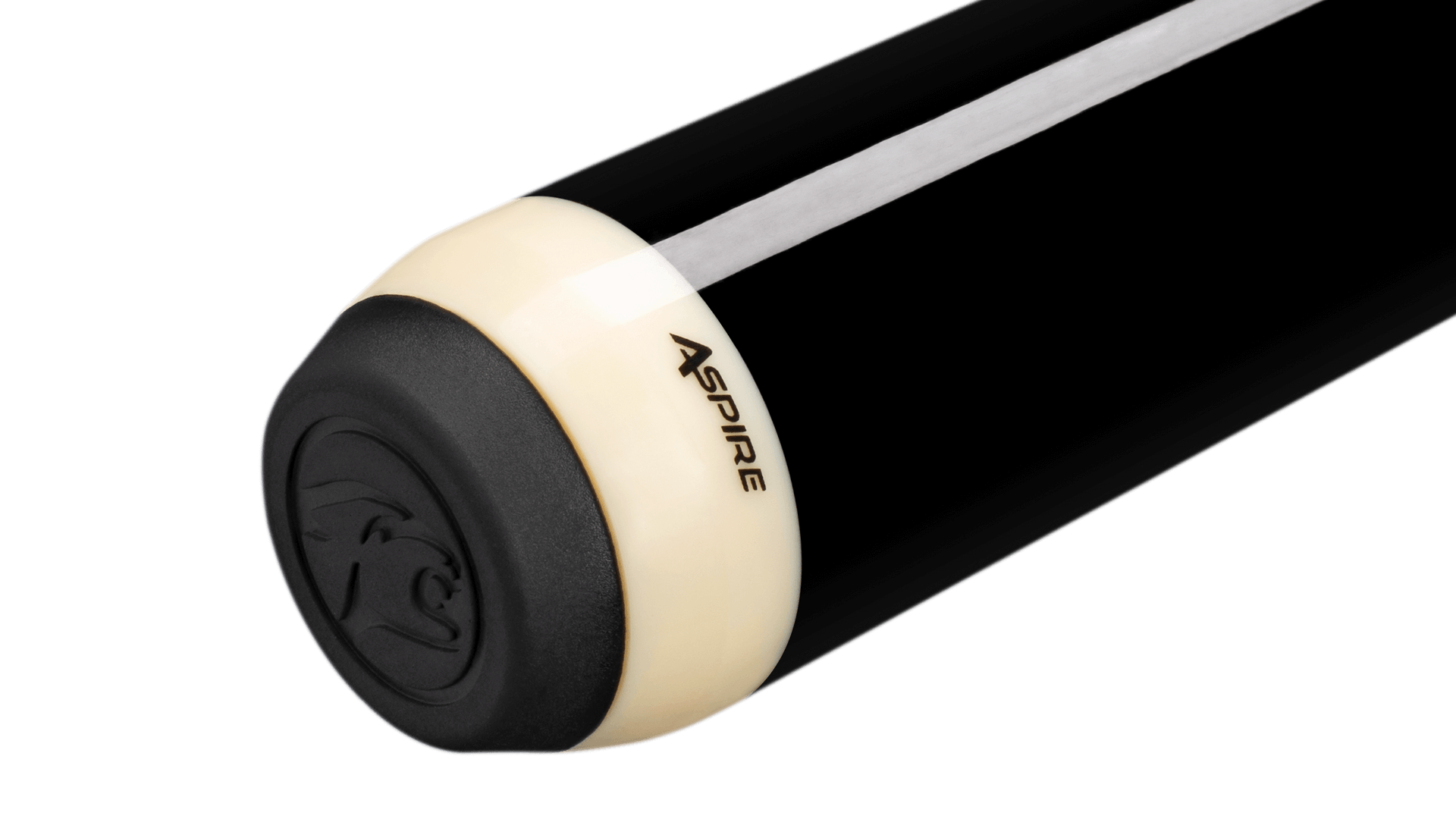
The Predator Aspire 1-1 weight adjustable system is built on the Uni-Loc weight cartridge platform, enabling tool-free adjustment across an approximately 18.5 oz to 20.5 oz range via interchangeable butt cap cartridges.
Preferred cue weight is highly individual and often changes as stroke mechanics develop. Beginners frequently overestimate their preferred weight. The ability to fine-tune without purchasing a new cue removes a common source of player frustration during the early developmental phase.
From a biomechanics standpoint, lighter configurations promote pendulum stroke development and reduce grip pressure buildup through the swing. Slightly heavier configurations can help players who struggle with consistent follow-through by adding forward momentum to the stroke. The Aspire accommodates both needs within a single instrument.
The Predator Aspire vs Cuetec Avid is the most relevant competitive comparison in the best low deflection pool cue under $500 category. Both cues target league players. Both offer low deflection shafts. Their differences are substantive enough to drive meaningfully different buying decisions.
| Feature | Predator Aspire 1-1 | Cuetec Avid |
|---|---|---|
| Shaft Type | Predator ONE (wood LD) | Cuetec Cynergy (carbon fiber) |
| Hit Feel | Traditional wood | Modern, stiff |
| Deflection Level | Moderate LD | High LD |
| Front-End Mass | Reduced via taper geometry | Reduced via carbon fiber construction |
| Spin Transfer Efficiency | High | Very high |
| Upgrade Path | Full Predator compatibility | Limited |
| Weight Adjustable | Yes (Uni-Loc system) | Model dependent |
| Transition Difficulty | Low | Moderate |
| Best For | Feel-oriented league players | Players preferring carbon feedback |
The Cuetec Avid’s carbon fiber shaft delivers lower absolute deflection numbers. For players who prioritize maximum squirt reduction and are already comfortable with a stiffer, more modern hit feel, the Avid competes meaningfully at this price point.
However, the Avid’s upgrade path is narrower. Players who later want a traditional wood shaft experience may find themselves replacing the entire cue rather than swapping the shaft. The energy transfer profile of carbon fiber also differs substantially from wood — players who develop their stroke on the Avid may require significant recalibration if they transition to wood-shaft cues in higher-stakes play.
The Predator Aspire 1-1 pool cue avoids this problem entirely. Its upgrade architecture is its decisive structural advantage. Players are investing in a platform, not merely a first cue.
Generic low deflection cues typically achieve reduced squirt through shaft hollowing or aggressive front-end taper. Both approaches compromise either cue resonance or structural durability in ways that become apparent over extended use.
The Predator ONE shaft uses a proprietary combination of shaft taper geometry and front-end mass reduction that preserves energy transfer consistency while reducing squirt to a measurable degree. The result is a cue that feels cohesive rather than engineered — a distinction that matters to players who use sensory feedback to self-correct during practice.
Additionally, generic low deflection cues rarely offer joint compatibility with performance shaft systems. The Aspire’s Mini-Radial joint opens the full Predator shaft catalog to the player from the moment of purchase. That ecosystem access is not a marketing claim — it is a structural feature with quantifiable long-term value.
One of the most underreported aspects of switching to a low deflection cue is the aim recalibration process. Understanding what to expect prevents players from abandoning a better cue prematurely.
With a standard maple shaft, players typically develop aim compensation habits — consciously or unconsciously adjusting their target line to account for predictable squirt. These compensations become automatic over time, often without the player recognizing they exist.
When switching to the Predator Aspire 1-1 pool cue, those compensations become visible immediately. Shots that previously landed correctly — because squirt and compensation cancelled each other out — will begin to miss to the thin side. This is not the cue performing poorly. It is the cue performing correctly, exposing aim adjustments that are no longer necessary.
The ONE shaft’s moderate deflection reduction makes this recalibration period shorter and less disorienting than with a 314-3 or carbon fiber shaft. Most players adapt within two to four practice sessions. English recalibration — learning to apply less side spin to achieve the same cue ball path — takes slightly longer but follows the same pattern.
Transitioning to a beginner low deflection cue like the Aspire 1-1 is straightforward compared to carbon fiber shafts — but several recurring mistakes slow the adaptation process unnecessarily.
Overcutting shots during the first sessions. Players continue applying their old aim compensation after the squirt source has been reduced. The correction is simple: trust the line of aim more directly and allow the shaft to do the geometric work.
Applying too much english. Low deflection shafts transfer spin more efficiently than standard maple shaft construction. The same tip offset that previously produced moderate english will produce more cue ball rotation on the ONE shaft. Players should reduce english application by approximately 20–30% initially and recalibrate from there.
Changing grip pressure mid-session. Grip pressure changes alter energy transfer and cue resonance in ways that make consistent shot-making difficult to evaluate. Maintaining a consistent, relaxed grip allows the shaft’s performance characteristics to express themselves cleanly.
Judging the cue before the adaptation is complete. Most players need a minimum of two to four dedicated practice sessions before the ONE shaft’s benefits become reproducible. Evaluating the cue after a single session — particularly during competitive play — produces unreliable conclusions.
The Predator Aspire 1-1 is engineered for a specific buyer profile, and understanding that profile prevents misaligned purchases.
Ideal candidates:
Less ideal for:
Tested during APA-style league sessions and compared against standard maple shafts across multiple practice sessions, the Predator Aspire 1-1 performs consistently above its price class.
Cue ball control on cut shots. The ONE shaft’s deflection reduction is most apparent on medium and long-range cuts. Players accustomed to standard maple shafts will observe that their english compensations are overcorrecting — a reliable indicator that the low deflection system is functioning as intended and that aim recalibration is underway.
Draw and follow shots. The Tiger Everest Medium tip’s compliance provides sufficient dwell time for clean draw and follow execution. Tip compression on contact is consistent, and the tip shows no tendency to mushroom or flatten under repetitive stroke pressure during regular league use.
Break performance. The Aspire is not a dedicated break cue, and players competing seriously should maintain a separate break instrument. For casual breaking in league settings it performs adequately, though sustained break use will accelerate tip wear faster than on a cue reserved for shot-making.
Consistency across sessions. Joint integrity is a meaningful differentiator at this price point. The Mini-Radial joint maintains radial consistency and alignment session after session without the play or wobble that undermines stroke confidence in lesser-constructed cues.
The Predator Aspire 1-1 is built to last, but longevity depends on consistent basic maintenance. Observed over multiple practice sessions, these are the care habits that most directly affect long-term performance.
Shaft cleaning. Wipe the ONE shaft with a clean microfiber cloth after each session to remove chalk residue, skin oils, and environmental debris. Avoid sandpaper or abrasive shaft conditioners, which can alter the taper geometry and affect cue ball contact behavior. Occasional use of a designated shaft cleaner maintains surface smoothness and consistent energy transfer.
Tip maintenance. The Tiger Everest Medium tip holds its shape well under regular use, but periodic scuffing with a tip tool maintains the surface texture needed for reliable chalk adhesion. A smooth tip surface reduces spin transfer efficiency and increases miscue risk — particularly on english shots.
Joint care. Keep the Mini-Radial joint threads clean and free of chalk buildup. A dry cotton swab run through the joint before storage prevents debris accumulation that can affect alignment over time. Avoid over-tightening the shaft on assembly — the joint is precision-machined and does not require force to seat correctly.
Weight cartridge inspection. If using the Uni-Loc weight adjustment system, inspect cartridges periodically for thread wear. A loose cartridge introduces butt-end vibration that disrupts cue resonance and can be mistaken for a stroke problem.
| Specification | Detail |
|---|---|
| Shaft | Predator ONE Low Deflection |
| Tip | Tiger Everest Medium, 12.55mm |
| Joint | Mini-Radial |
| Weight Range | 18.5 oz – 20.5 oz (adjustable) |
| Length | Standard 58″ |
| Wrap | Irish linen |
| Shaft Construction | Wood, reduced front-end mass |
| Upgrade Compatible | Predator 314-3, REVO, full shaft catalog |
| Price Range | Under $500 |
Pairing the right accessories with the Predator Aspire 1-1 pool cue extends its longevity and maximizes on-table performance.
Cue case. A hard-sided two-piece case protects the shaft and butt during transport. The ONE shaft’s taper geometry is precise enough that impact damage — even minor — can affect performance. A quality case is not optional for regular league players.
Shaft cleaner. A dedicated shaft cleaning product maintains surface consistency between sessions. Skin oil buildup on the shaft affects stroke feel and can cause inconsistent grip behavior over time.
Tip tool. A combination scuffer, shaper, and burnisher keeps the Tiger Everest tip in optimal condition. Consistent tip geometry directly affects tip compression consistency and spin transfer efficiency on english shots.
Quality chalk. Premium chalk — Master, Kamui, or equivalent — improves tip-to-ball grip, reduces miscues, and is especially important for players developing english and spin shots on a low deflection shaft. Chalk quality is one of the most underestimated performance variables at the beginner and intermediate level.
Separate break cue. Protecting the ONE shaft from break-shot stress is one of the highest-value equipment decisions a league player can make. A dedicated break cue — even a budget model — extends the Aspire’s playing shaft life significantly.
Yes. The Predator Aspire 1-1 is among the most technically sound options available to beginners and early-intermediate league players. Its ONE shaft introduces low deflection physics without the steep recalibration curve of premium shafts, allowing players to build correct aiming habits from the outset rather than compensating for excessive squirt. Shot repeatability improves measurably once the brief adaptation period is complete.
Yes. The cue ships standard with the Predator ONE shaft — a purpose-engineered low deflection wood shaft that reduces cue ball squirt through front-end mass reduction and shaft taper geometry, improving english accuracy and cue ball control across a range of stroke inputs.
The Predator Aspire 1-1 includes a Tiger Everest Medium tip at 12.55mm diameter. It is a performance-grade tip that balances spin transfer efficiency with durability and shape retention under regular league use — not a generic OEM replacement.
The Predator ONE shaft is optimized for players transitioning from standard maple shaft construction, offering moderate deflection reduction with a familiar, traditional wood hit feel and low transition difficulty. The 314-3 delivers greater deflection reduction and higher shot precision, but requires a more developed stroke and a deliberate aim recalibration period. Developing players benefit more from the ONE shaft; advanced players benefit more from the 314-3.
Yes. The cue uses Predator’s Uni-Loc weight cartridge system, enabling tool-free adjustment across an approximately 18.5 oz to 20.5 oz range via interchangeable butt cap cartridges. Weight can be changed between sessions without tools or professional fitting.
The Aspire and Avid serve overlapping but distinct buyer profiles. The Aspire delivers superior natural wood feedback, a more forgiving deflection profile for developing players, lower transition difficulty, and a significantly broader upgrade path through Predator’s shaft ecosystem. The Cuetec Avid offers greater absolute deflection reduction via carbon fiber shaft construction for players who prefer a stiffer, more modern energy transfer profile. For most APA and BCA league players prioritizing long-term equipment investment, the Aspire’s upgrade flexibility and traditional feel represent a structural advantage.
The Predator Aspire 1-1 is best suited for APA and BCA league players, beginners upgrading from house cues, and intermediate players seeking an affordable low deflection cue with a clear upgrade path. It is less appropriate for advanced players whose technique requires the precision deflection reduction of the 314-3 or REVO, or for players already adapted to carbon fiber shaft feedback.
Yes. The Mini-Radial joint is fully compatible with Predator’s complete shaft catalog, including the 314-3 and REVO series. Players can upgrade their shaft as skill level advances without replacing the butt — making the Aspire a long-term equipment platform rather than a transitional purchase.
Yes. The ONE shaft’s reduced front-end mass improves spin transfer efficiency compared to standard maple shafts, making english shots more predictable and requiring less tip offset to achieve the same cue ball path. Players transitioning from standard shafts should reduce initial english application by approximately 20–30% during the adaptation period to avoid overcorrection.
Yes. The Predator Aspire 1-1’s Mini-Radial joint is compatible with the Predator REVO carbon fiber shaft series. This makes the Aspire butt a viable long-term platform for players who eventually want to upgrade to carbon fiber performance without purchasing an entirely new cue.
The Predator Aspire 1-1 makes a compelling case that entry-level and high-performance are not mutually exclusive categories. Its specification profile — Predator ONE shaft, Tiger Everest Medium tip, Mini-Radial joint, Uni-Loc weight system — reflects deliberate engineering choices rather than cost-cutting compromises.
For APA and BCA league players, the Aspire delivers what structured competition actually demands: consistent cue ball control, repeatable stroke feedback, and equipment that develops with the player rather than against them. Its upgrade compatibility with the full Predator shaft ecosystem means the investment made at the Aspire level does not become obsolete as skill advances — a rare quality at this price point.
For players searching for the best APA league pool cue or a beginner low deflection cue that does not require replacement within a season, the Predator Aspire 1-1 remains one of the safest long-term investments under $500.
Among low deflection pool cues under $500, the Predator Aspire 1-1 pool cue stands as the most complete option for players who intend to develop seriously within the sport. It is not merely a beginner cue. It is a beginner cue built on professional infrastructure — with the joint compatibility, shaft performance, and upgrade architecture to support a player from their first league match to their most competitive season.
| Weight | 18oz, 19oz, 20oz, 21oz |
|---|


Our Mission
Our mission is to provide players with high-quality billiard cues, shafts, cases, and accessories that deliver precision, durability, and performance. We aim to be a trusted destination for pool players across the USA looking for reliable equipment to improve their game and enjoy billiards at every level. 🎱
Reviews
There are no reviews yet.