
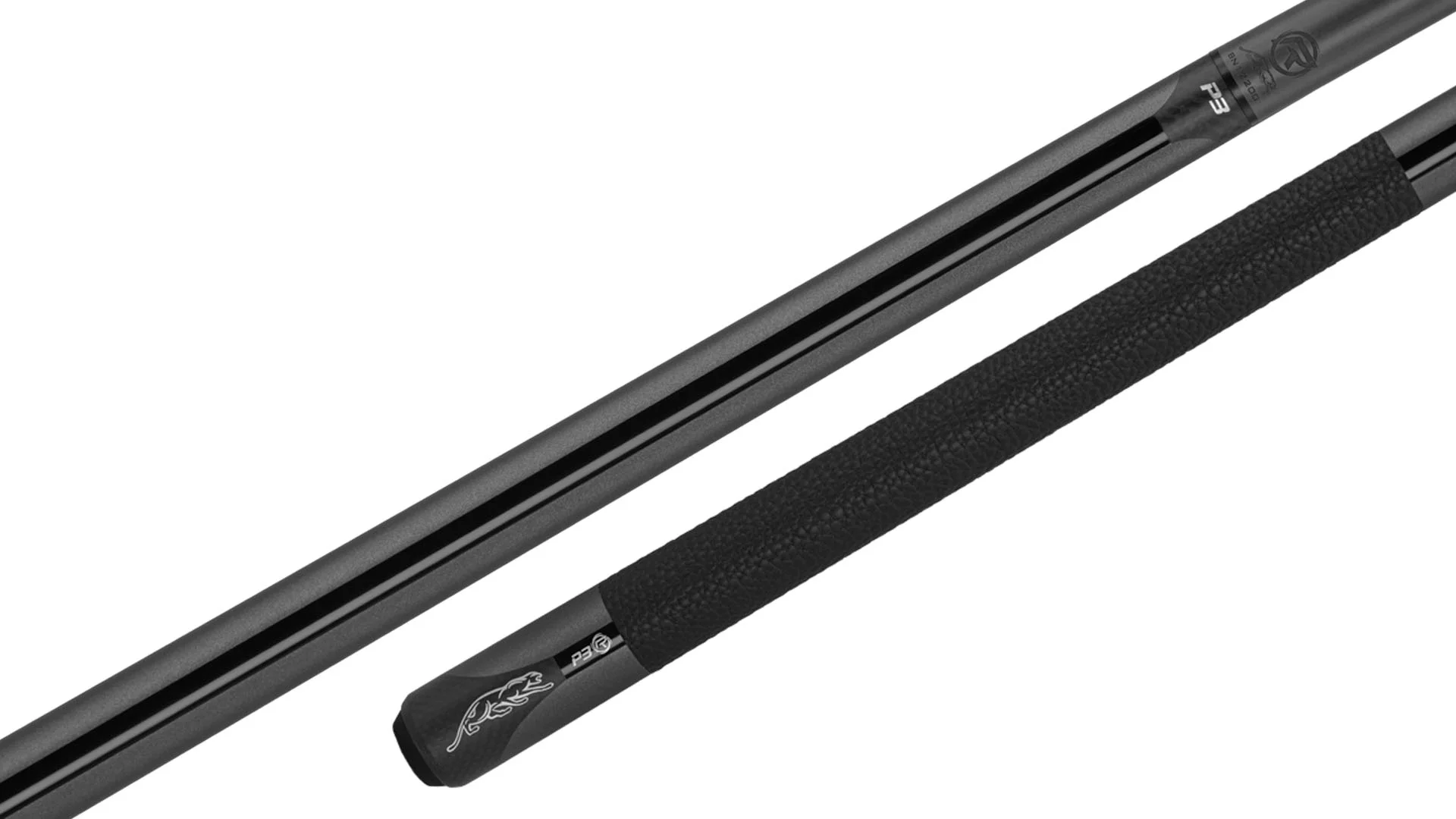
Butt Construction: 30-piece Hard Maple and Golden Oak Ash laminate with phenolic core
Wrap: Leather Luxe™ synthetic polyurethane
Finish: Metallic titanium grey with UV-resistant high-gloss lacquer
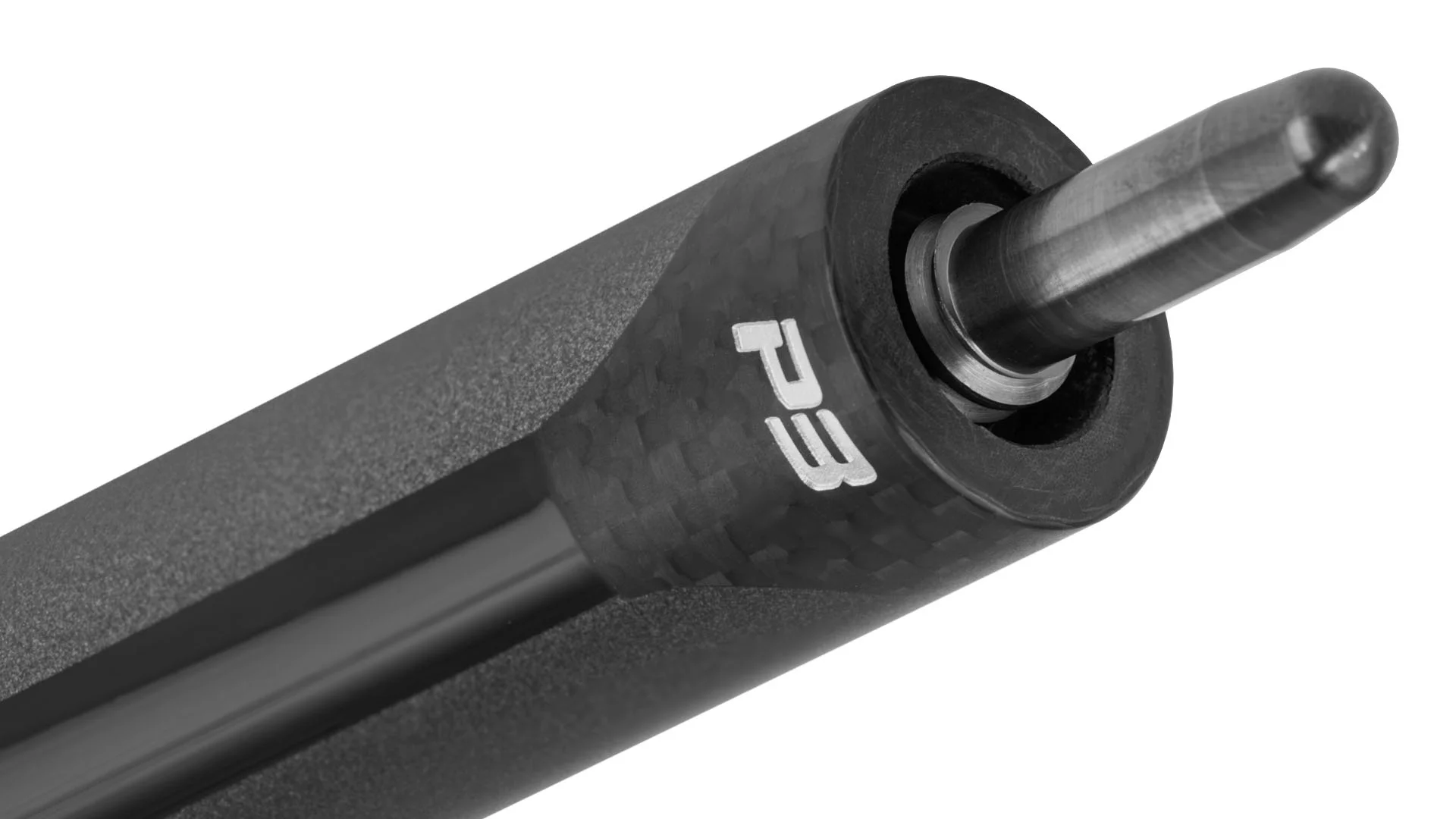
Joint: Uni-Loc® Quick Release Joint
Weight System: Uni-Loc® Weight Cartridge System
Weight Range: Approximately 18.5 to 20.5 ounces
Weight Increments: 0.1-ounce interchangeable cartridges
Butt Length: Standard
Compatible Shafts: REVO 11.8, REVO 12.4, REVO 12.9, 314³, Z³, Vantage
Joint Compatibility: All Uni-Loc® Quick Release shafts
Tip Compatibility: Shaft-dependent; Predator Victory Tip standard on wood shafts
Extension Compatibility: Predator QR Extension
Intended Use: Competitive league and tournament play
Manufacturer: Predator Group
$1,159.00

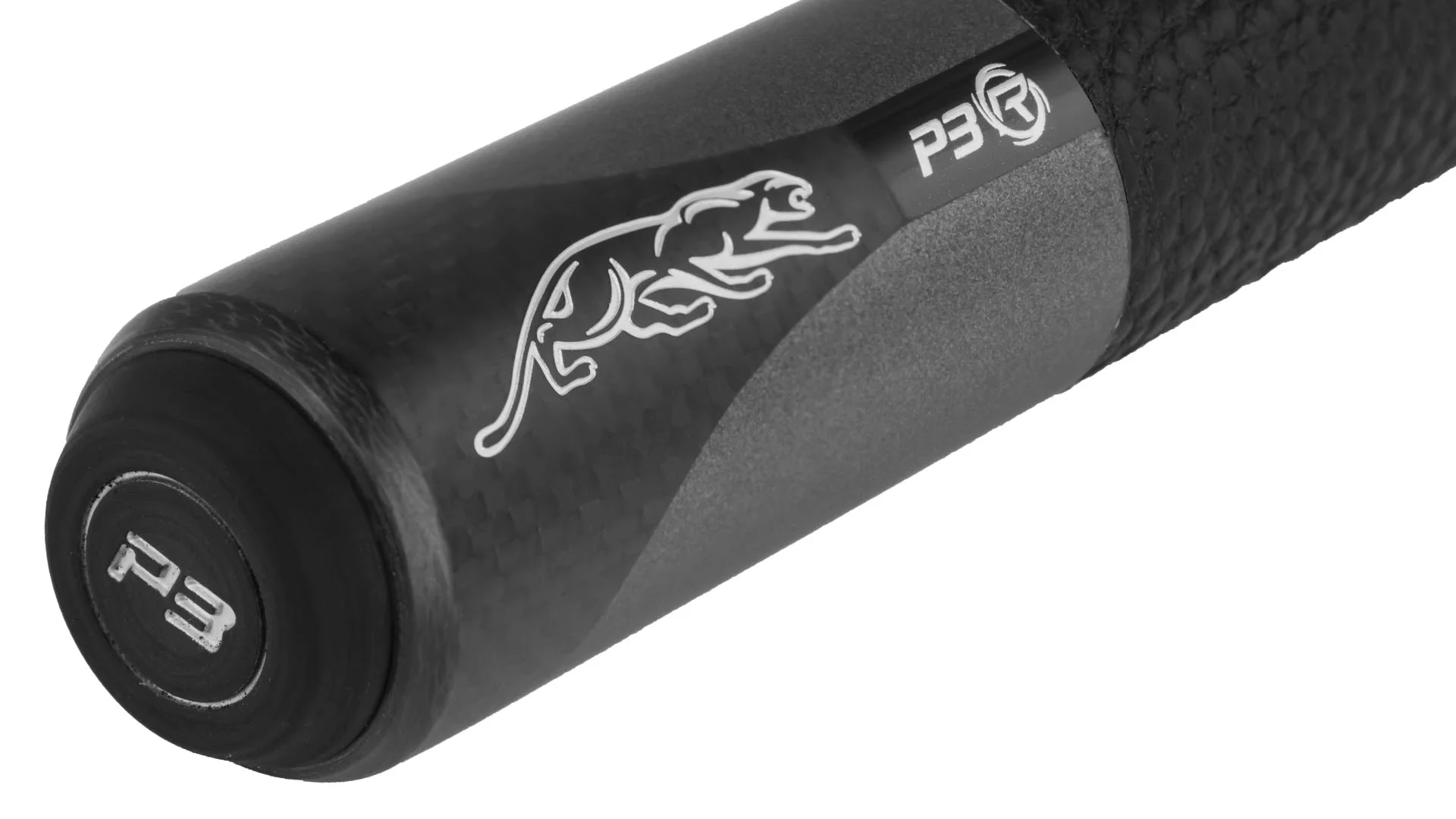
The Predator P3 Metallic Grey Leather Luxe is a premium performance pool cue featuring Predator’s patented 30-piece construction, Leather Luxe™ polyurethane wrap, Uni-Loc® Weight Cartridge System, and a metallic grey finish. It delivers excellent moisture management, customizable balance, and compatibility with REVO and Predator low-deflection shafts for competitive play.
The Predator P3 Metallic Grey Leather Luxe is a professional-grade pool cue engineered for players seeking advanced performance, premium materials, and a refined appearance. Its patented 30-piece Hard Maple and Golden Oak Ash construction surrounds a phenolic core to improve radial consistency, structural stability, and energy transfer. The Leather Luxe™ polyurethane wrap provides moisture management, grip consistency, and vibration dampening during long playing sessions. Finished in metallic titanium grey with a UV-resistant clear coat, the cue is compatible with REVO carbon fiber and Predator wood shafts through the Uni-Loc® Quick Release Joint and features the Uni-Loc® Weight Cartridge System for precise balance customization.
This review is based on engineering analysis, manufacturer specifications, comparative evaluation, and competitive play observations. Individual equipment preferences and playing styles may influence performance outcomes.
Butt Construction: 30-piece Hard Maple and Golden Oak Ash laminate with phenolic core
Wrap: Leather Luxe™ synthetic polyurethane
Finish: Metallic titanium grey with UV-resistant high-gloss lacquer
Joint: Uni-Loc® Quick Release Joint
Weight System: Uni-Loc® Weight Cartridge System
Weight Range: Approximately 18.5 to 20.5 ounces
Weight Increments: 0.1-ounce interchangeable cartridges
Butt Length: Standard
Compatible Shafts: REVO 11.8, REVO 12.4, REVO 12.9, 314³, Z³, Vantage
Joint Compatibility: All Uni-Loc® Quick Release shafts
Tip Compatibility: Shaft-dependent; Predator Victory Tip standard on wood shafts
Extension Compatibility: Predator QR Extension
Intended Use: Competitive league and tournament play
Manufacturer: Predator Group
The Predator P3 is one of the most technically sophisticated production cue butts currently available, and the Metallic Grey Leather Luxe variant represents a convergence of engineering precision and aesthetic refinement that few production cues achieve at any price point. Predator’s full P3 lineup is documented at predatorcues.com/cues/p3-cues.
Where most traditional pool cue butts rely on a single solid-wood blank, the P3 platform is built around a patented 30-piece laminated butt construction combining Hard Maple and Golden Oak Ash staves arranged in alternating grain orientation around a central phenolic core. This architecture is not cosmetic. It is a deliberate structural decision that reduces directional wood movement, improves radial consistency across the butt diameter, and creates more predictable energy transfer from stroke to tip contact than conventional solid-wood designs allow.
The Metallic Grey colorway applies a titanium-grey metallic flake finish beneath a UV-resistant high-gloss lacquer — a combination that provides durable scratch resistance while giving the cue a modern, low-profile elegance that distinguishes it from both traditional stained wood cues and flashier decorative alternatives.
The Leather Luxe™ wrap completes the package with a proprietary synthetic polyurethane grip layer engineered to manage hand moisture, maintain consistent traction, and reduce feedback vibration at the butt — making it particularly well-suited to competitive play across variable environmental conditions.
The 30-piece laminated architecture is the defining structural feature of every P3 cue, and it merits precise explanation.
Each butt blank is assembled from 30 individual staves of Hard Maple and Golden Oak Ash, arranged in alternating orientations around a phenolic core cylinder before being bonded under controlled pressure. The phenolic core provides a dimensionally stable, non-porous center axis that resists humidity-driven expansion and contraction — a common source of warp and performance inconsistency in traditional solid-wood butts.
The alternating grain orientation of the surrounding staves distributes mechanical stress radially rather than allowing it to concentrate along a single grain axis. Wood movement in response to humidity is a well-documented material property: the USDA Forest Products Laboratory at fpl.fs.usda.gov has established that hardwoods such as maple expand and contract primarily along the grain direction, making alternating-grain laminate construction a sound engineering strategy for reducing directional dimensional change in wood-based instruments. The practical result is a butt that maintains consistent diameter, balance point, and structural integrity across a wider range of playing environments than most solid-wood alternatives.
Expert Insight: “The 30-piece construction functions less like a piece of furniture and more like an engineered composite — one that happens to be made from wood. Players who have experienced butt creep or balance shift in traditional cues during tournament travel will find the P3 platform significantly more stable under those conditions.”
The central phenolic core serves two primary mechanical functions. First, it provides the dimensional foundation around which the 30 maple and ash staves are laminated — establishing a true, non-warping axis that keeps the assembled butt running straight over time. Second, phenolic’s high density and low compressibility contribute to the butt’s energy transfer characteristics, reducing the amount of stroke energy absorbed by the butt material itself and directing more of it toward the joint and shaft.
Phenolic resin is a thermoset polymer with a long history in precision sporting equipment and structural composites. ScienceDirect documents its core engineering properties — dimensional stability, low moisture absorption, and high mechanical hardness — at sciencedirect.com/topics/engineering/phenolic-resin. These are precisely the characteristics that make phenolic an effective core material for a performance cue butt. This distinction matters most to players sensitive to feedback and cue feel, particularly those transitioning from mass-market cues where butt construction is rarely engineered to this level of specificity.
The metallic titanium-grey finish is applied using fine metallic flake pigmentation suspended in a durable base coat, then sealed beneath a UV-resistant high-gloss lacquer. The UV-resistant formulation prevents the metallic pigment from yellowing or fading under prolonged exposure to artificial lighting — the standard playing environment in poolrooms and tournament venues.
The finish is not merely decorative. The hard lacquer layer provides meaningful scratch and abrasion resistance, protecting the underlying stave construction from the incidental contact that accumulates over years of regular competitive use.
Leather Luxe™ is Predator’s proprietary synthetic polyurethane wrap — engineered specifically to replicate the grip texture and tactile feedback of genuine leather while delivering measurably superior performance in the areas where natural leather most often fails: moisture management, dimensional consistency, and long-term durability.
Leather Luxe™ is not genuine leather. This distinction is important and frequently misunderstood. Genuine leather grips are porous, variable in thickness and texture, susceptible to stretching and cracking with temperature and humidity changes, and require ongoing conditioning to maintain performance. Leather Luxe™ eliminates each of these liabilities through its synthetic construction while preserving the grip feel that experienced players associate with traditional leather wraps.
Polyurethane’s performance characteristics in grip applications are well established in materials science. The American Chemical Society at acs.org describes polyurethane’s versatile molecular structure as uniquely adaptable — allowing manufacturers to engineer specific surface hardness, flexibility, and moisture resistance into a single material. These properties make polyurethane particularly well suited to performance grip applications where the variability inherent in natural materials is a functional liability rather than an aesthetic characteristic.
Expert Insight: “The Leather Luxe™ wrap changes the feel of the cue without changing its structural precision. The engineered core remains the foundation of performance; the wrap simply manages how that performance reaches the player’s hand.”
Direct Answer: The Leather Luxe™ wrap is engineered to wick moisture and maintain consistent traction throughout extended play. Many competitive players choose it because it provides a more stable grip than traditional leather or linen in warm or humid conditions.
Moisture management is the most operationally significant performance characteristic of any cue wrap in a competitive playing environment. For players who experience sweaty palms during high-pressure competition — a near-universal issue at the tournament level — grip consistency during a critical shot is a functional performance variable, not a comfort preference. A wrap that becomes slick or tacky under moisture introduces stroke variability that no amount of technical skill fully compensates for.
The relationship between grip surface friction and fine motor performance under stress is supported by established sports science. The Journal of Sports Sciences, published by Taylor and Francis and accessible at tandfonline.com/toc/rjsp20/current, has documented that grip inconsistency under moisture conditions measurably affects precision motor control — a finding with direct application to the demands of competitive billiards. Leather Luxe™ addresses this variable by maintaining consistent traction across extended playing sessions without requiring chalk powder, gloves, or other compensatory measures.
The higher friction coefficient of the Leather Luxe™ polyurethane surface relative to lacquered wood or Irish linen may allow some players to maintain secure grip with less applied hand pressure. For players who habitually over-grip the butt — a common technique fault that introduces unwanted torque at the moment of tip contact — this characteristic can function as a passive corrective, reducing grip pressure without requiring conscious adjustment.
Research in sports biomechanics consistently identifies excessive grip force as a source of performance variability in precision striking sports. The National Strength and Conditioning Association at nsca.com has published guidance indicating that unnecessary grip tension in fine motor tasks activates larger muscle groups that interfere with controlled, repeatable movement — a biomechanical principle that transfers directly to cue sport stroke mechanics even though the NSCA’s research addresses sport performance broadly rather than billiards specifically.
This effect is not universal. Players with well-established grip mechanics and consistent pressure habits may not notice a meaningful difference. However, players actively working to reduce grip tension may find the Leather Luxe™ surface supports that adjustment more readily than a wrapless or linen alternative.
The polyurethane construction of Leather Luxe™ provides a secondary performance benefit: vibration dampening at the grip point. Where wrapless cue butts and hard linen wraps transmit butt vibration directly to the bridge hand, the Leather Luxe™ layer absorbs a portion of the mechanical feedback generated at tip contact — particularly on off-center hits and break shots.
For players who experience hand fatigue or sensitivity to feedback vibration during long sessions, this dampening effect represents a measurable ergonomic advantage over wrapless alternatives.
Long-term wrap performance is rarely addressed in standard equipment reviews, yet it is one of the most practically relevant variables for players making a premium cue investment.
The Leather Luxe™ polyurethane construction demonstrates several durability characteristics that distinguish it from both genuine leather and Irish linen over extended use.
Surface wear: The polyurethane surface shows gradual smoothing at the primary contact zone — typically the lower third of the wrap — after 12 or more months of regular tournament play. This smoothing is subtle and does not materially affect grip traction in most playing conditions, but players with very dry hands may notice a slight reduction in friction at the contact zone over time.
Grip retention: Unlike genuine leather, which can stretch, crack, or develop inconsistent surface texture with age, Leather Luxe™ maintains dimensional consistency throughout its service life. The synthetic construction does not respond to humidity cycling with the swelling and contraction that eventually compromises natural leather wraps. Research conducted through the Leather Research Laboratory at the University of Cincinnati, accessible at uc.edu, has documented that natural leather’s dimensional response to repeated moisture cycling accelerates surface degradation — a failure mode that polyurethane construction eliminates by design.
Resistance to hand oils: Polyurethane’s non-porous surface resists the absorption of hand oils, chalk residue, and environmental particulates more effectively than porous natural materials. Regular cleaning with a damp microfiber cloth prevents oil accumulation from reaching the surface saturation level that degrades grip in leather wraps.
Color stability: The Leather Luxe™ wrap maintains color consistency under normal playing conditions. UV exposure from direct sunlight represents the primary color stability risk and is effectively mitigated by standard hard case storage.
Expert Insight: “A synthetic wrap’s longevity advantage over natural leather is most visible after the first year. Where leather begins to show stress — cracking at flex points, oil saturation, surface inconsistency — a well-maintained Leather Luxe™ wrap remains structurally consistent and dimensionally stable. The maintenance investment required is significantly lower.”
Direct Answer: The Leather Luxe™ version offers greater grip consistency, moisture management, and vibration dampening. The No Wrap version delivers more direct tactile feedback and unrestricted hand movement. Both versions use the same patented 30-piece construction and Uni-Loc® Weight Cartridge System.
The choice between a wrapped and wrapless cue butt involves genuine trade-offs that depend on playing style and physical preference, not simply personal taste.
Wrapless cue butts — including the Predator P3 Metallic Grey No Wrap variant — offer direct contact between the player’s hand and the lacquered wood surface, maximizing tactile feedback and allowing players with dry hands to achieve excellent grip through natural skin friction. For players who prefer this level of direct connection to the cue, a wrapless butt is demonstrably superior in feel.
However, wrapless butts are unforgiving of moisture. A light film of hand perspiration on a lacquered wood surface produces a significant and sudden reduction in grip traction — a liability that the Leather Luxe™ wrap directly addresses.
The practical guidance: Players with consistently dry hands who prioritize direct feedback should evaluate the wrapless variant. Players who compete in warm environments, experience hand moisture during pressure situations, or play extended sessions should consider the Leather Luxe™ wrap a functional performance advantage rather than merely an aesthetic preference.
The Uni-Loc® Quick Release Joint is one of the most consequential specifications on the P3 platform — and one of the most practically underrated by players evaluating the cue for the first time.
The Uni-Loc® system was developed to provide a mechanically consistent, repeatable joint connection that eliminates the micro-variability introduced by thread-based joints as they wear over time. Predator’s joint technology is documented at predatorcues.com/technology. Where conventional threaded joints can develop play, wobble, or uneven seating after extended use, the Uni-Loc® Quick Release mechanism locks and releases through a quarter-turn collar that maintains consistent joint geometry with each assembly.
Joint consistency directly affects cue ball deflection predictability. Any variation in joint seating — even at the sub-millimeter level — introduces variability in the angular relationship between butt and shaft at the moment of tip contact. The Uni-Loc® system reduces this variability systematically, which is why it has become the standard joint platform across Predator’s professional-grade cue lineup.
The Quick Release mechanism also enables rapid shaft swapping without tools — a practical advantage for players who carry multiple shaft options for different game situations or surface conditions.
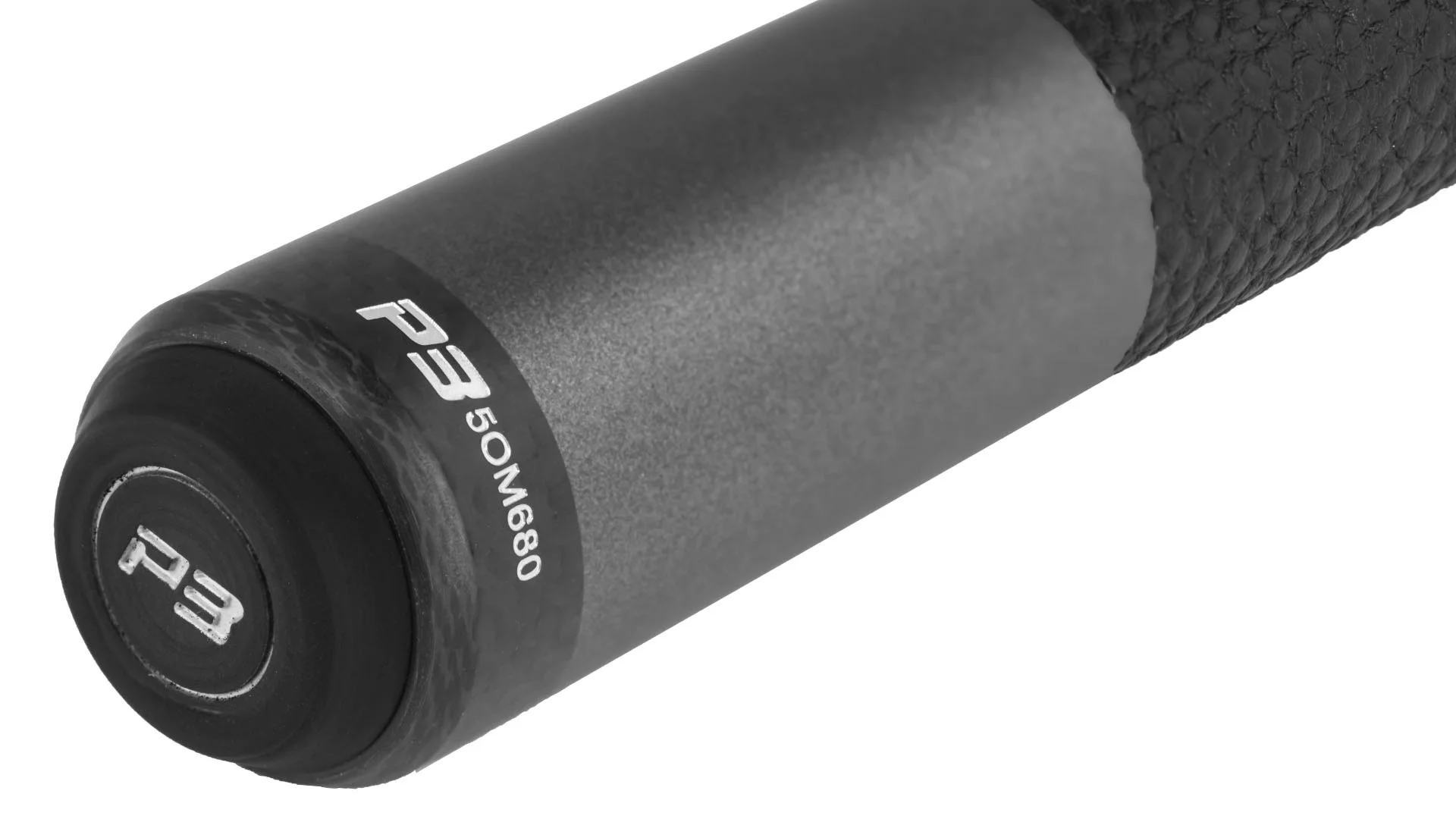
The Uni-Loc® Weight Cartridge System is a factory-integrated adjustability mechanism built into the P3 butt that allows players to modify total cue weight by exchanging interchangeable cartridges installed in the butt cap cavity.
Weight adjustment range spans approximately 18.5 to 20.5 ounces, with cartridges available in 0.1-ounce increments. The system allows players to dial in a specific weight preference with a degree of precision that fixed-weight cues cannot provide.
Cue weight preference is not arbitrary. It is a biomechanical variable that interacts with stroke mechanics, bridge length, tip speed, and cue ball response in ways specific to each player’s physical build and technique.
Heavier cues generate more cue ball momentum on break shots and reduce the effect of slight timing variations in the stroke. Lighter cues allow faster tip acceleration for players who generate power primarily through stroke speed rather than cue mass. Many players find different weight preferences optimal for different game formats — heavier for 9-ball break shots, lighter for precision 8-ball position play.
The Billiard Congress of America, the sport’s primary governing body in North America, does not mandate a specific cue weight for sanctioned play. Its official rules are published at bca-pool.com/play/rules, and players competing under BCA formats have full latitude to optimize weight for their individual mechanics and game format. The Weight Cartridge System makes these adjustments accessible without requiring a secondary cue purchase. For players who also compete under international formats, the World Pool-Billiard Association at wpa-pool.com similarly imposes no cue weight restriction.
Most players will find their optimal weight falls within a range of 1 to 1.5 ounces, discoverable through systematic testing rather than intuition. The recommended approach is to establish a baseline at the cue’s default weight, then make incremental adjustments of 0.2 to 0.3 ounces in a single direction — heavier or lighter — while evaluating stroke consistency and cue ball response over a minimum of one full playing session per adjustment.
Weight changes of less than 0.2 ounces are rarely perceptible in a single session. Changes of 0.5 ounces or more will be immediately noticeable to most experienced players and should be evaluated carefully before committing to a full adjustment.
The Uni-Loc® Quick Release Joint provides compatibility with every shaft in Predator’s current production lineup — a meaningful advantage given the breadth and performance differentiation across the range. The full shaft catalog is available at predatorcues.com/shafts.
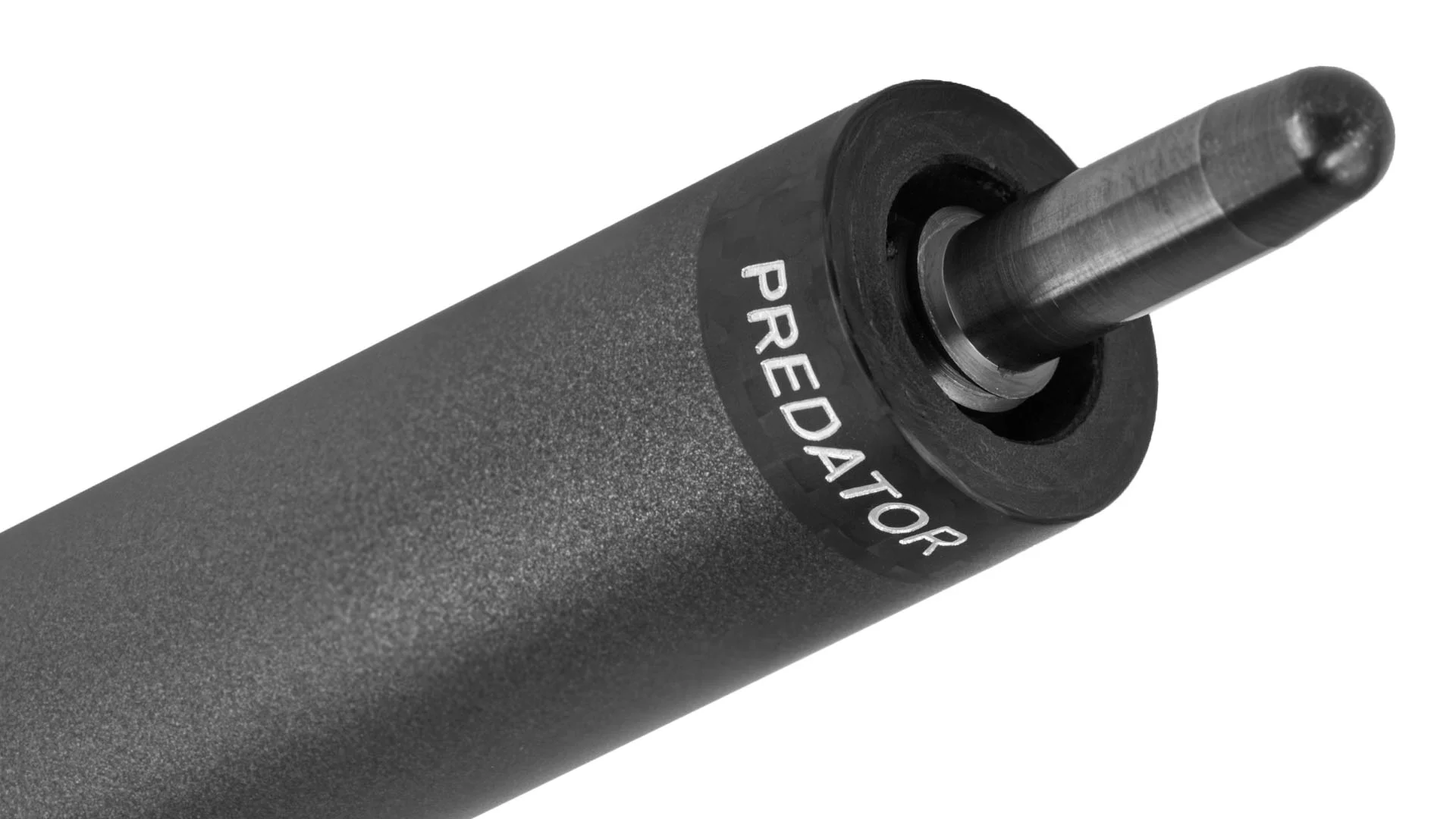
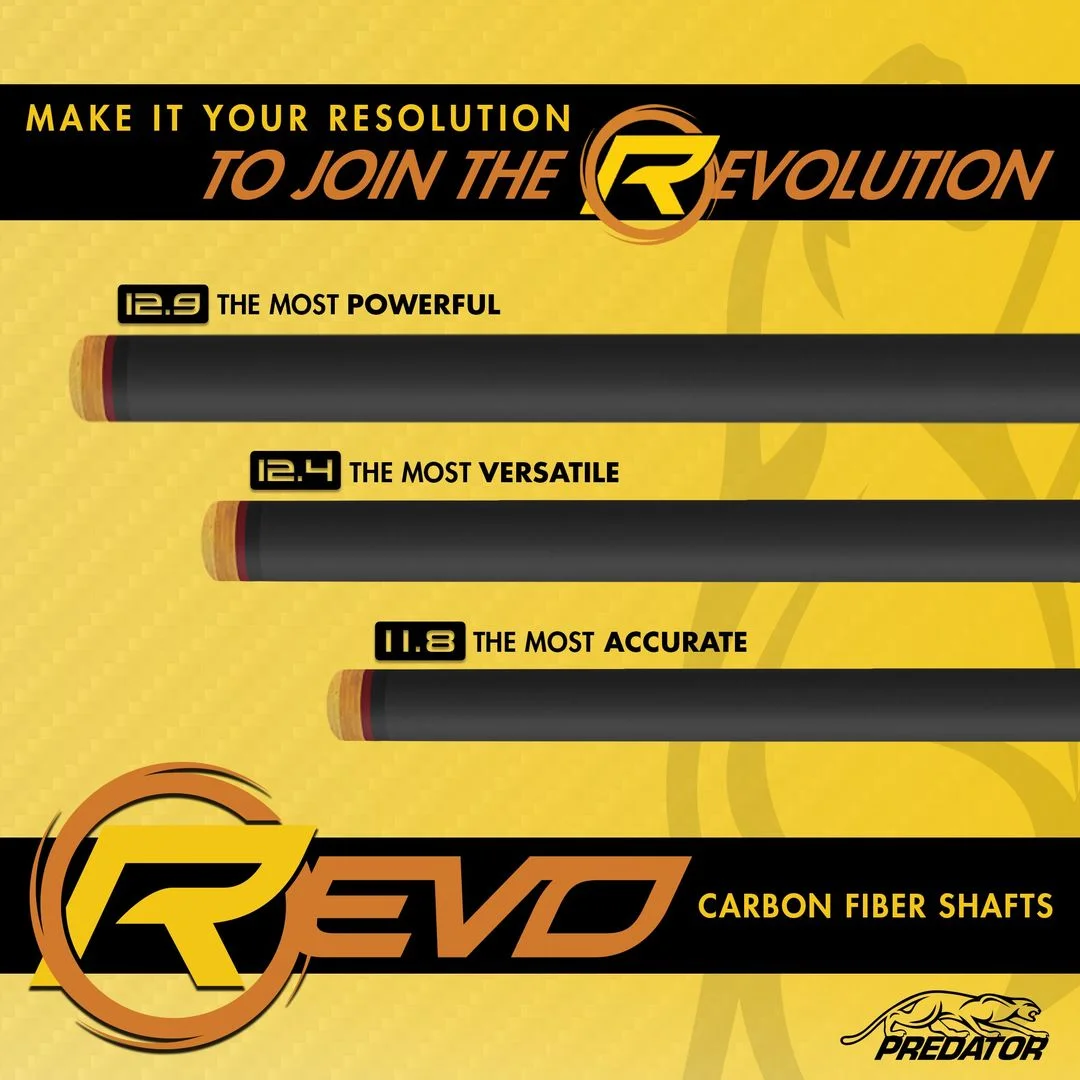
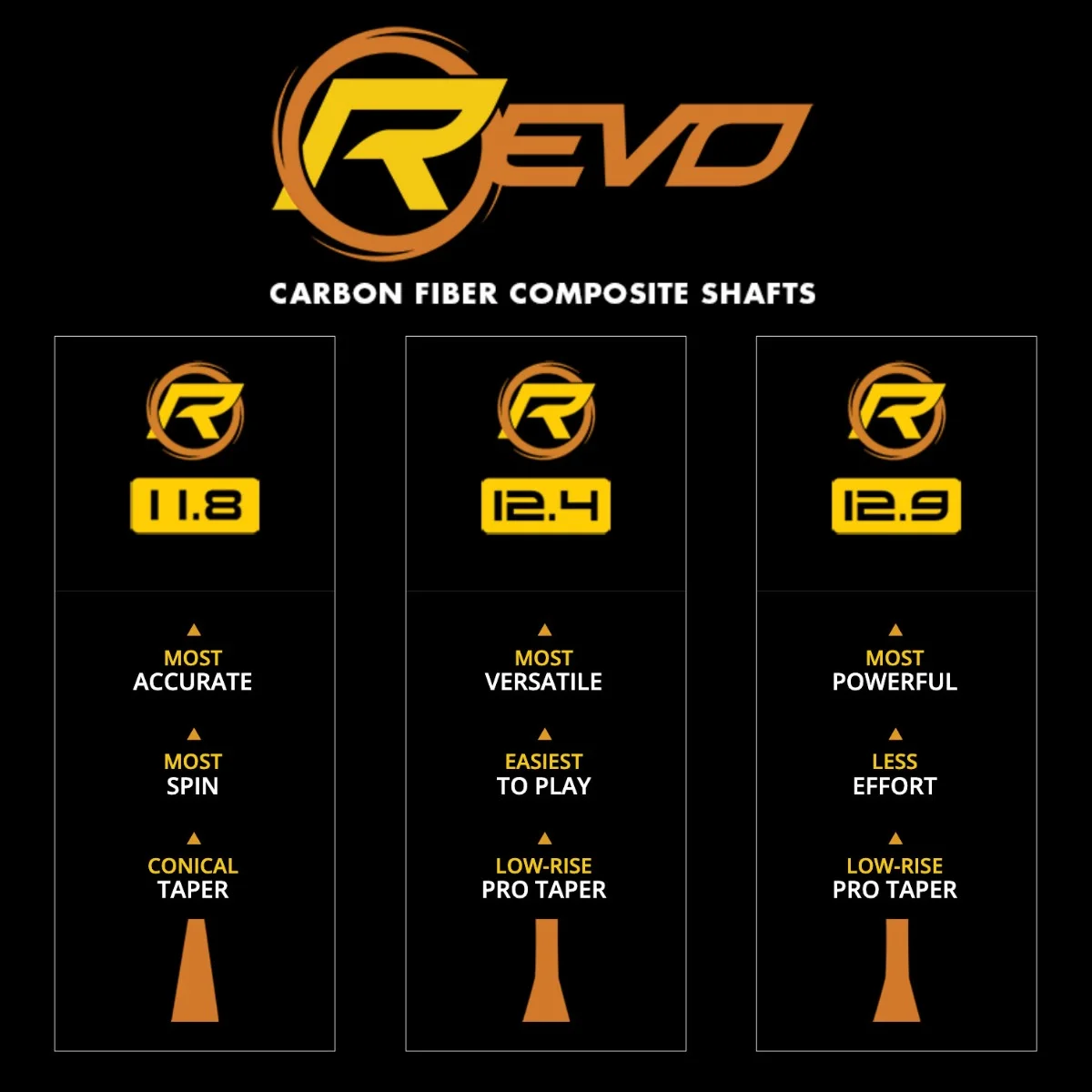
The REVO shaft family represents Predator’s most technically advanced low-deflection offering, with full specifications published at predatorcues.com/shafts/revo. Constructed from carbon fiber composite rather than wood, REVO shafts provide exceptionally low cue ball deflection, dimensional stability immune to humidity-driven warping, and a consistent, high-frequency feedback response that differs meaningfully from wood.
Carbon fiber composite’s mechanical properties in precision applications are well established. Research published through materials science resources at the National Institute of Standards and Technology, accessible at nist.gov, characterizes carbon fiber composites as offering exceptional stiffness-to-weight ratios and dimensional stability under variable temperature and humidity conditions — the same properties that make carbon fiber an effective shaft material for competitive billiards.
REVO 12.4: The most versatile REVO option and the recommended starting point for players new to carbon fiber shafts. The 12.4mm tip diameter suits a wide range of playing styles without requiring significant technique adjustment.
REVO 11.8: Preferred by players who favor a narrower tip for enhanced spin application and precise cue ball placement. Requires accurate center-ball striking to manage the increased deflection sensitivity at reduced diameter.
REVO 12.9: Suited to players who prefer a broader tip contact area, typically those transitioning from traditional wood shafts or who prioritize stroke forgiveness over maximum spin precision.
For players who prefer the tactile warmth and organic feedback of wood, the P3 platform accommodates Predator’s full wood shaft lineup.
314³: Predator’s flagship wood low-deflection shaft, constructed from a 3-piece radially consistent maple design that delivers low deflection with traditional wood feel.
Z³: A stiffer-playing wood shaft that provides increased feedback and a harder hit feel, preferred by players who want wood’s tactile characteristics with higher mechanical responsiveness.
Vantage: Predator’s value-positioned wood shaft, designed for players entering the low-deflection category who prefer wood feel at a more accessible price point.
For players evaluating the Predator P3 Metallic Grey REVO combo as a complete playing system, the REVO 12.4 represents the strongest all-around pairing — combining the P3 butt’s structural precision with the REVO’s dimensional stability and low deflection performance in a configuration that requires minimal technique adjustment from players transitioning from conventional shafts.
Direct Answer: The REVO 12.4 carbon fiber shaft provides the best overall balance of low deflection, stiffness, and versatility for the P3 Metallic Grey platform. Players preferring a traditional wood feel often choose the 314³, while the Z³ suits those seeking a stiffer response and enhanced cue ball control.
The Predator P3 Metallic Grey REVO combo is particularly well-suited to tournament players who require shaft consistency across environmental conditions — the carbon fiber construction of the REVO eliminates the humidity-driven performance variability that affects wood shafts in climate-variable venues.
The Predator P3 Metallic Grey Leather Luxe is priced within the premium production cue segment — above entry and mid-tier pool cues and below fully custom or hand-crafted instruments. Pricing varies by retailer and shaft configuration. Current pricing and authorized purchasing options are available through Predator’s dealer network at predatorcues.com/dealers.
Players evaluating the P3’s price point relative to less expensive alternatives should understand precisely what the premium funds: engineered construction rather than decorative addition.
The 30-piece laminated butt, phenolic core, Uni-Loc® joint system, and Weight Cartridge mechanism each require more complex manufacturing processes than conventional cue production. These are not cosmetic differentiators — they are functional specifications with measurable effects on performance consistency, long-term dimensional stability, and playing adaptability.
Compared to cues in the same price range that allocate budget toward decorative inlays, exotic wood veneers, or elaborate ring work, the P3 Metallic Grey Leather Luxe represents a fundamentally different value proposition: investment in structural integrity and mechanical precision over ornamentation.
Direct Answer: The Predator P3 Metallic Grey Leather Luxe is an excellent choice for competitive players who want moisture-managing grip, adjustable balance, and Predator’s patented 30-piece construction. It combines premium engineering with a durable Leather Luxe™ wrap for consistent performance in demanding playing conditions.
Buy the Predator P3 Metallic Grey Leather Luxe if:
Choose a different cue if:
Direct Answer: The Leather Luxe™ version offers greater grip consistency, moisture management, and vibration dampening. The No Wrap version delivers more direct tactile feedback and unrestricted hand movement. Both versions share identical 30-piece construction, metallic grey finish, Uni-Loc® Quick Release Joint, and Weight Cartridge System.
Grip Surface
Leather Luxe™ Wrap: Synthetic polyurethane
No Wrap: UV-lacquered Hard Maple/Ash
Moisture Management
Leather Luxe™ Wrap: Excellent
No Wrap: Poor
Tactile Feedback
Leather Luxe™ Wrap: Moderate, dampened
No Wrap: Maximum, direct
Vibration at Grip
Leather Luxe™ Wrap: Reduced
No Wrap: Full transmission
Long-Term Durability
Leather Luxe™ Wrap: High — polyurethane resists oil absorption and dimensional change
No Wrap: High — lacquered surface resists scratching but shows wear at contact zone
Grip Pressure Required
Leather Luxe™ Wrap: Lower — higher friction coefficient reduces required grip force
No Wrap: Higher under moisture conditions
Maintenance
Leather Luxe™ Wrap: Wipe clean with damp microfiber
No Wrap: Wipe clean with dry microfiber
Ideal For
Leather Luxe™ Wrap: All conditions, competitive play, warm environments
No Wrap: Dry hands, maximum feedback preference
The correct choice depends entirely on the player’s grip characteristics and tactile preferences. Neither variant is objectively superior — they are optimized for different physical profiles.
The Leather Luxe™ wrap requires significantly less maintenance than genuine leather, but the polyurethane surface responds poorly to the same cleaning agents that damage most synthetic materials. The following protocol protects the wrap’s grip performance and surface integrity over its service life.
Approved cleaning method:
Step 1: Allow the wrap to cool to room temperature after play before cleaning.
Step 2: Dampen a clean microfiber cloth with plain water — the cloth should be damp, not wet.
Step 3: Wipe the wrap surface in smooth, consistent strokes from collar to butt cap.
Step 4: Follow with a dry microfiber pass to remove residual moisture.
Step 5: Allow the cue to air dry completely before returning it to a case.
Cleaning frequency: After every playing session for players who experience hand moisture; after every two to three sessions for players with dry hands. Regular cleaning prevents hand oil accumulation from reaching the surface saturation threshold that degrades polyurethane grip.
What to avoid and why:
Alcohol-based solvents: Degrade polyurethane surface bonds and accelerate surface crazing.
Acetone or nail polish remover: Dissolves polyurethane coating on contact.
Petroleum-based cleaners: Cause swelling and surface discoloration.
Abrasive scrubbing pads or cloths: Create micro-scratches that accumulate chalk and oils.
Silicone-based conditioners: Create a slick film that reduces grip traction.
Leather conditioner: Formulated for porous natural leather, not synthetic polyurethane; leaves a residue that attracts particulates.
The American Cleaning Institute at cleaninginstitute.org recommends microfiber cloths as the preferred cleaning tool for synthetic surfaces because their fine fiber structure lifts and traps particulates without abrading the underlying material — a principle that applies directly to Leather Luxe™ wrap maintenance.
Clean the butt and shaft surfaces with a dry or lightly damp microfiber cloth. Pay particular attention to chalk accumulation at the Uni-Loc® joint collar, as compacted chalk residue can interfere with the Quick Release mechanism’s seating geometry over time. A dry toothbrush or brief burst of compressed air clears the collar effectively without introducing moisture to the joint pin.
Store the cue in a hard case or padded case in a climate-controlled environment. The USDA Forest Products Laboratory at fpl.fs.usda.gov recommends maintaining wood products within a 40 to 60 percent relative humidity range to minimize dimensional movement — a standard that applies to any wood-containing cue, including the P3’s laminated construction. While the phenolic core and alternating-grain stave assembly significantly reduce the P3’s sensitivity to environmental cycling, prolonged exposure to extreme humidity or temperature — in vehicles, garages, or unventilated storage — will stress any wood-composite instrument over time.
Inspect the Uni-Loc® joint pin and collar quarterly for chalk accumulation or debris in the locking mechanism. A dry toothbrush or compressed air is sufficient for clearing the collar. Do not apply lubricants or oils to the Uni-Loc® mechanism — the system is designed to operate dry, and lubrication attracts chalk particulates that degrade the locking mechanism’s precision over time.
The Predator P3 Metallic Grey Leather Luxe is a premium Predator pool cue featuring a patented 30-piece Hard Maple and Golden Oak Ash construction, Leather Luxe™ polyurethane wrap, metallic grey finish, Uni-Loc® Quick Release Joint, and an adjustable Weight Cartridge System.
No. Leather Luxe™ is a proprietary synthetic polyurethane wrap engineered to provide moisture management, grip consistency, durability, and a leather-like feel with less maintenance than genuine leather.
The multi-layer Leather Luxe™ wrap is engineered to wick moisture and maintain consistent traction during extended play, making it a reliable choice for competitive players who experience hand perspiration in warm or high-pressure playing environments.
The alternating Hard Maple and Golden Oak Ash construction increases radial consistency, improves structural stability, reduces vibration, and creates more predictable energy transfer and feedback than conventional solid-wood cue butts.
Yes. The Uni-Loc® Weight Cartridge System allows weight adjustments from approximately 18.5 to 20.5 ounces using interchangeable cartridges in 0.1-ounce increments.
The REVO 12.4 carbon fiber shaft is the recommended all-around pairing. The REVO 11.8, REVO 12.9, 314³, Z³, and Vantage shafts offer distinct playing characteristics suited to different technical preferences and playing styles.
Use a lightly damp microfiber cloth to remove chalk and hand oils after each session. Avoid alcohol-based solvents, acetone, petroleum-based cleaners, abrasive pads, silicone conditioners, and leather conditioner — each can permanently damage the polyurethane surface.
For competitive league players, tournament competitors, and serious enthusiasts seeking precision engineering, adjustable balance, moisture-managing grip, and modern styling, the Predator P3 Metallic Grey Leather Luxe is among the strongest high-end production cue options currently available.
The Predator P3 Metallic Grey Leather Luxe is not a generalist cue with premium aesthetics applied to a conventional platform. It is a purpose-engineered instrument in which every specification — the 30-piece laminated construction, the phenolic core, the Leather Luxe™ polyurethane wrap, the Uni-Loc® Quick Release Joint, and the Weight Cartridge System — serves a defined mechanical function with measurable consequences for playing performance.
For competitive players who have reached the level where equipment consistency genuinely affects outcomes, the P3 platform addresses the variables that conventional cues leave uncontrolled: butt stability across environments, grip consistency under moisture, joint precision across repeated assembly cycles, and weight customization for individual biomechanical optimization.
The Metallic Grey finish and Leather Luxe™ wrap define a specific case within the P3 lineup: a visually refined, tactilely competent cue for players who compete in variable conditions and require a grip interface that performs as reliably in the final rack of a long tournament set as it does in the first.
The Leather Luxe™ wrap’s long-term durability profile — its resistance to oil absorption, dimensional consistency under humidity cycling, and stable color retention — reinforces its value as a playing surface designed to maintain performance across the full service life of the cue, not just the initial months after purchase.
At its price point, the Predator P3 Metallic Grey Leather Luxe competes not on decoration but on engineering. For competitive players who require a production cue that delivers consistent, adaptable, environment-resistant performance across the full arc of serious play, it is one of the most defensible investments in the premium production cue market.
| Weight | 18.5 oz, 19 oz, 19.5 oz, 20 oz, 20.5 oz |
|---|


Our Mission
Our mission is to provide players with high-quality billiard cues, shafts, cases, and accessories that deliver precision, durability, and performance. We aim to be a trusted destination for pool players across the USA looking for reliable equipment to improve their game and enjoy billiards at every level. 🎱
Reviews
There are no reviews yet.