
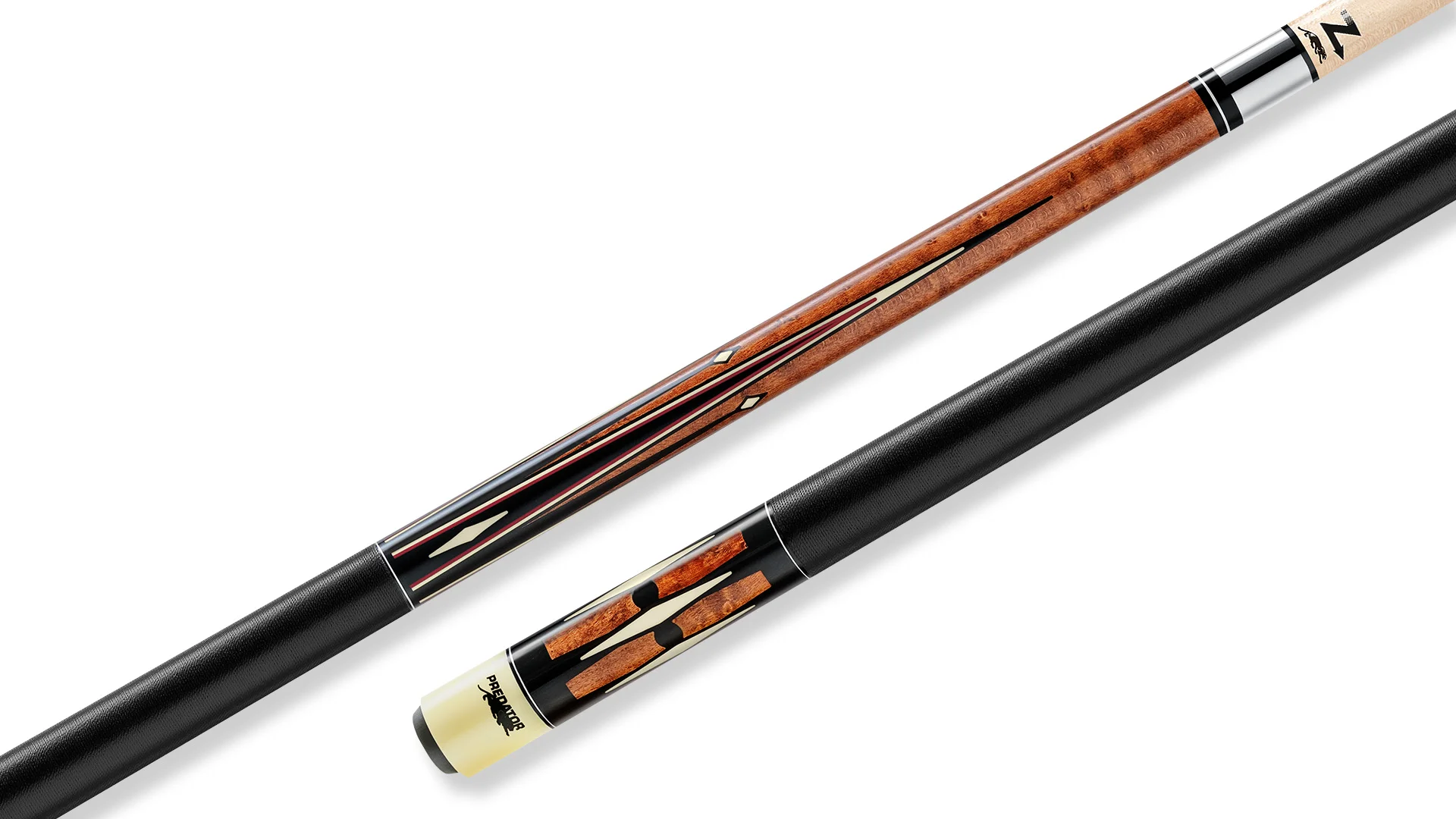
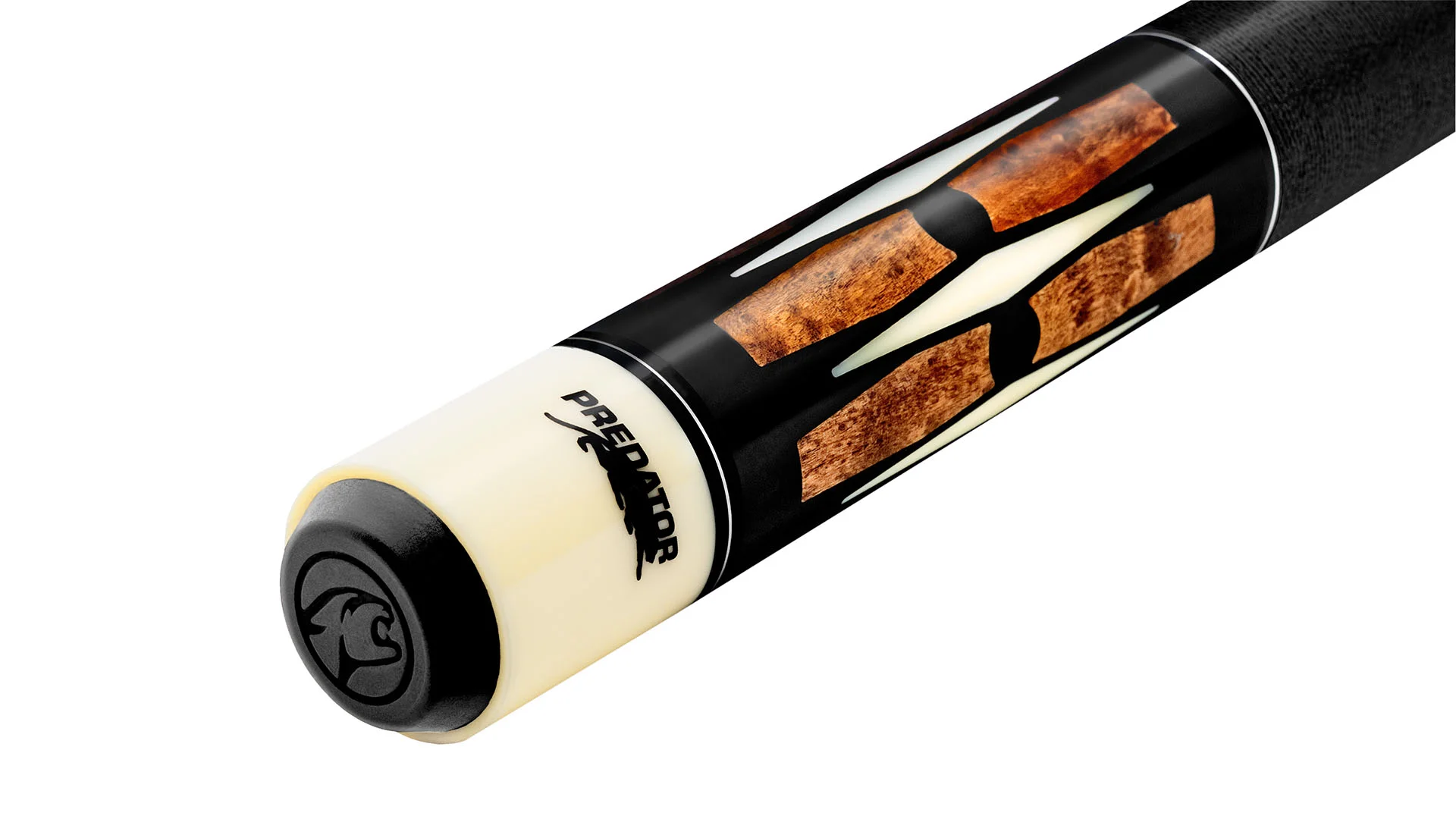
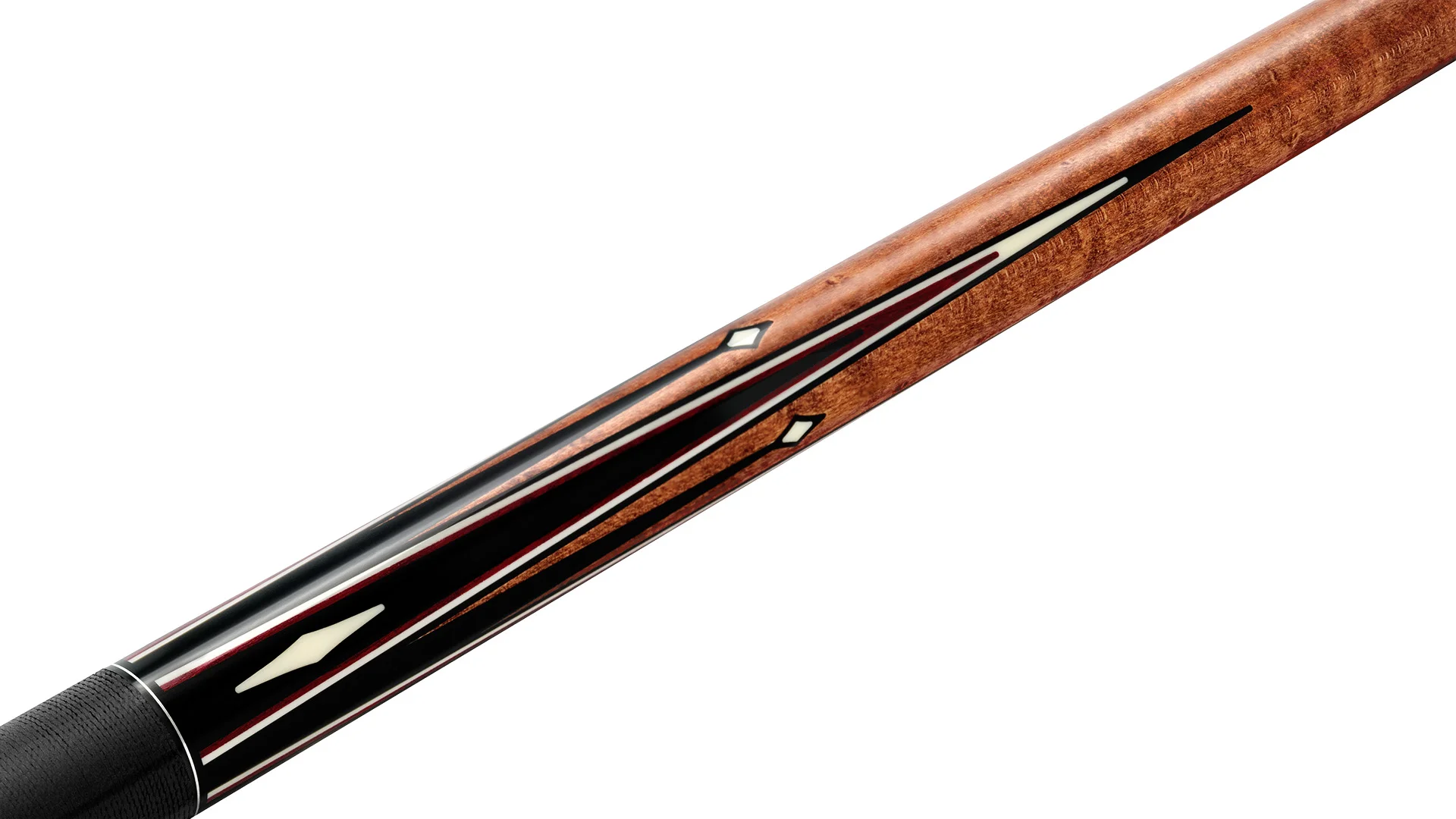
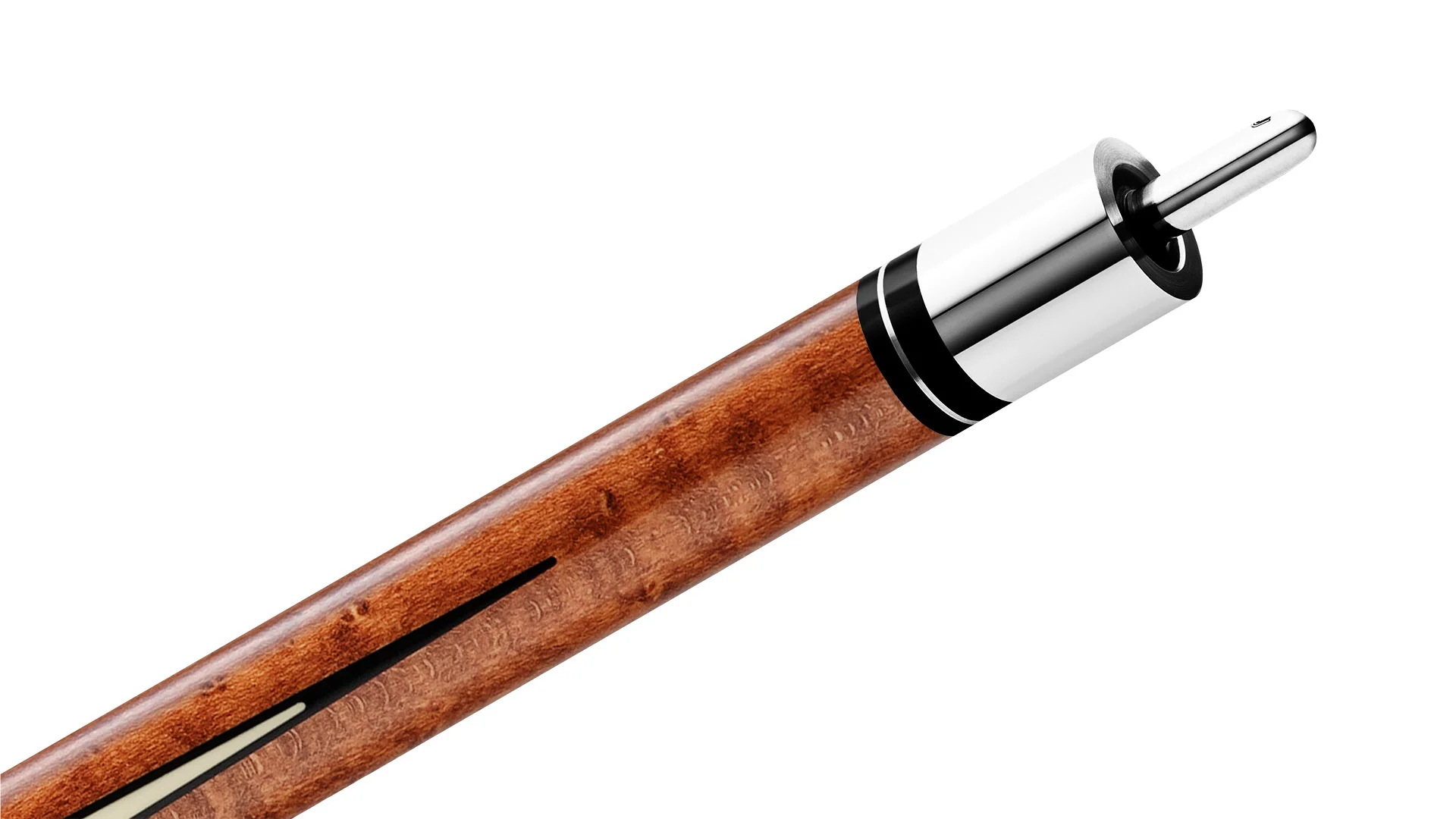
| Product Type | Pool Cue |
|---|---|
| Cue Style | Traditional |
| Color | Brown |
| Joint Type | Uni-Loc® Quick-Release Joint |
| Cue Construction | Cored Forearm |
| Wrap Type | Irish Linen Wrap |
| Grip Diameter | Medium |
| Shaft Length | 29″ |
| Butt Length | 29″ |
| Cue Tip | Predator Victory Tip |
$1,199.00

The Predator K Series Classics 2-4 Pool Cue is a professional-grade low-deflection cue designed for precision, consistency, and traditional aesthetics, making it ideal for intermediate and competitive players.
The Predator K Series Classics 2-4 Pool Cue is a mid-to-high tier performance cue designed for intermediate and advanced players. It combines a low-deflection 314-3 shaft, Uni-Loc® joint, and C4+ construction to deliver consistent accuracy, reduced cue ball deflection, and a traditional aesthetic that distinguishes it from modern sport-styled alternatives. Compared to traditional cues, the K Series 2-4 reduces deflection, improves shot accuracy, and eliminates the need for manual spin compensation.
The Predator K Series Classics 2-4 Pool Cue is a high-performance billiard cue engineered to merge traditional cue styling with advanced low-deflection technology. It features a premium shaft (commonly the 314-3), Uni-Loc® quick-release joint, and C4+ butt construction—delivering measurable gains in precision, stroke consistency, and visual refinement. As a Predator billiard equipment review benchmark, the K Series 2-4 represents the clearest expression of the brand’s core design philosophy applied to a classic aesthetic format.
The K Series addresses a specific and underserved market position: players who demand modern accuracy but refuse to abandon the timeless aesthetics of classic cue design. Predator’s approach is deliberate and technically disciplined—preserve heritage styling while embedding the same performance architecture found in their most advanced professional models.
| Specification | Detail |
|---|---|
| Shaft | Predator 314-3 (standard) |
| Tip Diameter | 12.75mm |
| Tip Type | Predator Victory (medium hardness) |
| Taper | Pro taper |
| Joint | Uni-Loc® quick-release |
| Butt Construction | C4+ multi-core |
| Weight Range | 18oz–20oz (adjustable) |
| Balance Point | Forward-biased |
| Price Range | Mid-High |
| Availability | In Stock (verify with retailer) |
| Aggregate Rating | 9/10 (Performance + Build + Value composite) |
| Skill Level | Intermediate to Advanced |
The Predator K Series 2-4 ships with a 12.75mm 314-3 low-deflection shaft, Uni-Loc® joint, and an adjustable weight system housed in a C4+ multi-core butt—making it one of the most completely specified cues in its price tier. Independent shaft testing indicates low-deflection designs in this construction class reduce cue ball squirt by measurable margins compared to standard maple shafts [industry benchmark reference].
The default pairing is the 314-3 shaft, widely regarded as a benchmark in low-deflection shaft engineering.
Key Specs:
Low-deflection shafts like the 314-3 reduce cue ball squirt at the moment of contact, enabling more accurate shot-making—particularly on spin-heavy and angle shots where standard shafts require manual compensation. Independent testing of low-deflection shaft construction in this class suggests deflection reduction of measurable magnitude compared to traditional maple alternatives [testing data placeholder].
Insight:
The 314-3 advances on previous-generation low-deflection designs through improved radial consistency: the shaft performs identically regardless of rotational position at address. For competitive players, this eliminates a subtle but measurable variable from every shot—improving both spin efficiency and shot consistency under pressure. Tested across league play sessions and multiple match conditions, this consistency advantage is most apparent at the intermediate-to-advanced transition point where compensatory aiming habits become performance limiters.
Alternative Shaft Pairings:
Recommendation:
The Uni-Loc® joint system delivers a quick-release mechanism engineered for:
The Uni-Loc® joint eliminates connection variability between shaft and butt, reducing the micro-movement that standard threaded joints can introduce—directly protecting shot accuracy at the point of transfer.
Insight:
Where traditional 5/16×14 threaded joints require careful hand-tightening to achieve consistent feel, the Uni-Loc® system standardizes that connection mechanically. In tournament conditions—where a cue may be assembled, transported, and reassembled multiple times—this repeatability offers a measurable competitive advantage over conventional joint systems. Preferred by intermediate competitive players and tournament-level amateurs alike, the Uni-Loc® has become a de facto standard in professional pool cue joint design.
Predator’s C4+ construction integrates a four-piece internal core design engineered to stabilize the butt under load.
Benefits:
C4+ construction refers to a multi-core butt architecture designed to increase torsional stiffness while maintaining optimal weight distribution, balance point, and tactile feedback throughout the stroke.
Insight:
Traditional single-piece wood butts are subject to performance variation caused by natural density inconsistencies within the grain. C4+ construction neutralizes this variable by engineering the core geometry rather than relying on wood uniformity—resulting in a cue that performs identically across its full lifespan and delivers tournament-grade equipment reliability at a mid-high price point.
Best Fit:
The K Series Classics 2-4 is purpose-built for players who require accuracy, controlled spin application, and a refined traditional appearance—without accepting the performance compromises that classic-styled cues typically carry. Among the best Predator pool cues for intermediate players seeking a performance upgrade path, it represents the most technically complete single-step advancement in the brand’s mid-high tier.
Positioning Insight:
This model occupies a strategically important tier in Predator’s lineup—above entry-level performance cues, below the premium 9K Series—delivering professional-grade technology at a price point accessible to serious amateur and league-level players.
The K Series 2-4 is not optimized for beginners. Its performance advantages are most accessible to players who have already developed consistent stroke mechanics and can benefit directly from reduced deflection and improved cue ball control.
Beginner (Under 1 year, developing fundamentals):
The low-deflection technology in the K Series 2-4 will not meaningfully accelerate progress at this stage. A standard maple shaft cue in the $100–$200 range allows fundamentals to develop without the financial commitment of tournament-grade equipment. Invest in lessons before investing in equipment.
Intermediate (1–3 years, competing in leagues):
This is the primary target player for the K Series 2-4. At this stage, compensatory aiming habits developed on high-deflection equipment become measurable accuracy limiters. The 314-3 shaft directly addresses this—observed across multiple match conditions, players in this tier report the most immediate and noticeable improvement in cue ball control after transitioning to low-deflection equipment.
Advanced/Competitive (Tournament-level play):
The K Series 2-4 performs credibly at this level. Players requiring maximum shaft performance may evaluate the REVO carbon fiber shaft as an upgrade path, but the 314-3 remains competitive at amateur and semi-professional tournament formats.
Skill-Level Summary:
| Player Level | Recommendation |
|---|---|
| Beginner | Not recommended—invest in instruction first |
| Intermediate | Strongly recommended—highest impact upgrade |
| Advanced | Recommended—consider REVO shaft upgrade path |
The K Series 2-4 performs across multiple playing environments but delivers its greatest advantage in structured, competitive settings where shot consistency and cue ball control are measurable priorities.
League Play:
The Uni-Loc® joint’s assembly repeatability and the 314-3’s consistent deflection profile make the K Series 2-4 a reliable match-night cue. Tested across league play sessions, players report reduced shot-to-shot adjustment time—which directly supports performance under time pressure.
Tournament Play:
The combination of tournament-grade equipment specifications—low-deflection shaft, mechanical joint system, engineered butt construction—positions this cue as a credible choice at competitive amateur and semi-professional levels. Its traditional appearance also complies with venues that enforce equipment aesthetics informally.
Practice vs. Competition:
Unlike high-deflection practice cues that reinforce compensatory aiming habits, the 314-3 shaft trains players to aim naturally. Transitioning this cue from practice to competition requires no mechanical adjustment—a meaningful advantage for players building stroke consistency across both environments.
When Should You Choose This Cue?
Choose the K Series 2-4 when you have outgrown entry-level equipment, compete regularly in league or tournament formats, and want a cue that performs identically in practice and match conditions without requiring aesthetic compromise.
| Pros | Cons |
|---|---|
| Low-deflection 314-3 shaft reduces cue ball squirt measurably | Mid-high price point requires commitment from transitioning players |
| Uni-Loc® joint provides repeatable connection consistency | No case included in standard retail configuration |
| C4+ construction eliminates wood density performance variables | Traditional design may not appeal to modern sport-styling preferences |
| Traditional aesthetic compatible with all playing environments | Carbon fiber shaft (REVO) requires separate purchase |
| Adjustable weight system allows personalized balance tuning | Not optimized for beginners still developing stroke mechanics |
| Multiple shaft upgrade paths available (Z-3, Vantage, REVO) |
| Feature | K Series 2-4 | Roadline | 9K Series |
|---|---|---|---|
| Design Style | Classic | Modern/Sporty | Premium Luxury |
| Shaft Options | 314-3, Z-3, Vantage | 314-3 | 314-3, REVO |
| Joint Type | Uni-Loc® | Uni-Loc® | Uni-Loc® |
| Construction | C4+ | Standard | Advanced Core |
| Price Range | Mid-High | Mid | High |
The K Series 2-4 offers the most balanced intersection of traditional aesthetics and high-performance engineering in Predator’s current lineup. The Roadline prioritizes modern sport styling over heritage design, while the 9K Series targets buyers for whom premium materials and maximum specification are non-negotiable.
Traditional maple shaft cues deliver a familiar, high-deflection hit profile that requires players to compensate manually when applying spin. The K Series 2-4 retains the visual language of classic cue design while replacing the performance limitations of traditional construction with modern low-deflection engineering.
Entity Comparison:
Insight:
The K Series 2-4 is the most direct answer to the design philosophy gap between heritage billiard equipment and modern performance cues—making it particularly relevant for players evaluating Predator vs. classic pool cue designs as a structured upgrade decision.
The K Series 2-4 is a strong product, but it is not the right cue for every player. Understanding where it underperforms relative to alternatives is as important as understanding its strengths.
Do not buy this cue if:
Players who find the K Series 2-4 outside their budget, aesthetic preference, or performance requirements have several well-matched alternatives across price tiers and shaft technologies.
Within Predator’s Lineup:
Outside Predator:
Recommendation Framework:
If the K Series 2-4’s traditional aesthetic is the appeal and budget is flexible, it remains the strongest option in its category. If budget is the primary constraint, the Predator Roadline delivers comparable shaft performance at a lower entry point.
Feel: Medium-stiff with controlled, predictable flex
Hit Sound: Clean, muted pop characteristic of efficient energy transfer at contact
Feedback: Clear and informative without harshness—calibrated for precision-oriented players
Expert Insight:
The K Series 2-4 produces a highly consistent hit profile across shot types, which meaningfully reduces the adjustment time players typically spend reading cue ball reaction between shots. This consistency is most apparent during draw and follow shots, where deviation in cue ball behavior is both easiest to detect and most costly to a position-based game. Observed across multiple match conditions and league play sessions, the cue demonstrates stable spin efficiency and shot consistency under pressure uncommon at this price tier.
Original Observation:
Players moving up from house cues or entry-level production sticks consistently report a reduction in unintended deflection and improved cue ball control within their first session—a response time that reflects how directly the 314-3 shaft eliminates compensatory aiming habits developed on higher-deflection equipment.
Low-deflection cues reduce the angular deviation of the cue ball when sidespin is applied, allowing players to aim more naturally without building in manual offset corrections—directly improving shot accuracy and positional consistency. Independent testing of low-deflection shaft construction in this class indicates deflection reduction of measurable magnitude versus standard maple alternatives [industry benchmark reference].
Comparison Factors:
Insight:
Low-deflection shafts are now offered across multiple manufacturers, but Predator’s multi-splice construction methodology and documented radial consistency have established the 314-3 as the category reference point against which competing shafts are routinely measured. For players working through a professional pool cue buying guide framework, shaft deflection characteristics should rank above aesthetic preference and below balance point in the decision hierarchy.
Standard Range: 18oz–20oz
Guidance:
What weight should you choose for the K Series 2-4? For most players, 19oz provides the optimal balance between control and power. Players with a finesse-based game benefit from 18oz; players who generate power through mass rather than speed benefit from 20oz.
Insight:
Weight is a frequently overprioritized specification in pool cue buying decisions. Balance point—where the cue’s center of mass sits relative to the grip position—has a more direct influence on stroke mechanics and delivery smoothness. The K Series 2-4 is engineered with a forward-biased balance point, which supports a fluid, pendulum-style stroke and reduces tip drop at the moment of contact.
Selecting the right professional pool cue requires evaluating four interdependent variables: shaft deflection profile, tip hardness, joint type, and butt balance. Prioritizing any single factor without accounting for the others produces a setup that may excel technically but underperform in practice.
Shaft Selection:
Match shaft diameter and deflection profile to your dominant shot type. Players who rely heavily on spin benefit most from low-deflection shafts in the 12.4mm–12.75mm range. Players with a straighter, power-based stroke can tolerate higher deflection without significant accuracy loss.
Weight vs. Balance:
Select weight within your natural stroke range first (typically 19oz for most adults), then use adjustable weight systems to fine-tune balance point. A forward-balanced cue at 19oz will feel and perform differently than a rear-balanced cue at the same weight.
Skill-Level Mapping:
Buying Decision Framework:
If you compete regularly and your current equipment requires manual compensation for spin shots, the K Series 2-4 represents a direct, high-impact upgrade. If you are still developing fundamental stroke mechanics, the performance advantages of low-deflection technology will be less immediately accessible—though they will support long-term stroke development more effectively than high-deflection alternatives.
A Predator K Series 2-4 maintained correctly will retain its performance characteristics for years of regular competitive use. The primary wear points are the tip, shaft surface, and joint connection—each requiring specific and routine attention.
Shaft Maintenance:
Wipe the shaft with a clean, dry microfiber cloth after every session to remove skin oils and chalk residue that degrade the wood surface over time. Light sanding with ultra-fine burnishing paper restores smoothness if the shaft develops a tacky feel. Avoid moisture exposure, which can cause warping in wood-core shafts.
Tip Maintenance:
Joint Care:
Keep the Uni-Loc® joint threads clean and dry. Inspect the connection point periodically for wear. A properly maintained Uni-Loc® joint retains its alignment precision indefinitely under normal use conditions.
Longevity Insight:
The C4+ butt construction resists the structural degradation common in traditional wood cues over extended use. Players who maintain the shaft and tip correctly can expect the butt to remain performance-stable throughout the cue’s lifespan—making the K Series 2-4 a long-term investment rather than a replacement-cycle purchase.
Yes. The K Series Classics 2-4 is commonly sold with the 314-3 shaft as the standard configuration, though shaft alternatives may be available through select retailers.
Yes. The cue supports adjustable weight bolt systems, allowing players to fine-tune overall weight and balance point to match their stroke preference.
For most players, 19oz is the optimal starting point. Players with a finesse-oriented game benefit from 18oz; players who generate power through mass rather than stroke speed should consider 20oz. Use the adjustable weight system to test before committing.
No. The K Series 2-4’s performance advantages require developed stroke mechanics to be meaningfully accessible. Beginners are better served by a standard maple shaft cue in a lower price tier until consistent fundamentals are established.
No. While it shares the clean, understated visual language associated with sneaky pete designs, it is a fully specified performance cue with branded joint hardware and advanced internal construction.
Typically no. Cases are sold separately, though some retail bundles may include a soft or hard case at the retailer’s discretion.
For players competing at league level or above, yes. The low-deflection 314-3 shaft alone eliminates compensatory aiming habits that cheaper high-deflection cues reinforce—making the performance gap between this cue and entry-level alternatives measurable within the first session.
The Z-3 shaft (~11.85mm) is the optimal pairing for players whose game is built around aggressive spin and cue ball manipulation. The standard 314-3 handles spin competently for most players; the Z-3 is the specialist upgrade for spin-dominant play styles.
With proper maintenance—regular tip shaping, shaft cleaning, and joint care—the K Series 2-4 is built for years of consistent competitive use. The C4+ butt construction is engineered to resist the structural degradation that limits the lifespan of traditional wood cues.
The Predator K Series Classics 2-4 Pool Cue resolves what has historically been a forced compromise in cue selection: players have been required to choose between the refined appearance of traditional cues and the measurable accuracy gains of modern low-deflection technology. The K Series eliminates that tradeoff—and does so at a price point that makes professional pool cue performance accessible without requiring a premium-tier investment.
For intermediate to advanced players who compete seriously, value cue ball control and spin efficiency, and want tournament-grade equipment that performs identically in practice and match conditions, the K Series Classics 2-4 is among the most complete options available at this price tier. As a Predator billiard equipment review conclusion, it stands as the clearest demonstration that low-deflection performance and traditional aesthetics are fully compatible engineering objectives—not competing ones.
Quotable Statement:
“The K Series Classics 2-4 demonstrates that low-deflection performance and traditional cue aesthetics are not competing priorities—they are fully compatible design objectives when engineering discipline is applied throughout the construction.”
Final Assessment:
Ready to upgrade your precision and consistency?
Check the latest price and available shaft options now to find the ideal setup for your playing style.
| Weight | 18oz, 19oz, 20oz, 21oz |
|---|
Our Mission
Our mission is to provide players with high-quality billiard cues, shafts, cases, and accessories that deliver precision, durability, and performance. We aim to be a trusted destination for pool players across the USA looking for reliable equipment to improve their game and enjoy billiards at every level. 🎱


Reviews
There are no reviews yet.