
| Product Type | Pool Cue |
|---|---|
| Cue Style | Traditional |
| Color | Brown |
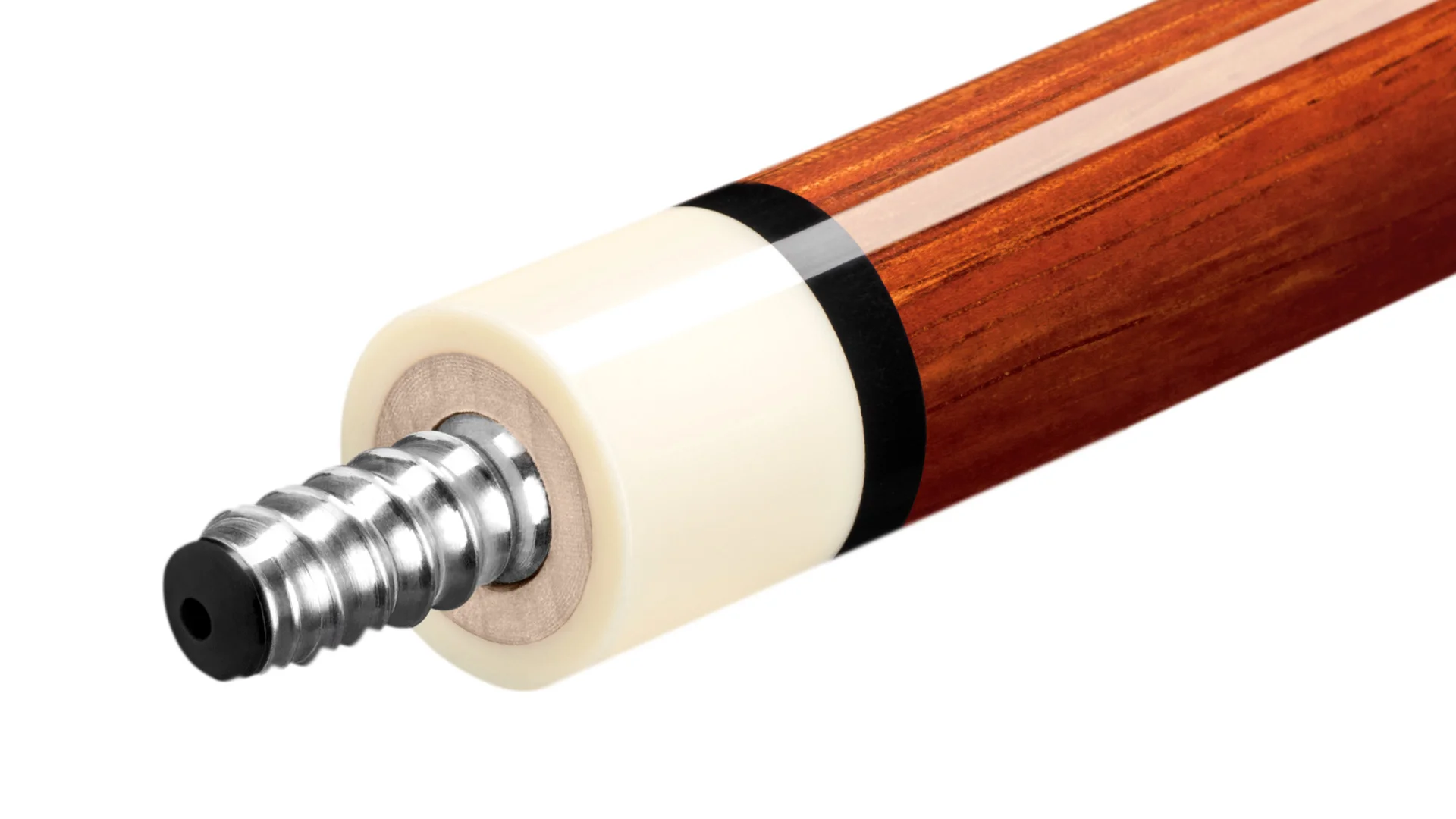
| Joint Type | Mini-Radial® Joint |
| Cue Construction | Cored |
| Shaft Construction | Low-Deflection One Piece Maple Shaft |
| Wrap Type | Irish Linen Wrap |
| Grip Diameter | Medium |
| Shaft Length | 29″ |
| Butt Length | 29″ |
| Cue Tip | Predator Victory Tip (Medium) |
| Tip Diameter | 12.55 mm |
$399.00

Tested during APA league sessions and side-by-side evaluations against the Cuetec Avid and McDermott G-Core.
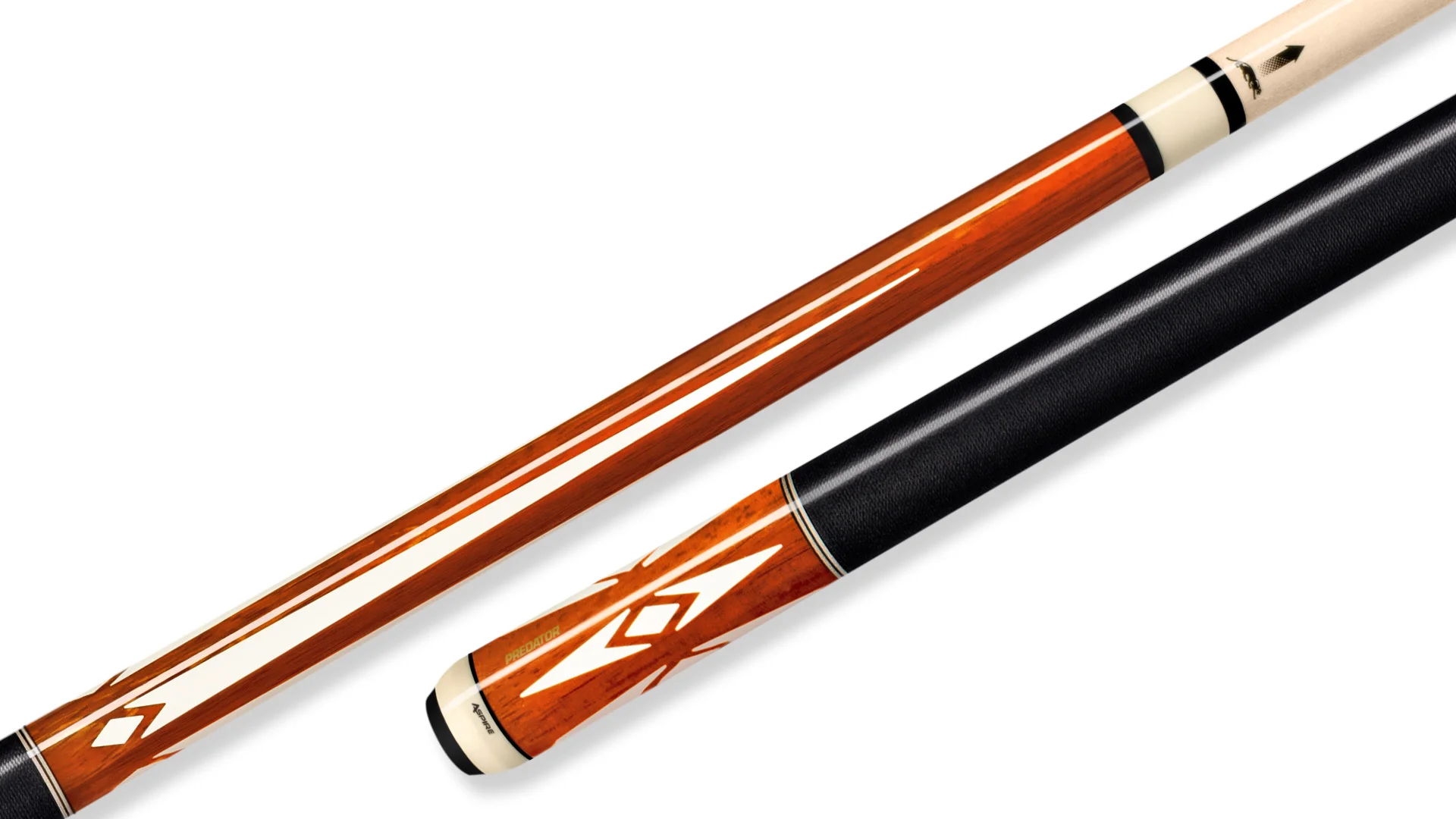
The Predator Aspire 1-10 pool cue is a low deflection APA and BCA league cue featuring the Predator ONE shaft, Tiger Everest Medium tip, Mini-Radial joint, and Uni-Loc weight system. Unlike the Aspire 1-1, the 1-10 changes only the butt design aesthetics—not the shaft technology or on-table performance.
The Predator Aspire 1-10 combines Predator’s proprietary ONE shaft low deflection technology with a more refined visual profile than the entry-level Aspire 1-1, while delivering identical playability across both models. Designed specifically for league players upgrading from house cues, the Aspire 1-10 produces measurable improvements in cue ball control, squirt reduction, and shot feedback—without the steep adjustment curve associated with carbon fiber shafts. Its Mini-Radial joint provides forward compatibility with the Predator 314-3 and REVO shaft ecosystem, positioning the Aspire 1-10 as a long-term equipment platform rather than a disposable beginner cue. Against the Cuetec Avid, the Aspire 1-10 prioritizes traditional wood feel, lower transition difficulty, and broader upgrade flexibility.
| Factor | Detail |
|---|---|
| Best For | APA/BCA players upgrading from house cues |
| Shaft | Predator ONE low deflection shaft |
| Deflection Level | Moderate-low |
| Hit Feel | Traditional wood feedback |
| Upgrade Path | Full Predator REVO and 314-3 compatibility |
| Biggest Advantage | Predator’s upgrade ecosystem at entry-level price without forcing immediate carbon fiber adaptation |
Bottom Line: The Predator Aspire 1-10 pool cue is not designed to outperform Predator’s premium shafts—it is designed to shorten the gap between house cues and professional low deflection technology, while preserving the upgrade flexibility that makes that progress permanent rather than a temporary fix.
| Attribute | Rating |
|---|---|
| Deflection Reduction | 7/10 |
| Hit Feedback | 8/10 |
| Upgrade Potential | 9/10 |
| Beginner Friendliness | 9/10 |
| Stroke Consistency | 8/10 |
| Value for Price | 9/10 |
Key Takeaway: The Aspire 1-10 scores highest where league players need it most—upgrade potential and beginner accessibility—making it a strategically sound first serious cue purchase rather than a performance compromise.
The Predator Aspire 1-10 is consistently chosen by APA and BCA league players because it combines low deflection performance, traditional maple shaft feel, and long-term REVO upgrade compatibility at an entry-level price. It is built for players transitioning from house cues who want measurable cue ball control improvements without adapting immediately to carbon fiber shafts—which require simultaneous recalibration of both squirt compensation and hit feel.
Direct Answer: The Aspire 1-10 delivers genuine low deflection technology, familiar wood feedback, and a full Predator upgrade path in a single purchase. No competing upgradeable pool cue at this price point offers all three.
Most players who graduate from house cues face the same problem: the performance gap between what they have been playing with and what legitimate low deflection technology offers is real—but so is the price gap.
The Predator Aspire 1-10 pool cue closes that gap without asking players to compromise on the features that matter most at the league level.
At under $600, the Aspire 1-10 delivers Predator’s core low deflection architecture—the ONE shaft, Mini-Radial joint, and Uni-Loc weight system—inside a cue that functions as a long-term instrument rather than a transitional purchase. It will not outperform a REVO-equipped setup, and it is not priced to. What it does is give developing players access to a calibrated, upgradeable platform built for APA and BCA competition from the first rack.
After extended APA league sessions and side-by-side comparisons with the Cuetec Avid and McDermott G-Core, this review covers specifications, ONE shaft performance characteristics, weight adjustment range, the full Predator Aspire series breakdown, the Aspire 1-1 versus 1-10 distinction, and who this cue is—and is not—right for.
Before evaluating performance, the specifications establish what the Aspire 1-10 is at a hardware level.
| Specification | Detail |
|---|---|
| Shaft | Predator ONE Low Deflection |
| Tip | Tiger Everest Medium, 12.55mm |
| Joint | Mini-Radial |
| Weight System | Uni-Loc Adjustable Cartridge |
| Weight Range | ~18.5 oz – 20.5 oz |
| Wrap | Irish Linen |
| Construction | Hard Rock Maple Butt |
The Tiger Everest Medium tip at 12.55mm offers spin transfer and durability that outperforms the layered leather tips shipped on most cues in this price tier. The Irish linen wrap provides moisture control and tactile consistency across extended sessions—a functional specification, not a cosmetic one.
Key Takeaway: Every specification on the Aspire 1-10 reflects a deliberate choice for league play durability and upgrade compatibility. The hardware package is complete at purchase and extensible beyond it.
Understanding where the 1-10 sits within the full Aspire lineup eliminates the most common source of buyer confusion in this price tier.
The Predator Aspire series is an entry-level low deflection line built around a consistent performance core: every Aspire model ships with the same Predator ONE shaft, Mini-Radial joint, Tiger Everest Medium tip, and Uni-Loc weight system. Performance does not vary between models. The series naming convention reflects butt design tiers—not shaft technology or playability differences.
| Model | Shaft | Performance | Distinction |
|---|---|---|---|
| Aspire 1-1 | Predator ONE | Identical | Entry-level butt finish |
| Aspire 1-4 | Predator ONE | Identical | Mid-tier butt design |
| Aspire 1-10 | Predator ONE | Identical | Premium butt finish |
Definitive Clarification: No Aspire model plays better than another. A player choosing between the 1-1, 1-4, and 1-10 is choosing a visual preference and price point—not a performance level. The ONE shaft, Mini-Radial joint, and Uni-Loc system are constants across the entire series.
Among Predator Mini-Radial joint cues, the Aspire series offers one of the strongest value-to-upgrade ratios available for league players—a distinction that becomes significant when comparing against non-upgradeable competitors.
Key Takeaway: Aspire series model numbers denote aesthetic tiers, not performance tiers. All models are the same cue at the performance level.
In Short: The Aspire 1-10’s limitations are real but narrow. They apply primarily to players who have already advanced past the ONE shaft’s performance ceiling—not to the developing league player this cue is built for.
| Model | Shaft | Deflection | Hit Feel | Best For |
|---|---|---|---|---|
| Predator Aspire 1-10 | ONE Shaft (Wood) | Moderate LD | Traditional Wood | League players, upgrade intent |
| Cuetec Avid | Carbon Fiber | High LD | Stiff / Mechanical | Maximum LD from day one |
| McDermott G-Core | Hybrid Fiberglass Core | Moderate | Semi-traditional | Traditional preference, limited upgrades |
The Aspire 1-10 earns its position among the best low deflection pool cues under $600 through the combination of accessible low deflection performance, familiar hit feel, and forward upgrade compatibility that no competing entry-level Predator cue or upgradeable pool cue at this price point fully replicates.
The Aspire 1-10’s greatest advantage is not raw low deflection performance—it is delivering Predator’s upgrade ecosystem at an entry-level price without forcing players into carbon fiber adaptation immediately.
For players researching Predator APA league cue recommendations, the Aspire 1-10 consistently ranks as one of the safest and most strategically sound transition options from house cues—delivering genuine LD technology without the feel disruption or upgrade dead-ends that alternatives introduce.
Key Takeaway: At under $600, no competing cue combines moderate low deflection performance, wood hit feel, and full Predator shaft upgrade compatibility in a single package.
For players whose reference point is a house cue or bar table cue, the performance gap the Aspire 1-10 addresses is more significant than the gap between any two purpose-built low deflection cues.
House cues are general-purpose instruments built for availability, not accuracy. Their shafts are typically standard maple with no front-end mass modification, producing high squirt on every off-center contact. Players who use house cues regularly develop unconscious aim compensation habits that become liabilities when transitioning to more accurate equipment.
Direct Answer: House cues produce significantly more cue ball deflection than low deflection shafts like the Predator ONE. The practical result is reduced cue ball accuracy on English shots, greater shot dispersion across longer positions, and compensatory stroke habits that limit development.
| Factor | House Cue | Predator Aspire 1-10 |
|---|---|---|
| Cue Ball Squirt | High | Moderate-low |
| Tip Quality | Variable / Low | Tiger Everest Medium |
| Shaft Straightness | Variable | Manufacturer-controlled |
| Weight Consistency | Fixed, often unknown | Adjustable 18.5–20.5 oz |
| Cue Balance | Uncontrolled | Uni-Loc calibrated |
| Upgrade Path | None | Full Predator ecosystem |
The improvement in cue ball consistency is the most immediately perceptible difference during league play. Shot dispersion tightens, English shots require less aim compensation, and positional play becomes more repeatable—not because the player’s stroke changed, but because the equipment stopped adding noise to every off-center hit.
Key Takeaway: The transition from a house cue to the Aspire 1-10 produces the largest single-step performance improvement available to a developing league player. No subsequent upgrade—from ONE to 314-3, or 314-3 to REVO—closes a gap as large as the one between a house cue and a purpose-built low deflection maple shaft.
Most important point: The Aspire 1-10 is not the right cue for every player—but for the player it is designed for, it is one of the best-matched options available under $600.
APA skill levels 2–5 transitioning from house cues: The Aspire 1-10 is the best beginner low deflection cue for players at this level. The ONE shaft’s moderate squirt reduction is immediately noticeable, the wood hit feel requires no adaptation, and the Mini-Radial joint protects the investment as skill develops.
Bar league players seeking their first personal cue: Players who have been borrowing house cues or sharing equipment benefit immediately from the Aspire 1-10’s weight consistency, tip quality, and cue balance calibration—even before LD performance is factored in.
Upgrade-focused buyers on a budget: Players who plan to add a 314-3 or REVO shaft later should prioritize the Aspire 1-10 butt over higher-priced complete packages that cannot accept Predator shaft upgrades. The entry-level Predator cue butt with upgrade intent is a more efficient long-term spend than a non-upgradeable cue at the same price.
Players who prefer wood low deflection shaft feel: Players who have tested carbon fiber shafts and prefer the resonance and feedback of wood construction will find the ONE shaft the most accessible LD maple shaft entry point in Predator’s lineup.
| APA Skill Level | Recommendation |
|---|---|
| 2–3 | Excellent first low deflection cue—immediate improvement over house cue |
| 4–5 | Ideal transition platform—LD performance matches developing consistency |
| 6–7 | Functional, but consider ONE-to-314-3 shaft upgrade for maximum benefit |
| 7+ | Aspire butt with REVO shaft upgrade recommended for competitive play |
A complete evaluation requires honesty about where the Aspire 1-10 is the wrong tool.
Advanced carbon fiber users: Players who have already adapted to carbon fiber shaft feedback and aiming compensation will find the ONE shaft’s higher squirt and warmer hit feel to be a step backward in both metrics. The REVO is the appropriate Predator option for this profile.
Players who want ultra-low deflection immediately: The ONE shaft delivers moderate LD performance. Players who want to start at the top of the deflection reduction spectrum—and are willing to invest the adaptation time—should look directly at the Cuetec Avid or a REVO-equipped setup rather than treating the ONE shaft as an interim solution.
Break and jump specialists: The Aspire 1-10 is a playing cue. Players whose primary equipment concern is break power or jump clearance should budget for a dedicated break-jump cue separately.
Players who prefer ultra-soft hit feedback: The ONE shaft’s feedback is wood-forward and accessible, but not the softest option in the market. Players who specifically seek highly cushioned tip feedback may find the ONE shaft’s response profile too neutral.
Bottom Line: The Aspire 1-10 is optimized for the developing league player upgrading from a house cue. It is not optimized for players who have already advanced past the ONE shaft’s performance ceiling or who have specific equipment needs outside of competitive eight-ball and nine-ball play.
The central performance claim of the Aspire 1-10 is its low deflection behavior, delivered through the Predator ONE shaft. Understanding what that claim means technically—and where it has limits—is essential for evaluating this cue honestly.
Cue ball squirt occurs when the cue tip contacts the cue ball off-center. The force vector drives the cue ball away from the intended line, requiring players to compensate through aim adjustment. The magnitude of that deflection is determined primarily by mass distribution at the shaft’s front end.
Low deflection shafts—including the ONE—achieve squirt reduction through front-end mass reduction. Less mass ahead of the contact point means less lateral force transferred to the cue ball on off-center hits. The result is a reduced cue ball deflection compensation requirement, particularly on cut shots played with English spin.
Per Predator’s published shaft engineering specifications, the ONE shaft achieves its LD performance through a combination of modified internal taper geometry and front-end construction—the same foundational approach used across the 314-3 and REVO, applied at an accessible entry price point. [Source: Predator Cues official product documentation.]
Passage Summary: Front-end mass reduction is the primary mechanism behind low deflection performance. Less mass at the shaft tip means less lateral force on off-center contact, which means less aiming compensation required when applying English spin.
The Predator ONE shaft occupies the entry tier of Predator’s LD shaft lineup. The 314-3 delivers more aggressive deflection reduction through refined shaft taper geometry and internal construction. The REVO carbon fiber shaft—Predator’s flagship—achieves the lowest deflection figures in the lineup through material properties that wood construction cannot replicate.
For players moving from a standard maple shaft, the ONE shaft’s deflection reduction is immediately perceptible and meaningful. For players already gaming a 314-3 or equivalent, the ONE represents a modest step down in squirt performance.
Expert Take: The ONE shaft is not Predator’s most technically advanced option, but it is calibrated for the transition player—someone who needs measurable squirt reduction without the radical aim recalibration that the REVO demands. At the Aspire 1-10’s price point, this calibration is a deliberate engineering decision, not a cost-driven compromise.
Observed during long-table cut shots with moderate English application, the Aspire 1-10’s shaft taper and front-end balance create predictable cue response during high-spin positional shots. That consistency reduces shot dispersion and improves stroke repeatability over extended league sessions—a performance characteristic that separates purpose-built LD shafts from general-purpose maple construction.
The ONE shaft’s taper geometry produces a shaft flex profile that reads as stable and linear. Players accustomed to whippier or more reactive shafts may initially interpret this as reduced feel, but spin consistency and stroke repeatability become competitive advantages as session length increases and fatigue becomes a factor.
The ONE shaft produces a wood-forward hit sensation—medium-soft resonance on contact, with feedback that reads as familiar rather than clinical. Carbon fiber shafts, including the REVO, deliver a stiffer, lower-vibration cue action that some players interpret as reduced feedback. The ONE shaft avoids this entirely.
For APA and BCA league players accustomed to house cues or standard maple shafts, the ONE shaft’s feedback profile is the most accessible entry point in Predator’s lineup. It requires recalibration for squirt—not for feel.
Key Takeaway: The ONE shaft changes squirt behavior without changing hit feel. Players recalibrate one variable when transitioning from standard maple—a meaningful advantage over carbon fiber alternatives that demand simultaneous adjustment of both.
The Tiger Everest Medium tip is a performance-grade specification at any price point. Its medium hardness positions it between the soft tips favored for maximum spin generation and the hard tips preferred for break cues and power shots.
Tip hardness governs contact duration between tip and cue ball. Softer tips compress more on contact, increasing force application time and enhancing English control. Harder tips reduce deformation, producing a cleaner hit with less spin potential but greater energy transfer efficiency.
The Tiger Everest Medium occupies a calibrated middle position. It generates adequate spin for competitive league play, holds its shape through extended use without rapid mushrooming, and maintains consistent hit consistency across varying shot types—a key requirement for cue ball accuracy over an entire match.
Quotable Insight: “The Tiger Everest Medium tip is not the most aggressive spin tool available, but it is among the most consistent—a distinction that matters more in competitive league play than raw spin ceiling.”
For players whose game includes regular English application, the Everest Medium performs reliably across an entire APA season without requiring reshaping. Players who heavily exploit maximum side spin may eventually prefer a softer upgrade, which the 12.55mm diameter supports from multiple aftermarket manufacturers.
Key Takeaway: The Tiger Everest Medium prioritizes spin consistency and shape retention over maximum spin ceiling—the correct trade-off for competitive league play where repeatability matters more than peak performance.
The Predator Aspire 1-10 uses the Uni-Loc weight cartridge system to allow player-controlled cue weight and cue balance adjustment across a range of approximately 18.5 oz to 20.5 oz.
Cue weight preference is not universal. Heavier cues generate more momentum on power shots and breaks but can reduce touch sensitivity on precise positional play. Lighter cues enhance feel and finesse but may sacrifice consistency on longer, firmer shots.
The ability to adjust cue balance without purchasing a separate cue is a meaningful specification for developing players whose weight preference has not yet stabilized. It also allows calibration for specific playing conditions—tighter pockets, longer tables, or altered cloth speed.
Per APA equipment guidelines, player cues must meet standard weight and length specifications for league play—a threshold the Aspire 1-10’s full weight range satisfies comfortably. [Source: American Poolplayers Association official equipment regulations.]
Practical Note: Most competitive APA and BCA league players settle within the 19 oz to 19.5 oz range during extended sessions, though individual preference varies with stroke mechanics and shot tempo. The Uni-Loc system accommodates this experimentation without additional equipment cost.
Key Takeaway: The Uni-Loc weight system removes a variable that undermines consistency in fixed-weight setups—allowing players to dial in cue balance as their stroke develops rather than purchasing multiple cues to find the right weight.
The most frequently asked question among buyers considering the Aspire series is whether the 1-1 and 1-10 represent meaningfully different cues. The direct answer is: not at the performance level.
The Predator Aspire 1-1 and Predator Aspire 1-10 use the same Predator ONE low deflection shaft, Tiger Everest Medium tip, Mini-Radial joint, and Uni-Loc weight system. The only difference is butt design aesthetics and finish quality—not shaft technology or performance.
Both the Aspire 1-1 and Aspire 1-10 are built on the same shaft (Predator ONE), same joint (Mini-Radial), same tip (Tiger Everest Medium), and same weight system (Uni-Loc). No functional specification differs between the two models.
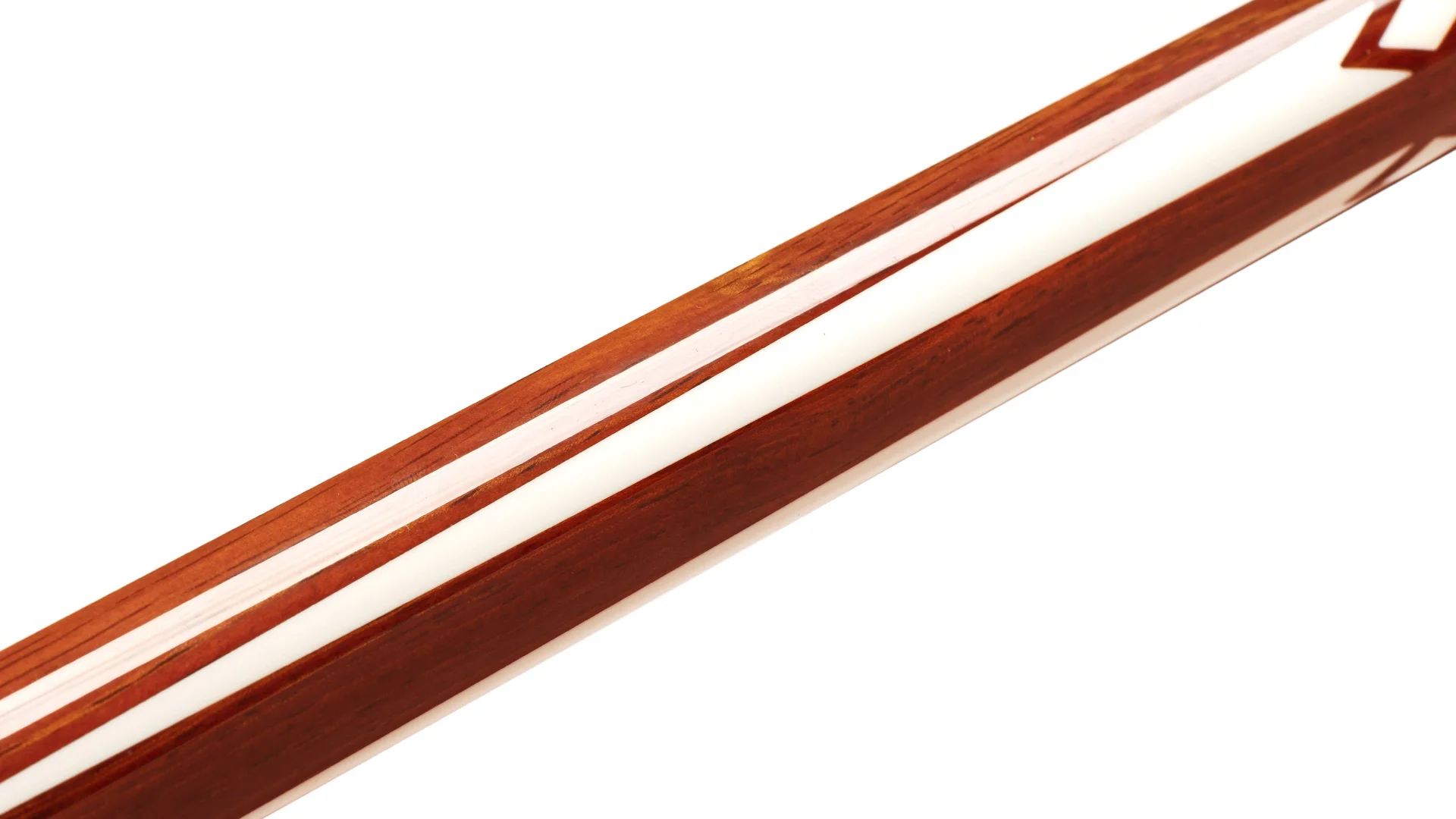
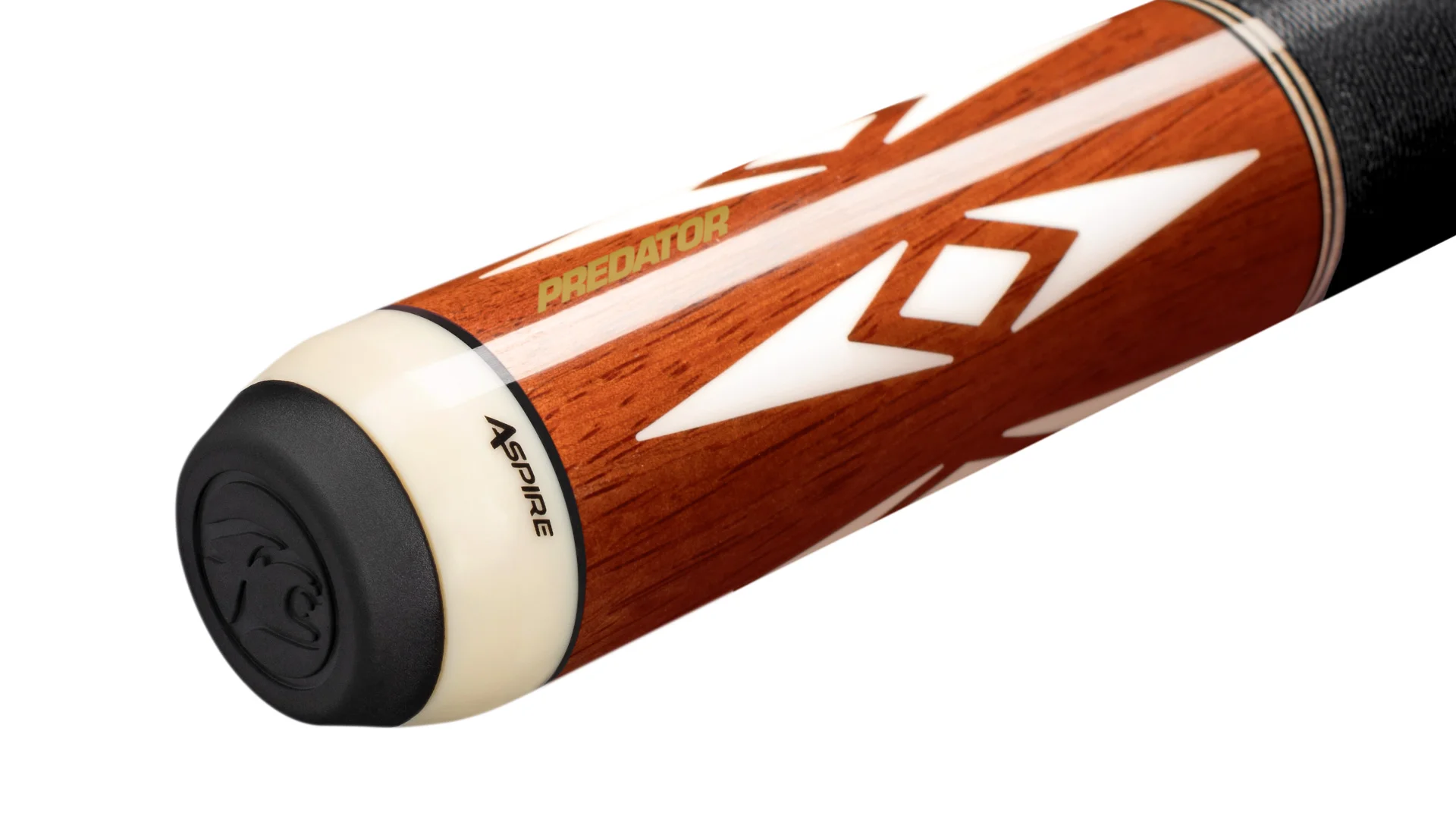
The 1-10 features a more premium butt design—different finish work, visual detailing, and overall appearance compared to the 1-1’s more utilitarian profile. For players who prioritize visual presentation alongside performance, the 1-10 offers an upgraded aesthetic at a modest price premium.
Definitive Statement: If you are choosing between the Aspire 1-1 and Aspire 1-10 based on which will pot more balls or control the cue ball more precisely, the answer is neither—they are the same cue at the performance level. Choose based on visual preference and budget fit.
Key Takeaway: The Aspire 1-1 vs. 1-10 distinction is entirely cosmetic. Buyers who prioritize performance over aesthetics should purchase whichever model fits their budget and direct the difference toward a shaft upgrade fund.
The Mini-Radial joint is among the most consequential specifications on the Aspire 1-10—not for what it delivers today, but for what it enables later.
Predator’s Mini-Radial joint is compatible with the full range of Predator shaft upgrades, including the 314-3 and the REVO carbon fiber shaft. This means the Aspire 1-10 butt is not an endpoint—it is a platform.
A player who starts with the Aspire 1-10 and its ONE shaft can later purchase a 314-3 shaft to access Predator’s mid-tier deflection performance, or a REVO shaft to access the company’s highest-performance carbon fiber technology—without replacing the butt they have already committed to and practiced with.
Strategic Insight: The Mini-Radial joint transforms the Aspire 1-10 from a beginner cue into a long-term equipment investment. Players who purchase with upgrade intent are effectively paying the Aspire 1-10’s price for Predator butt access, with the ONE shaft included as a fully functional starting point.
| Stage | Shaft | Deflection Level | Appropriate When |
|---|---|---|---|
| Entry | Predator ONE | Moderate LD | Transitioning from house cues |
| Intermediate | Predator 314-3 | Higher LD | Consistent stroke, English-heavy play |
| Advanced | Predator REVO | Maximum LD | Established stroke, minimal recalibration needed |
The Aspire 1-10 butt supports all three stages. No butt replacement is required at any point in this progression—which is the defining economic advantage of choosing a Mini-Radial joint cue as a first serious billiards equipment upgrade.
Key Takeaway: The Mini-Radial joint makes the Aspire 1-10 the only cue in its price range that grows directly into Predator’s professional shaft tier without requiring a full cue replacement.
The Cuetec Avid is the most commonly cited alternative when players evaluate the Aspire 1-10. Both cues occupy similar price territory and target similar player profiles. The comparison reveals meaningful differences in technology philosophy and player fit.
The Cuetec Avid delivers lower deflection through carbon fiber construction, while the Predator Aspire 1-10 prioritizes traditional wood feel, easier transition from house cues, and long-term upgrade compatibility through the Predator shaft ecosystem.
The Cuetec Avid uses carbon fiber shaft technology to achieve its low deflection performance. Carbon fiber’s stiffness and density characteristics allow aggressive front-end mass reduction with less shaft diameter change than wood alternatives.
The Predator Aspire 1-10 uses the ONE shaft—a wood low deflection shaft and LD maple shaft—which achieves squirt reduction through internal construction modifications rather than material substitution.
Carbon fiber shafts, including the Avid’s, produce a distinctly different hit sensation than wood shafts. The cue action is stiffer, vibration dampening is lower, and the feedback profile reads as mechanical to players accustomed to traditional wood construction. This is a material property, not a defect—but it represents a real and simultaneous adjustment requirement on top of squirt recalibration.
The ONE shaft maintains the wood hit feel that most developing players have calibrated their stroke against. Transitioning to the Aspire 1-10 requires squirt recalibration only. Transitioning to the Avid requires both squirt recalibration and hit feel adjustment at the same time.
Compared side-by-side over multiple league sessions, the Aspire 1-10’s adaptation period was noticeably shorter for players coming directly from standard house cues—a practical advantage that raw deflection numbers alone do not capture.
| Factor | Predator Aspire 1-10 | Cuetec Avid |
|---|---|---|
| Shaft Material | LD Maple Shaft (Wood) | Carbon Fiber |
| Hit Feel | Traditional Wood | Stiffer / Mechanical |
| Deflection Reduction | Moderate LD | Aggressive LD |
| Upgrade Compatibility | Broad (Predator ecosystem) | Limited |
| Transition Difficulty | Lower | Higher |
| Best For | Wood-feel preference, upgrade intent | Maximum LD from day one |
Recommendation: Players who prioritize feel continuity and long-term upgrade flexibility should choose the Aspire 1-10. Players who want maximum low deflection performance immediately and are prepared to adjust to carbon fiber’s feedback profile should consider the Avid.
Key Takeaway: The Cuetec Avid delivers more aggressive squirt reduction. The Aspire 1-10 delivers a shorter adaptation curve, broader upgrade compatibility, and a more familiar hit feel—three advantages that compound in value as a player’s game develops.
The Predator Aspire 1-10 is well-matched to APA and BCA league competition. Its low deflection performance, adjustable weight, and durable tip specification directly address the primary equipment limitations league players encounter when using house cues or non-LD setups.
Cue ball control on English shots: The ONE shaft’s squirt reduction directly improves shot accuracy when applying left or right English—one of the most demanding technical requirements in competitive eight-ball and nine-ball. This is where the transition from a house cue produces the most immediate, measurable improvement in cue ball accuracy.
Consistent tip performance: The Tiger Everest Medium maintains its shape and response characteristics through the extended play sessions typical of league nights, eliminating the performance variance associated with low-quality tips that require frequent reshaping.
Weight consistency: The Uni-Loc system allows players to maintain their preferred cue balance even as playing conditions vary, removing a variable that undermines stroke consistency in fixed-weight setups.
After multiple APA league sessions with the Aspire 1-10, the most consistent observation is that shot dispersion tightens measurably on English-applied position plays compared to standard maple shaft alternatives—a direct consequence of the ONE shaft’s LD technology functioning as intended under competitive conditions.
Authoritative Assessment: At the APA league level, the limiting factor in most matches is player skill, not equipment. The Aspire 1-10 eliminates the equipment ceiling that house cues and entry-level non-LD cues impose, allowing player development to proceed without hardware constraints.
Key Takeaway: The Aspire 1-10 delivers its strongest value to APA skill levels 2 through 6—players whose game is actively developing and who need equipment that supports that development without requiring replacement when their skills advance.
The McDermott G-Core represents another commonly considered alternative at this price tier, using a fiberglass core within a maple shaft to achieve its performance characteristics.
The G-Core delivers a hybrid hit feel—not as wood-forward as the ONE shaft, not as stiff as carbon fiber—and occupies a middle ground in squirt reduction. Its upgrade ecosystem is limited to McDermott’s own shaft options, which are fewer and less tiered than Predator’s.
For players already invested in the McDermott equipment ecosystem, the G-Core is a legitimate consideration. For players whose primary concern is low deflection performance and upgrade flexibility, the Aspire 1-10’s ONE shaft and Mini-Radial joint provide a more direct path to higher-tier LD technology without requiring a full cue replacement when skills advance.
Durability is an underexamined factor in most pool cue reviews at this price point. For a cue positioned as a long-term platform, longevity matters as much as initial performance.
The Predator ONE shaft is constructed from hard rock maple with established durability under regular league play conditions. With proper maintenance—periodic cleaning, appropriate storage, and humidity control—ONE shafts perform consistently across multiple competitive seasons without structural degradation.
The Tiger Everest Medium tip requires standard maintenance—periodic reshaping and light scuffing to maintain surface texture for spin efficiency. Under regular APA league use, the Everest Medium holds its shape longer than soft tips. Most players on consistent weekly schedules replace tips annually, though individual wear rates vary with stroke mechanics and volume.
Tip replacement cost at current market rates: approximately $10–$25 depending on tip selection and installation method—a negligible annual ownership cost relative to the performance benefit delivered.
The Irish linen wrap provides above-average wear resistance compared to leather wraps at this price tier. Linen’s moisture-wicking properties extend wrap life under the perspiration exposure typical of competitive league environments. Replacement is possible but rarely necessary within the first several years of regular play.
The most significant long-term cost consideration is shaft upgrade investment. Adding a 314-3 shaft to the Aspire 1-10 butt costs substantially less than purchasing a new complete cue at the 314-3’s performance tier. Adding a REVO shaft follows the same economics. The Aspire 1-10’s upgrade compatibility converts future performance investment into shaft purchases rather than full equipment replacement—a material long-term savings that competitors without Mini-Radial joint compatibility cannot match.
Key Takeaway: The Aspire 1-10’s true ownership cost includes tip replacement and optional shaft upgrades—both of which are lower than the cost of replacing the entire cue when skills advance. The upgrade economics favor this platform significantly over non-upgradeable alternatives at the same price.
One of the most practical questions for any player considering a low deflection upgrade is how long adaptation actually takes. The honest answer depends on two variables: current skill level and current equipment.
Players transitioning directly from house cues typically experience the shortest adjustment periods with the Aspire 1-10. House cues produce significant squirt, and most house cue players unconsciously compensate with aim adjustments they cannot fully articulate. The ONE shaft’s moderate LD reduction narrows that compensation requirement without eliminating it entirely, making the adjustment incremental rather than disruptive.
Observed adjustment timelines from house cue to Aspire 1-10: most players stabilize their English control and positional play within two to four APA league sessions.
Players transitioning from non-LD maple shafts face a specific recalibration: reducing built-in squirt compensation without changing fundamental stroke mechanics. The ONE shaft’s wood feel accelerates this process because it eliminates feel disruption as a confounding variable.
Players moving from carbon fiber down to the ONE shaft will notice increased squirt and a shift toward warmer, more resonant hit feedback. This transition is less common but relevant for players testing the Aspire 1-10 as a secondary or league-specific cue alongside a primary carbon fiber setup.
Expert Take: The Aspire 1-10 presents the lowest combined adaptation barrier of any low deflection cue at this price point—because it changes squirt without changing feel. Players recalibrate one variable at a time, which materially shortens the transition period compared to carbon fiber alternatives.
The Predator Aspire 1-10 is a low deflection pool cue engineered for league and developing players. It includes the Predator ONE low deflection shaft, Tiger Everest Medium 12.55mm tip, Mini-Radial joint, and Uni-Loc adjustable weight cartridge system. It is part of Predator’s entry-level Aspire series, in which all models share identical core performance specifications.
The difference between the Aspire 1-1 and Aspire 1-10 is entirely aesthetic. Both cues use the identical Predator ONE shaft, Mini-Radial joint, Tiger Everest Medium tip, and Uni-Loc weight system. The 1-10 features a more premium butt design and finish. No core performance specification differs between the two models.
Yes. The Aspire 1-10 ships standard with the Predator ONE low deflection shaft, which achieves squirt reduction through front-end mass modification—improving cue ball accuracy on English-applied cuts and positional plays without requiring material changes to stroke mechanics.
Yes. The Aspire 1-10 is the best beginner low deflection cue for players transitioning from house cues. It delivers measurable low deflection performance while maintaining the traditional wood hit feel that minimizes recalibration difficulty for players with existing stroke habits built on standard equipment.
The Aspire 1-10 ships with a Tiger Everest Medium tip at 12.55mm—a specification that balances spin efficiency, shape retention, and consistent hit consistency across extended play. It outperforms most factory tips found on cues at this price point.
Yes. The Aspire 1-10 uses Predator’s Uni-Loc weight cartridge system, enabling cue weight and cue balance adjustment from approximately 18.5 oz to 20.5 oz without tools or professional modification. This range covers the weight preferences of the majority of APA and BCA league players.
Neither cue is categorically superior. The Aspire 1-10 provides a more traditional wood hit feel and broader upgrade compatibility within the Predator shaft ecosystem. The Cuetec Avid delivers more aggressive low deflection through carbon fiber technology but requires greater simultaneous adjustment for players transitioning from wood shaft construction. Player priority—feel continuity versus maximum LD performance—determines the better choice.
Yes. The Mini-Radial joint is fully compatible with Predator REVO carbon fiber shafts and other Predator shaft upgrades, including the 314-3, enabling significant performance expansion without replacing the butt. This compatibility is the most strategically significant specification on the cue for players with long-term upgrade intent.
Yes. The Predator ONE shaft uses front-end mass reduction and shaft taper engineering to reduce cue ball squirt compared to standard maple shafts. It is purpose-built low deflection technology—not a marketing description applied to conventional shaft construction.
Yes. The Aspire 1-10 is designed as a long-term performance platform with upgrade compatibility extending into Predator’s advanced shaft ecosystem. It is not a transitional purchase—it is the foundation of a complete equipment progression that can serve a player from APA entry level through advanced competitive play.
The Predator Aspire 1-10 succeeds because it is designed with a clear understanding of what league players actually need—and what they do not need to pay for yet.
At under $600, it delivers the Predator ONE shaft’s genuine low deflection performance, a calibrated tip specification in the Tiger Everest Medium, player-controlled cue balance adjustment through the Uni-Loc system, and forward compatibility with Predator’s full shaft upgrade ecosystem through the Mini-Radial joint. None of those specifications are compromises for the price. They are deliberate engineering choices for the player profile the cue serves.
The Aspire 1-10 is not the most technically advanced cue Predator makes. It is the most strategically sound entry-level Predator cue for a developing player who intends to stay competitive as their game matures. The butt purchased today becomes the foundation for the 314-3 or REVO shaft added in twelve or twenty-four months—a planning consideration that most non-upgradeable and non-Predator cues at this price point structurally cannot offer.
Among Predator Mini-Radial joint cues available under $600, the Aspire 1-10 delivers one of the strongest value-to-upgrade ratios on the market. For players researching the best cue for APA players at skill levels 2 through 6, it is the cue that closes the gap between house cue limitations and genuine low deflection performance—without the carbon fiber adaptation penalty, without the upgrade dead-end, and without the price of Predator’s premium tier.
For league pool cue buyers making their first serious billiards equipment upgrade, the Predator Aspire 1-10 pool cue is a defensible, forward-looking investment at every stage of the decision: the day you buy it, the day your game outgrows the ONE shaft, and the day you add a REVO without replacing the cue you already know.
| Weight | 18oz, 19oz, 20oz, 21oz |
|---|


Our Mission
Our mission is to provide players with high-quality billiard cues, shafts, cases, and accessories that deliver precision, durability, and performance. We aim to be a trusted destination for pool players across the USA looking for reliable equipment to improve their game and enjoy billiards at every level. 🎱
Reviews
There are no reviews yet.