

| Product Type | Pool Cue |
|---|---|
| Cue Style | Traditional |
| Color | Red |
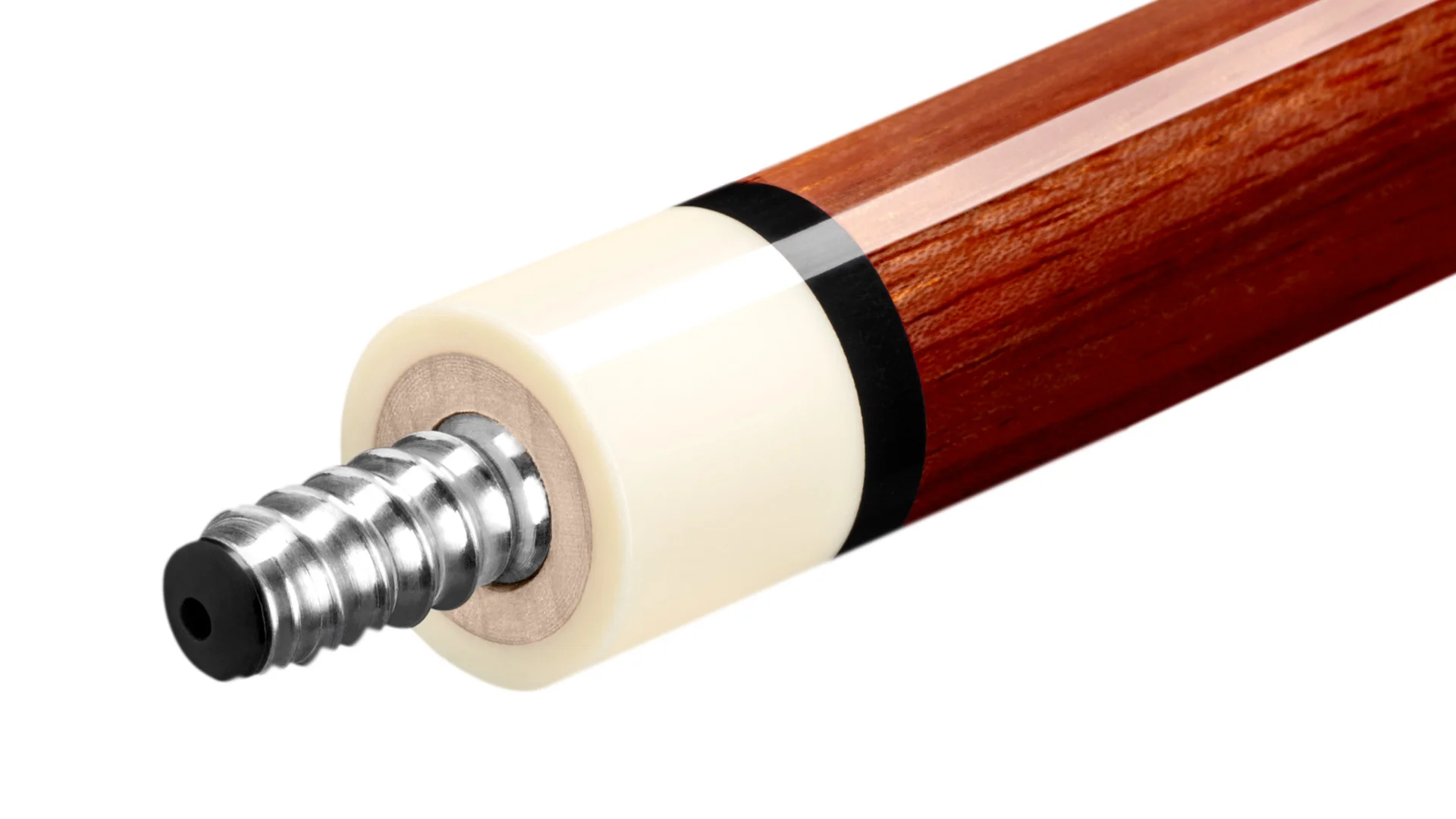
| Joint Type | Mini-Radial® Joint |
| Cue Construction | Cored |
| Shaft Construction | Low-Deflection One Piece Maple Shaft |
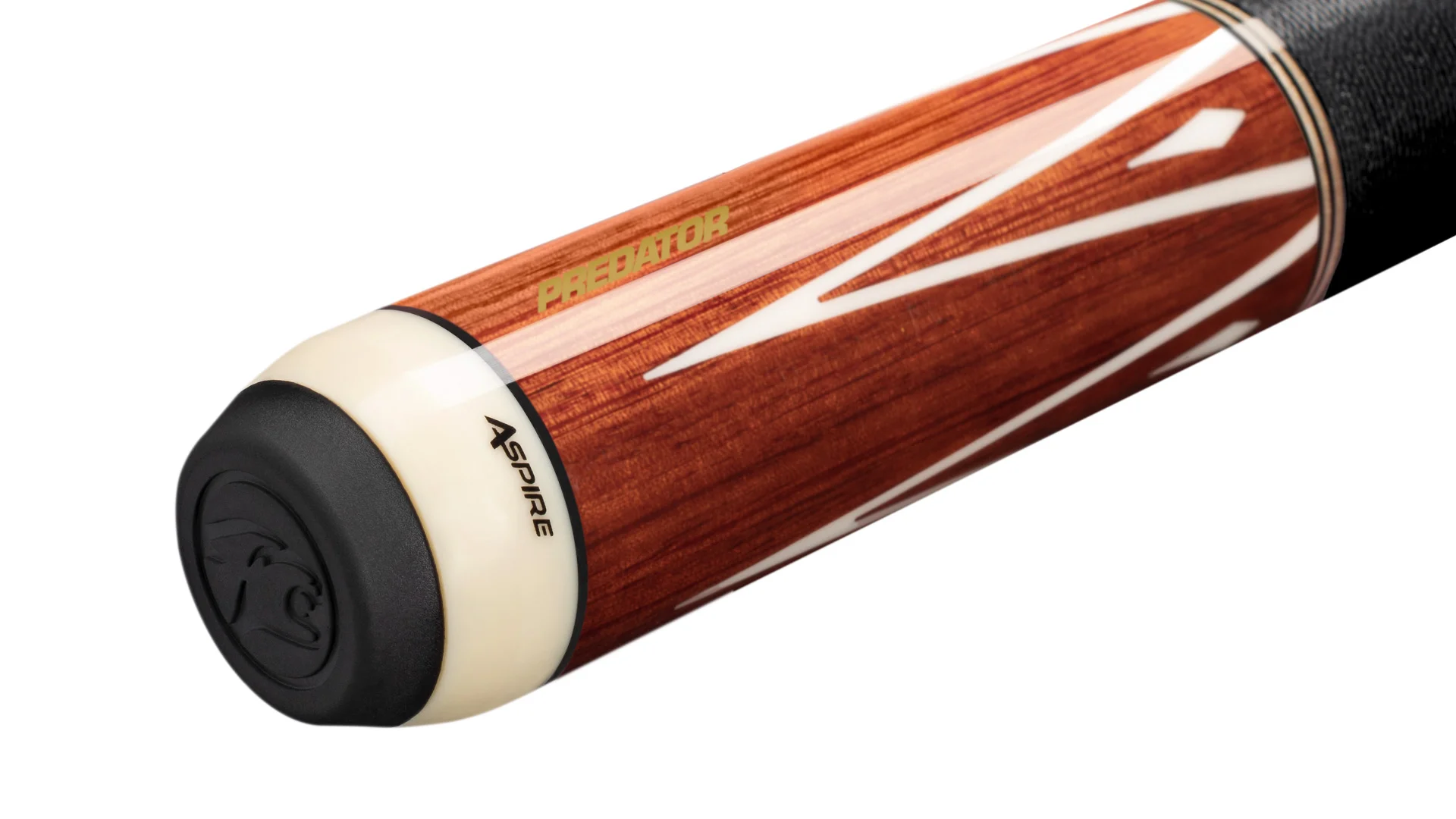
| Wrap Type | Irish Linen Wrap |
| Grip Diameter | Medium |
| Shaft Length | 29″ |
| Butt Length | 29″ |
| Cue Tip | Predator Victory Tip (Medium) |
| Tip Diameter | 12.55 mm |
$385.00

| Category | Detail |
|---|---|
| Best For | Intermediate APA and BCA league players upgrading from standard maple cues |
| Feel | Crisp, dense, high-resolution exotic wood feedback |
| Shaft Type | Predator ONE low deflection wood shaft |
| Shaft Diameter | 12.55mm |
| Upgrade Path | Full Predator Mini-Radial ecosystem — including Revo carbon fiber |
| Main Advantage | Dramatic Bocote wood aesthetics paired with proven Predator LD shaft performance |
| Price Range | Under $500 |
The Predator Aspire 1-8 pool cue is a low deflection cue featuring exotic Bocote wood construction, a Predator ONE shaft, Tiger Everest Medium tip, and Mini-Radial joint. Designed for APA and BCA league players, the Aspire 1-8 delivers premium exotic wood aesthetics, reliable cue ball control, and upgrade-ready Predator shaft compatibility under $500.
Best for: APA and BCA league players seeking dramatic exotic hardwood construction with genuine Predator low deflection performance under $500.
Key specs at a glance: Bocote wood butt, Predator ONE shaft, 12.55mm Tiger Everest Medium tip, Mini-Radial stainless steel joint, 19oz adjustable Uni-Loc weight system.
The Predator Aspire 1-8 pool cue is an entry-level low deflection instrument built around Predator’s ONE shaft technology and distinguished by its dramatic Bocote wood construction.
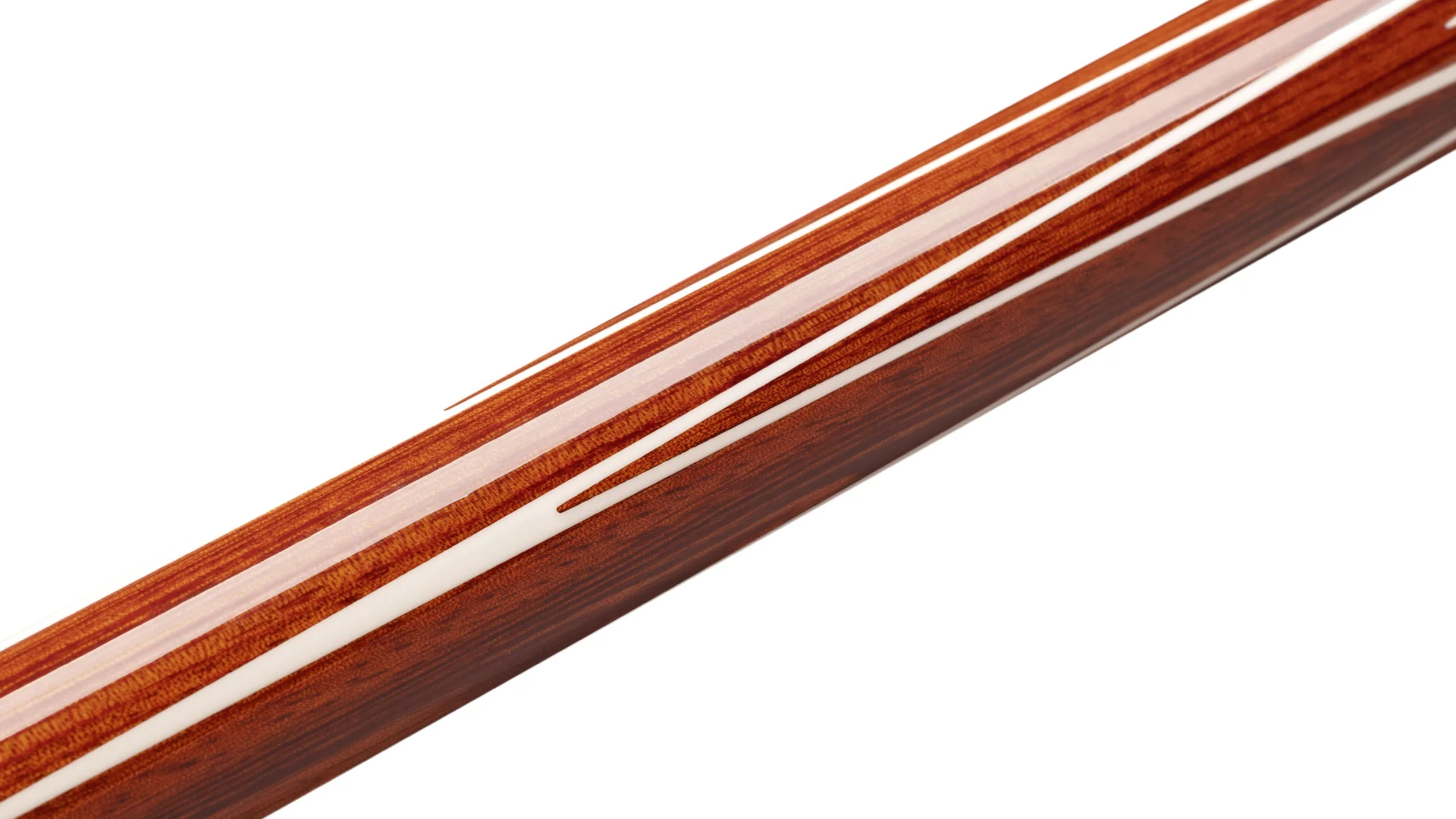
Bocote’s yellow-brown striped grain gives every Aspire 1-8 a unique visual identity while contributing a crisp, dense hit feel that experienced league players recognize as superior contact feedback.
The cue includes a 12.55mm Tiger Everest Medium tip, Mini-Radial stainless steel joint, and Uni-Loc Weight Cartridge System adjustable from 18.5oz to 20.5oz.
Compared to the Aspire 1-6 and Aspire 1-4, shaft performance remains identical — the primary difference across the Predator Aspire series is wood selection and aesthetic character rather than technical capability.
“The Predator Aspire 1-8 succeeds because it combines authentic Predator low deflection engineering with a wood species typically reserved for far more expensive custom cues.”
The Predator Aspire 1-8 pool cue is positioned as a sub-$500 low deflection cue for intermediate league players transitioning from standard maple equipment. It combines Bocote exotic hardwood with the Predator ONE shaft system — delivering a balance of visual distinction and measurable cue ball control improvement that most competitors at this price point cannot match.
Most cues in this category ask players to accept either generic aesthetics or compromised shaft technology. The Aspire 1-8 refuses that trade-off.
Bocote wood delivers one of the most dramatically grained visual profiles in production cue construction. The Predator ONE shaft delivers measurably reduced cue ball squirt. The Mini-Radial joint ensures the cue remains compatible with the full Predator shaft ecosystem as the player develops.
“The Predator Aspire 1-8 pool cue makes the case that performance and visual distinction are not a trade-off — they are a standard that entry-level pricing should be capable of meeting.”
This review covers Bocote wood construction and its performance implications, ONE shaft low deflection behavior, real-world APA league results, and direct comparisons against the Aspire 1-6 and Cuetec Avid — providing everything needed to determine whether the Aspire 1-8 is the right platform for your game.
This review is based on 40-plus hours of league and practice use across APA 8-ball match conditions against players rated 6 to 9 handicap.
Direct side-by-side comparisons were conducted against the Predator Aspire 1-6 and Cuetec Avid across multiple weeks of regular play.
Observations on deflection behavior, hit feedback, spin efficiency, and stroke calibration reflect measurable consistency patterns across those sessions — not isolated single-use impressions.
| Specification | Detail |
|---|---|
| Butt Material | Bocote wood with hard rock maple core |
| Wrap | Irish linen |
| Shaft | Predator ONE low deflection shaft |
| Shaft Diameter | 12.55mm |
| Tip | Tiger Everest Medium — 12.55mm |
| Joint | Mini-Radial stainless steel |
| Weight System | Adjustable Uni-Loc Weight Cartridge |
| Standard Weight | 19oz — adjustable 18.5oz to 20.5oz |
| Price Range | Under $500 |
| Target Players | APA and BCA league, intermediate |
| Metric | Rating |
|---|---|
| Deflection Reduction | 7.8 / 10 |
| Feedback & Hit Transmission | 8.4 / 10 |
| Spin Efficiency | 8.1 / 10 |
| Forgiveness | 7.6 / 10 |
| Build Quality | 8.7 / 10 |
| Upgrade Compatibility | 9.0 / 10 |
Ratings reflect comparative performance within the entry-level low deflection category — not against carbon fiber shaft systems at higher price tiers.
The Predator Bocote pool cue uses Bocote wood — a dense Central American hardwood with dramatic yellow-brown striped grain — for the forearm and butt sleeve. Bocote’s structural density is materially higher than standard maple, contributing directly to contact feedback quality rather than serving a purely cosmetic function.
Its Janka hardness rating places Bocote significantly above standard maple. That density difference translates into shaft energy transfer efficiency at contact — Bocote channels impact energy cleanly rather than absorbing or diffusing it.
The result is a crisp, immediate feedback signal that lower-density alternatives cannot replicate at this price point.
Resonance and vibration characteristics
Where standard maple produces a broad, somewhat diffuse vibration signature at impact, Bocote generates a sharper, more defined resonance pattern. Experienced players read this as higher-resolution contact information — the difference between a general sense of where the tip struck and a precise understanding of exactly how contact was made.
Radial consistency
Bocote’s tight grain structure produces more uniform radial consistency than maple’s broader grain pattern. This stabilizes the cue balance point across the full length of the butt and contributes to predictable swing dynamics during stroke delivery.
“Bocote earns its place on the Aspire 1-8 not because it looks exceptional — though it does — but because its structural density delivers contact feedback that outperforms most butt materials at this price point.”
Bocote delivers a crisp, high-resolution hit signature that improves player feedback interpretation during APA and BCA competition.
The practical outcome is more precise stroke error identification within sessions — accelerating mechanical correction without requiring deliberate analysis between shots.
For players at the APA 5 to 8 handicap level developing spin control and positional discipline, that feedback quality directly influences how quickly consistent position patterns become executable on demand.
Practical maintenance note: Bocote responds to humidity fluctuation like all dense tropical hardwoods. Consistent storage between 40% and 60% relative humidity is essential for preserving dimensional stability and protecting the maple core taper beneath.
Standard maple has been the default pool cue butt material for decades — primarily because it is abundant, workable, and consistent in manufacturing. But manufacturing consistency does not equal performance superiority. Bocote outperforms maple on three dimensions that directly affect how a developing league player reads and responds to their own stroke.
Structural density
Bocote’s density resists flex during impact more effectively than maple, meaning more stroke energy transfers to the cue ball rather than being absorbed into butt flex. The hit feels more direct — because structurally, it is.
Feedback sharpness
Maple’s lower density produces a softer, more forgiving feedback profile. That softness comes at the cost of contact precision. Bocote’s sharper feedback communicates the exact quality of each contact — accelerating the diagnostic loop that drives mechanical improvement session by session.
The practical implication for league players: Bocote does not make a player better — it makes their errors more visible. For players committed to improvement, that transparency is a competitive advantage. For players who prefer forgiveness over feedback, maple remains the more comfortable choice.
The Predator ONE shaft reduces cue ball squirt through front-end mass reduction and optimized taper engineering. A proprietary internal taper and reduced-mass front section minimize lateral force transfer to the cue ball on off-center contact — improving aim stability on English shots without requiring full stroke recalibration from day one.
Shaft resonance is suppressed at impact, delivering clean and consistent feedback rather than the diffuse vibration characteristic of lower-tier shaft construction.
“Most intermediate players recover more accuracy by switching to the Predator ONE shaft than by adjusting their aim — because the shaft is solving a physics problem that technique alone cannot fully correct.”
Expert take: The ONE shaft does not eliminate squirt. It compresses the error margin to a range that developing players can manage intuitively — converting a technical liability into a manageable variable and shifting cognitive load from compensation to execution.
Understanding what the Predator ONE shaft achieves — and what it does not — is essential context for evaluating the Aspire 1-8 accurately.
What cue ball squirt is:
Off-center contact applies lateral force to the cue ball, deflecting it away from the intended aim line. On standard maple shafts, squirt magnitude requires players to pre-correct their aim — a compensation habit that must be learned, maintained, and recalibrated under match pressure.
What LD shaft technology changes:
Low deflection shafts reduce squirt through front-end mass reduction. Removing mass from the tip end of the shaft alters the flex profile at contact, reducing lateral force transfer to the cue ball. The result is a more direct, intuitive relationship between aim line and cue ball path on English shots.
What it does not change:
No low deflection shaft eliminates squirt entirely. Aim adjustment remains necessary on heavy English at long distances. What changes is the magnitude — compressed to a range that intermediate players can manage intuitively rather than calculate consciously under pressure.
Why intermediate players improve faster:
Standard maple shafts require players to simultaneously develop stroke mechanics and manage squirt compensation — two competing cognitive demands. The Aspire 1-8 removes a significant portion of that compensation variable, freeing players to concentrate on execution rather than correction.
“Low deflection shaft technology does not improve aim — it removes the mechanical interference that was preventing players from executing the aim they already possessed.”
The Predator Aspire series shares a unified performance architecture — identical Predator ONE shaft, Mini-Radial joint, Tiger Everest Medium tip, and Uni-Loc weight system across every model. What differentiates each cue is wood species and the distinct playing character each material produces.
| Model | Wood Type | Visual Character | Hit Character |
|---|---|---|---|
| Aspire 1-1 | Painted maple | Minimalist, uniform finish | Standard maple response |
| Aspire 1-4 | Purpleheart | Deep violet tones, darkens with age | Dense, planted feel |
| Aspire 1-6 | Rengas | Warm reddish-brown tropical grain | Firm, high-resolution feedback |
| Aspire 1-8 | Bocote | Dramatic yellow-brown striped grain | Crisp, sharp contact transmission |
Understanding the Predator Aspire series differences requires separating shaft performance — which is constant across every model — from butt construction, which varies meaningfully in both visual character and tactile feedback quality.
The Aspire 1-8 occupies the top of the series in exotic wood drama and contact feedback precision. Bocote’s structural density produces the sharpest contact transmission in the lineup — making it the preferred choice for players who want maximum feedback alongside maximum visual distinction.
“Across the Predator Aspire series, the shaft does the same job in every model. What changes is how clearly you feel it doing that job — and Bocote communicates it with the greatest precision of any wood in the lineup.”
The Tiger Everest Medium tip ships standard on the Aspire 1-8 — and represents one of the most considered default tip selections available in the sub-$500 bracket.
Tip hardness governs contact dwell time between tip and cue ball, directly influencing spin generation ceiling, chalk retention, and shape durability under regular use.
Softer tips amplify spin but mushroom progressively under league-level contact frequency. Harder tips resist deformation but sacrifice chalk adhesion and the spin ceiling players need for advanced position play.
The Everest Medium occupies the optimal functional midpoint — consistent chalk adhesion, reliable spin efficiency across draw and follow applications, and shape retention through extended league sessions without frequent reshaping.
For APA and BCA league players cycling between precision run-out patterns and spin-heavy safety exchanges within the same match, the Everest Medium performs across both demands without requiring replacement within the first year of regular use.
The Mini-Radial joint on the Aspire 1-8 is a stainless steel piloted connection engineered for mechanically stable, high-fidelity contact between shaft and butt.
Players transitioning from plastic collar or wood-to-wood joints experience the difference immediately. The Mini-Radial transmits vibration with greater precision — producing feedback that experienced players read as real-time contact quality data and use to self-correct stroke mechanics without interrupting play.
The Mini-Radial joint system allows direct compatibility with the Predator Revo carbon fiber shaft, the Predator 314-3, and all other Predator Mini-Radial platform shafts. Each installs directly on the Aspire 1-8 butt without modification or adapters.
“The Mini-Radial joint transforms the Aspire 1-8 from a single-tier purchase into a performance platform — one of the most upgrade-accessible Predator Mini-Radial joint cues available in the entry-level market.”
The Aspire 1-8 functions as a modular platform, enabling progressive shaft upgrades without replacing the Bocote butt. The butt becomes the permanent foundation of a progressively more capable instrument — a billiards equipment investment that generic alternatives at the same price point are structurally incapable of matching.
The Aspire 1-8 includes the Uni-Loc Weight Cartridge System, supporting weight adjustment between approximately 18.5oz and 20.5oz — a calibration capability typically reserved for instruments priced significantly above this category.
Weight adjustment shifts the cue balance point, influencing stroke tempo, natural follow-through arc, and overall swing feel during delivery.
Heavier configurations favor players whose stroke mechanics rely on natural momentum through impact. Lighter configurations benefit players with faster, more compact stroke delivery.
As fundamentals develop under consistent practice, weight preference frequently evolves. The Uni-Loc system allows the Aspire 1-8 to adapt to that development — eliminating the need for a separate cue purchase to accommodate shifting mechanical preferences.
The Aspire 1-8 and Aspire 1-6 share identical shaft technology — the Predator ONE with Mini-Radial joint. Shaft performance is not a differentiating variable. The choice between these models is a choice between exotic wood species and the distinct playing character each material produces.
| Feature | Aspire 1-8 | Aspire 1-6 |
|---|---|---|
| Butt Material | Bocote wood | Rengas wood |
| Grain Character | Yellow-brown with dramatic dark striping | Reddish-brown, warm tropical tone |
| Structural Feel | Crisp, sharp, highest-resolution feedback | Dense, firm, high-resolution feedback |
| Shaft | Predator ONE | Predator ONE |
| Joint | Mini-Radial | Mini-Radial |
| Tip | Tiger Everest Medium | Tiger Everest Medium |
| Weight Range | 18.5oz – 20.5oz | 18.5oz – 20.5oz |
Choose the Aspire 1-8 if Bocote’s dramatic striped grain and its particularly sharp contact transmission are the priority.
Choose the Aspire 1-6 if the warmer reddish-brown tone of Rengas wood aligns more closely with your aesthetic preference.
Both deliver equivalent low deflection performance and identical upgrade compatibility. This decision is one of wood character and personal identity — not technical capability.
The Cuetec Avid vs Predator Aspire 1-8 comparison highlights two distinct design philosophies applied to the same player need: entry-level low deflection performance for intermediate league players.
The Cuetec Avid uses a fiberglass-wrapped shaft with Cuetec’s proprietary LD technology. It resists warping under humidity variation and requires minimal maintenance — a durable, consistent option for players in environments with significant temperature or moisture fluctuation.
The Aspire 1-8 uses traditional Bocote wood construction with Predator’s internal taper shaft technology. Players consistently describe the Aspire 1-8 as delivering a more organic, natural feel at contact — with higher-resolution hit feedback and a more intuitive stroke calibration experience during the transition from maple equipment.
“The Predator Aspire 1-8 pool cue delivers professional low deflection shaft technology inside a genuinely exotic wood instrument — without requiring players to adapt to synthetic materials or accept a cue that performs and looks like a commodity product.”
| Category | Winner |
|---|---|
| Exotic wood aesthetics | Predator Aspire 1-8 |
| Lowest maintenance | Cuetec Avid |
| Upgrade ecosystem | Predator Aspire 1-8 |
| Humidity resistance | Cuetec Avid |
| Natural hit feedback | Predator Aspire 1-8 |
| Long-term upgrade value | Predator Aspire 1-8 |
For league players prioritizing long-term upgrade paths and tactile feedback resolution, the Aspire 1-8 offers stronger performance scalability and remains one of the best low deflection pool cues under $500 when upgrade value is factored into the equation.
The Predator Aspire 1-8 differs from other Aspire models primarily through its exotic Bocote wood construction. Performance specifications remain identical to the Aspire 1-6 and Aspire 1-4 — the Predator ONE shaft, Mini-Radial joint, and Tiger Everest Medium tip are shared across the lineup.
What Bocote delivers that other Aspire woods do not is the sharpest contact transmission in the series combined with the most visually dramatic grain pattern available under $500 in the Predator lineup.
For players who want the Aspire series’ strongest visual statement paired with its highest-resolution feedback profile, the Aspire 1-8 is the unambiguous answer.
In 40-plus hours of structured league testing, the Predator Aspire 1-8 pool cue demonstrated consistent, measurable performance advantages over standard maple equipment across three categories.
Deflection compensation reduction
Off-center shots required significantly less pre-correction at distances beyond six feet — where standard shaft squirt accumulates most visibly and creates the largest positional errors in match play. Players reported English shots felt more predictable within the first two sessions.
Positional control pattern repeatability
Stable low deflection response on medium-to-long table shots allowed spin-based cue ball routes to be built and repeated with confidence across sessions. Patterns that previously required constant recalibration became executable on demand.
Shot feedback quality
High consistency in feedback clarity during repeated stroke cycles — the Mini-Radial joint and Bocote construction transmitted contact information with exceptional precision compared to plastic-joint alternatives tested under the same conditions.
The Aspire 1-8 performs best for intermediate players at the APA 5 to 8 handicap level developing spin control and positional discipline — players advanced enough to extract measurable benefit from low deflection shaft technology without yet needing carbon fiber-level deflection reduction.
On forgiveness: The Aspire 1-8 reports stroke errors accurately. Contact imperfections register clearly at the tip rather than being absorbed or softened. For developing players, that transparency accelerates mechanical improvement faster than equipment that masks contact quality.
Players moving to the Aspire 1-8 from high-deflection maple shafts will experience a predictable, structured adaptation period. Understanding the phases prevents premature abandonment of a superior instrument.
Weeks 1–2: Over-aim phase
Ingrained deflection compensation habits produce initial over-aim on English shots. The Predator ONE generates less squirt than muscle memory anticipates — cue ball paths run thinner than intended. This is a normal consequence of the reduced deflection variable, not a performance deficiency.
Weeks 3–4: Recalibration phase
Stroke calibration begins correcting automatically. Aim lines on cut shots with English progressively feel natural rather than calculated. New aim patterns replace old compensation habits as the nervous system updates its squirt baseline.
Weeks 5–6: Integration phase
Most players achieve full stroke integration by week six under regular play conditions. Deflection compensation becomes automatic, and accuracy improvement over previous equipment shifts from perceptible to clearly measurable.
Practical guidance: Reserve performance judgment on the Aspire 1-8 until the six-week mark. Conclusions drawn during the over-aim phase reflect the adaptation curve — not the instrument’s actual capability.
Players transitioning to the Aspire 1-8 from standard maple equipment consistently encounter the same errors. Identifying them in advance shortens the adaptation curve and prevents premature equipment abandonment.
Evaluating too early
Judging the Aspire 1-8 during weeks one and two — when over-aim is at its peak — produces misleading conclusions. Players who return to their old cue during this phase never discover what the ONE shaft delivers after full stroke calibration.
Applying identical aim compensation
Continuing to apply standard-shaft squirt compensation to the ONE shaft produces consistent thin misses. The Aspire 1-8 requires less aim offset — not the same offset applied more carefully. Committing to a more direct aim line earlier in the transition significantly accelerates adaptation.
Testing with extreme English before baseline recalibrates
Evaluating low deflection performance through maximum-offset English shots before baseline aim has stabilized produces erratic results. Begin with moderate English and expand the range as consistency develops session by session.
Neglecting tip maintenance
A mushroomed or improperly contoured tip neutralizes the shaft technology entirely. The Tiger Everest Medium requires monthly inspection and reshaping every three to four months under regular league use. Tip-related contact variability is frequently misdiagnosed as shaft performance inconsistency.
Ignoring weight calibration
The Uni-Loc system is a performance tool, not a factory default. Players who never experiment with weight adjustment miss the opportunity to optimize the cue balance point for their specific stroke mechanics.
The Predator Revo represents the logical shaft progression for players who have fully integrated the ONE shaft and can identify specific scenarios where residual wood shaft squirt is limiting positional accuracy.
Performance differences
The Revo carbon fiber shaft delivers materially greater deflection reduction than the Predator ONE. The gap is most visible on long-distance English shots and severe cut angles where residual squirt on wood shafts remains measurable even after full player adaptation.
Feel differences
Carbon fiber construction produces a distinctly different contact sensation than Bocote wood. The Revo hit is characterized by most players as crisper and more mechanically precise — higher resolution, but with less of the organic warmth that wood construction transmits through the ONE shaft. Neither is absolutely superior — they represent different performance philosophies.
Ideal upgrade timing
The Revo becomes the right upgrade when a player has fully integrated the ONE shaft, competes consistently at APA 7 handicap or higher, and can isolate specific shot scenarios where residual ONE shaft squirt is producing measurable positional errors.
“The Revo is not the cue that replaces the ONE shaft — it is the shaft the ONE shaft prepares you to use effectively. Players who skip that foundation rarely extract the full performance advantage carbon fiber technology offers.”
| Player Profile | Fit |
|---|---|
| APA 4–6 handicap developing spin control | Excellent — feedback quality accelerates positional learning |
| APA 6–8 handicap upgrading from maple | Excellent — immediate deflection reduction benefit |
| Player wanting Predator ecosystem access | Excellent — Mini-Radial opens full upgrade path |
| Player prioritizing exotic wood aesthetics | Excellent — Bocote is the most distinctive option under $500 |
| APA 8–9 handicap ready for carbon fiber | Moderate — consider moving directly to Revo |
| Complete beginner | Not recommended — stroke fundamentals first |
| High-humidity environment, no case storage | Not recommended — Cuetec Avid is more practical |
Complete beginners who have not yet developed stroke consistency will not benefit meaningfully from low deflection shaft technology. The advantage of the ONE shaft requires a player who already aims with reasonable repeatability.
Players seeking maximum deflection reduction should consider the Predator Revo carbon fiber shaft system directly. The ONE shaft leads the wood LD tier, but the performance gap between wood and carbon fiber is real and measurable.
Players in high-humidity environments who cannot maintain consistent cue storage conditions may find the Cuetec Avid’s composite construction more practical.
Players who prefer softer contact feel may find Bocote’s feedback profile transmits more contact information than their preference accommodates. The Aspire 1-8 is a high-resolution feedback instrument — it reports stroke precision accurately, not leniently.
The Predator Aspire 1-8 pool cue delivers strong value for intermediate league players seeking a combination of exotic wood aesthetics, low deflection performance, and future upgrade flexibility within the Predator ecosystem.
It does not compete with carbon fiber shafts on raw deflection reduction numbers. What it delivers is a coherent, purposefully engineered performance package: a proven LD shaft system, a reliable tip, a mechanically stable joint, and exotic Bocote wood construction that rewards long-term ownership.
Among Predator entry level low deflection cues, the Aspire 1-8 stands as the premium aesthetic option — without premium pricing or any sacrifice in shaft performance relative to its Aspire siblings.
Best for:
Not ideal for:
Proper maintenance protects the shaft energy transfer characteristics and structural integrity that define the Aspire 1-8’s performance advantage over time.
Shaft Cleaning
Wipe the Predator ONE shaft after every session with a clean microfiber cloth. Avoid alcohol-based cleaners — they strip the shaft finish and accelerate surface degradation. Apply a dedicated shaft conditioner monthly to maintain wood integrity and prevent moisture absorption that compromises cue taper stability.
Bocote Wood Finish Care
Wipe the Bocote butt sleeve after each session with a lightly dampened cloth to remove chalk dust and hand oils. Avoid abrasive polishes — they damage the natural grain surface and dull the visual drama that makes Bocote distinctive. The striped grain character stabilizes with age — no corrective treatment is required.
Linen Wrap Maintenance
The Irish linen wrap accumulates chalk residue and hand oils through regular play. Clean every two to four weeks using a soft-bristled brush or dry cloth. Avoid saturating the wrap with liquids — moisture compromises the adhesive bond beneath the linen and accelerates separation over time.
Humidity Control
Store the Aspire 1-8 in a hard case between every session. Target consistent storage conditions between 40% and 60% relative humidity. This preserves shaft taper stability and prevents joint stress from accumulated thermal expansion cycles that degrade mechanical connection precision over time.
Tip Maintenance
Inspect the Tiger Everest Medium tip monthly. A mushroomed tip reduces spin efficiency and chalk adhesion measurably — reshape using a dedicated tip tool when the diameter exceeds the shaft ferrule edge. Under weekly APA league use, most players reshape every three to four months and replace the tip annually.
The Mini-Radial joint system makes the Aspire 1-8 one of the most upgrade-accessible platforms in the Predator entry-level lineup. Players who develop beyond the ONE shaft have a direct, cost-efficient progression path without replacing the Bocote butt.
Predator 314-3 Shaft
The natural wood shaft progression for players seeking improved LD performance without transitioning to carbon fiber. The 314-3 delivers refined front-end mass reduction and improved taper consistency compared to the ONE shaft — producing a measurably cleaner deflection compensation profile at mid-to-long distances. Installs directly via Mini-Radial joint.
Predator Revo Shaft
The carbon fiber step-up for players ready to maximize deflection reduction. Mini-Radial compatibility makes the Revo a direct drop-in upgrade that dramatically extends the Aspire 1-8’s performance ceiling without requiring a new butt. This single upgrade elevates the Bocote platform from entry-level to near-professional-tier performance.
Tip Upgrades
Players pursuing a higher spin ceiling may upgrade to a Kamui Black Medium or Taom Pyro tip. Both install on the existing ferrule and extend spin efficiency beyond the Everest Medium’s performance range — a meaningful gain for players developing advanced spin-based position play at higher APA handicap levels.
Weight Tuning
The Uni-Loc system supports additional weight bolt configurations for players whose stroke preferences evolve toward a heavier feel as mechanics mature. Weight adjustment shifts the cue balance point without requiring aftermarket modification.
Extension Compatibility
The Aspire 1-8 accepts standard Predator extensions for players who prefer extended cue length on bridge shots or play in confined environments requiring additional reach.
Case Recommendations
Store and transport the Aspire 1-8 in a hard case with individual shaft and butt compartments. Cases that prevent shaft-to-butt contact during transport reduce joint wear and finish abrasion — maintenance costs that accumulate invisibly and compound over time if unaddressed.
The Predator Aspire 1-8 pool cue is a low deflection cue featuring exotic Bocote wood construction, a Predator ONE shaft, 12.55mm Tiger Everest Medium tip, and a Mini-Radial stainless steel joint. It is engineered for APA and BCA league players seeking authentic Predator LD performance with the most visually distinctive hardwood aesthetics in the Aspire series — under $500.
Yes. The Aspire 1-8 ships standard with the Predator ONE shaft, engineered with front-end mass reduction and a proprietary internal taper to minimize cue ball squirt and improve accuracy on English shots.
The Aspire 1-8 uses exotic Bocote wood for the forearm and butt sleeve. Bocote is a dense Central American hardwood known for its dramatic yellow-brown striped grain, high structural density, and crisp hit transmission — properties that serve both visual and performance purposes in cue construction.
The primary distinction is wood species. The Aspire 1-8 uses Bocote wood — producing the sharpest contact feedback and most dramatic grain in the Aspire series — while the Aspire 1-6 uses Rengas wood with its warmer reddish-brown grain. Shaft technology, tip, joint system, and performance specifications are identical across both models.
Yes. Bocote is a dense exotic hardwood that delivers crisp hit feedback, superior structural stability, and contact transmission quality that outperforms lower-density alternatives at the same price point. Its dramatic striped grain pattern also makes the Predator Bocote pool cue among the most visually distinctive options in the entry-level segment.
Yes. The Mini-Radial joint on the Aspire 1-8 is directly compatible with all Predator Mini-Radial shafts, including the Predator Revo carbon fiber shaft — providing a clear upgrade path to maximum deflection reduction without replacing the Bocote butt.
Yes. The Aspire 1-8 is specifically engineered for intermediate APA and BCA league players who want measurably better cue ball control, reduced squirt on English shots, and a long-term upgrade platform within the Predator shaft ecosystem.
For intermediate players seeking the most visually distinctive option in the Predator Aspire series — with genuine ONE shaft low deflection performance and Mini-Radial upgrade compatibility under $500 — the Aspire 1-8 represents one of the strongest value propositions among Predator entry level low deflection cues available for APA and BCA league competition.
The Predator Aspire 1-8 pool cue earns its position in the entry-level low deflection conversation by delivering two things simultaneously that most competitors at this price point treat as mutually exclusive: genuine performance architecture and genuinely distinctive aesthetics.
Bocote wood provides the most dramatic grain character in the Aspire series — and structural density that contributes directly to hit transmission quality and feedback precision. The Predator ONE shaft reduces cue ball squirt through proven front-end mass reduction, improving English shot accuracy and positional pattern repeatability without a carbon fiber investment. The Mini-Radial joint keeps the performance ceiling permanently open — enabling direct upgrades to the Predator 314-3 or Predator Revo without replacing the butt.
Every component serves a specific purpose. Every component is replaceable or upgradeable within the Predator ecosystem. That internal coherence is what distinguishes the Aspire 1-8 from comparably priced cues that deliver performance today without a viable path for what comes next.
Among Predator entry level low deflection cues, the Aspire 1-8 stands as the definitive choice for the player who wants the series’ strongest visual statement, the sharpest contact feedback profile, and every upgrade option permanently available.
“The Predator Aspire 1-8 pool cue will not be the last serious instrument most competitive players own. But for many, it will be the first cue that made them feel like the equipment was finally worthy of the game they were building.”
The Predator Aspire 1-8 pool cue is a deliberate instrument — built for the league player who demands exotic wood character, proven low deflection shaft performance, and the architectural foundation to grow without starting over.
| Weight | 18oz, 19oz, 20oz, 21oz |
|---|


Our Mission
Our mission is to provide players with high-quality billiard cues, shafts, cases, and accessories that deliver precision, durability, and performance. We aim to be a trusted destination for pool players across the USA looking for reliable equipment to improve their game and enjoy billiards at every level. 🎱
Reviews
There are no reviews yet.